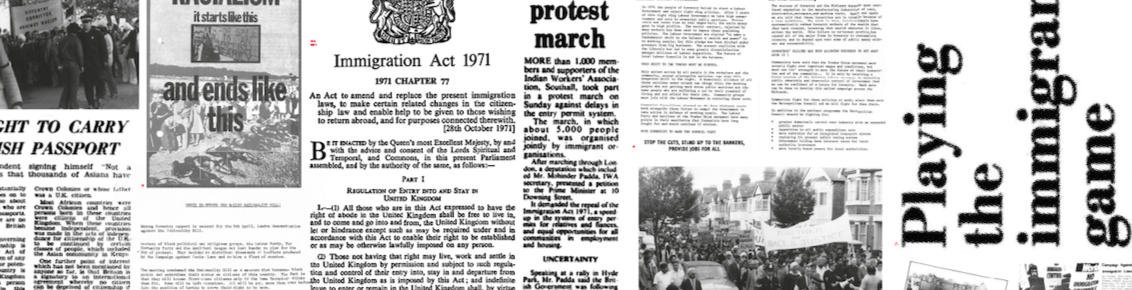
Passport Control
The wall with 'Passport Control' symbolises the hostile environment (from the media and political rhetoric), which many new communities continue to experience when they arrive in the UK.
This is the story of Roots.
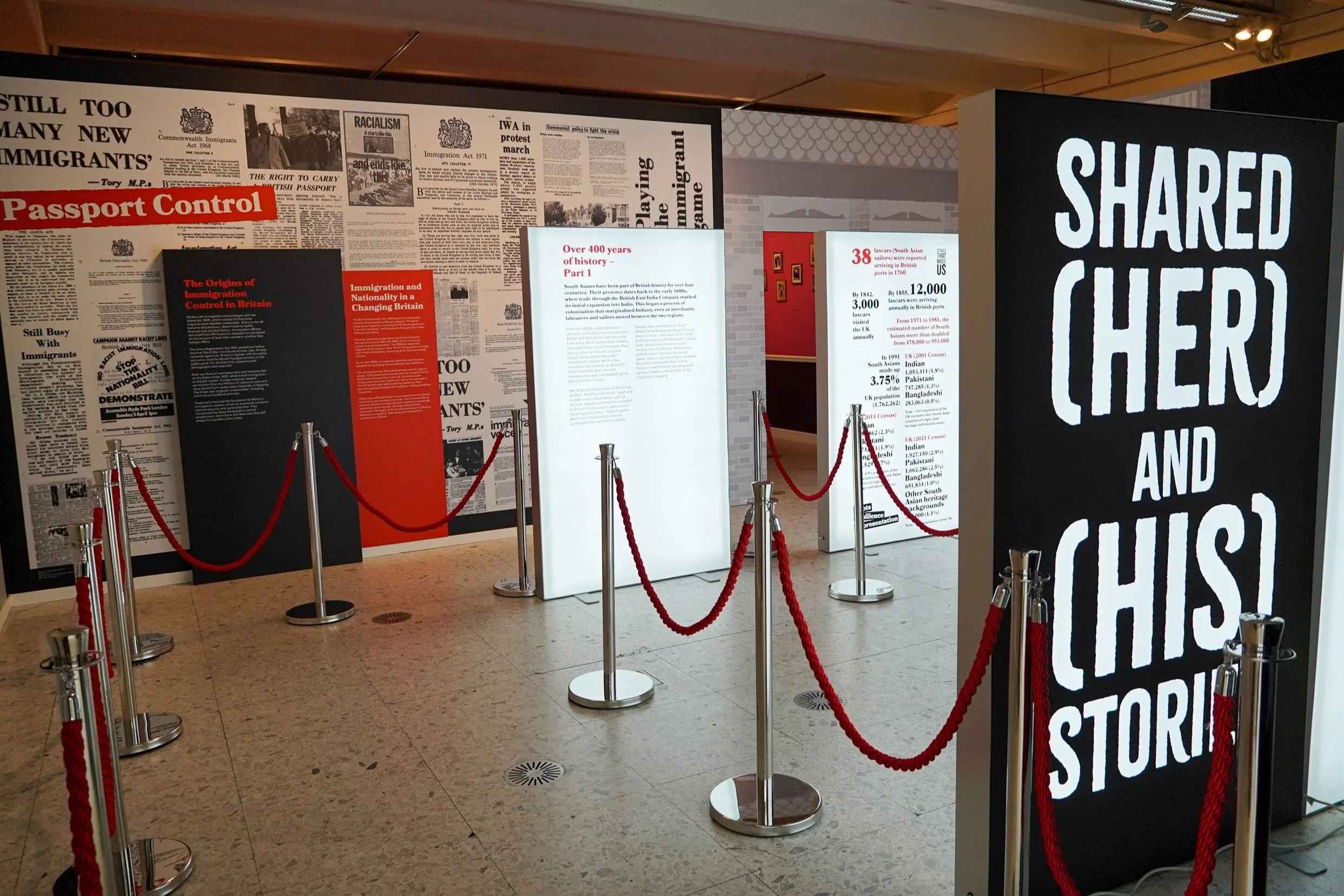
Photo © Ayesha Jones 2025.
This environment of Roots is captured in the design, history, legislative information and stories.
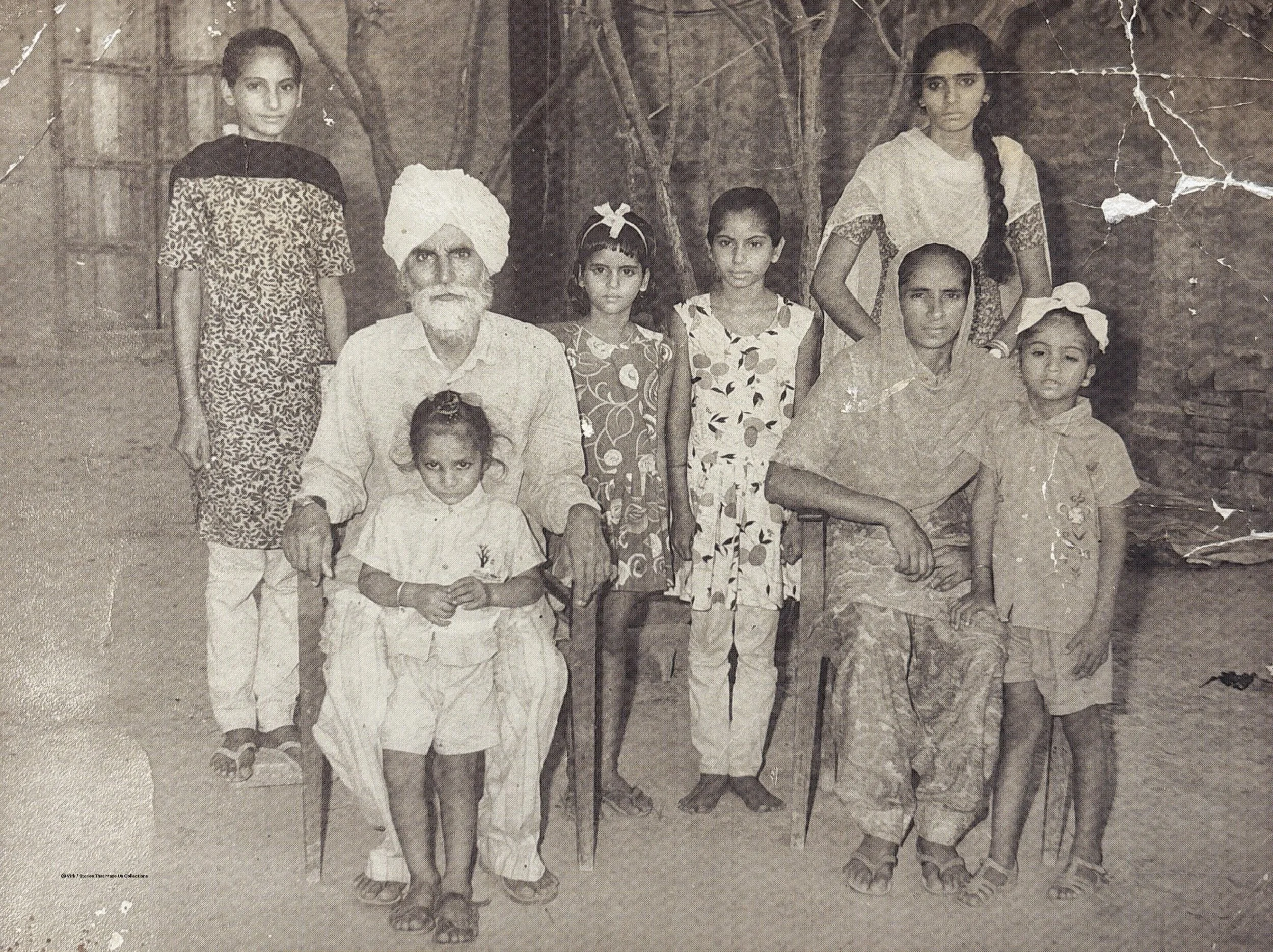
Kang Family
1960s
Photograph
This photograph was taken in Rawalpindi village in the 1960s. It features Jasvir Kang and her family, including her father Gurdas Singh and mother Gurdev Kaur and her siblings Manjit, Baljit, Parminder, Mohan and cousin Pammi.
The Kang Family
The Kang family lived in a village called Rawalpindi located on the Hoshiarpur Road, near to the city of Phagwara in the northern state of Punjab in India. It was here that Jasvir Kang was born in 1948. Her village, once home to the Rawal community, was part of a region deeply affected by the 1947 Partition of India.
These photos show the Kang family in the 1950s–1960s.
Just across from Phagwara, Harbhajan Singh Virk was born in the village of Virk, which was rooted in Rajput and Jat heritage.
In 1968, Harbhajan migrated from India to England, where he settled in Coventry. A couple of years later, Jasvir moved to Coventry to marry Harbhajan, leaving behind her homeland and youthful dreams. Together they built a new life on St George’s Road in Stoke, a diverse inner-city area of Coventry that became home to many South Asian families during Britain’s post-war migration wave.
In 1971, they welcomed their first child, Hardish Virk, followed by daughters Manjinder and Pavenpreet a few years later.
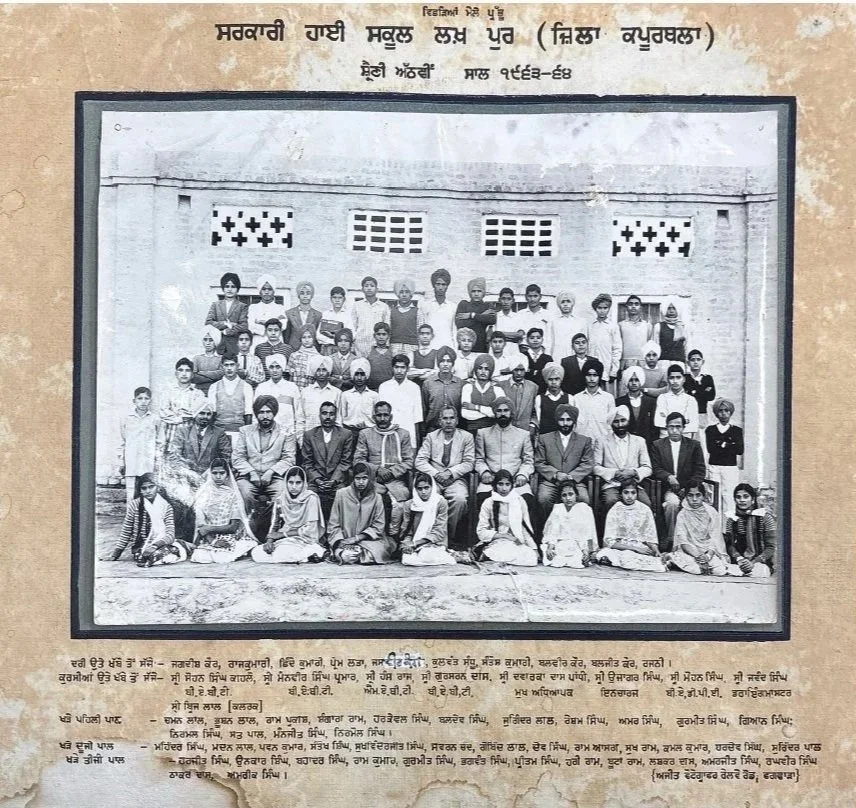
College students in Punjab
1960s
Cardboard framed photographs
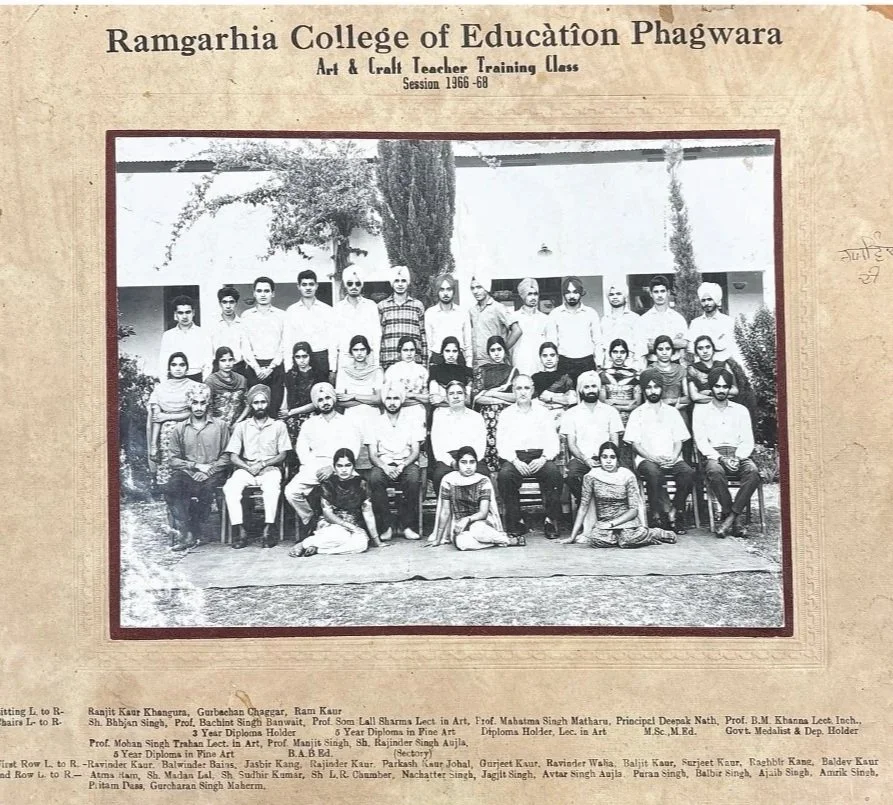
These college photos in their original frames show Jasvir Kang when she was an Art student at Ramgarhia College of Education Phagwara, Art and Craft Teachers Training.
Member of the Kang family
Late 1950s – early 1960s
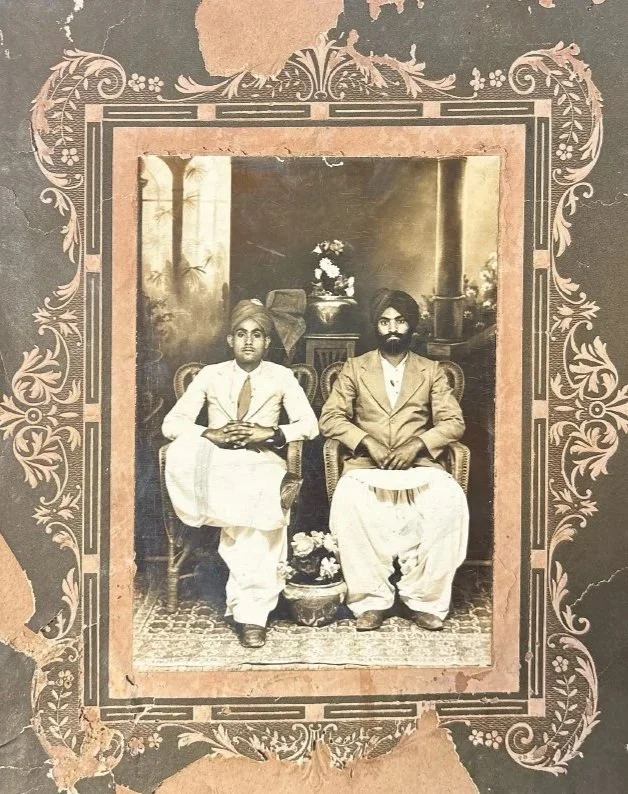
Cardboard framed photograph. This is a photograph of Puran Singh, the brother of Gurdas Singh who was the father of Jasvir Kang. He fought with the British during the Second World War.
The Origins of Immigration Control in Britain
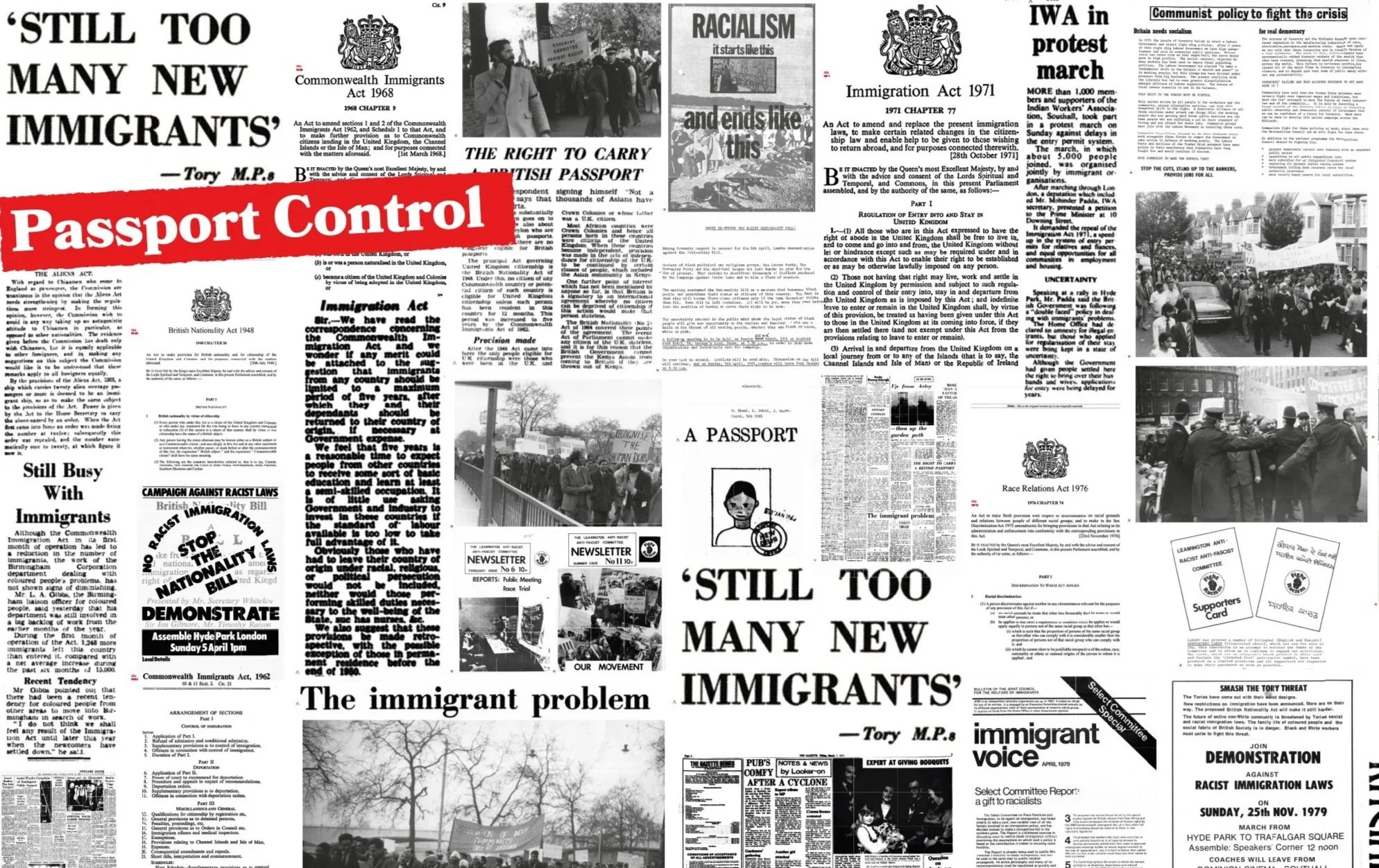
Modern UK immigration control began with the Aliens Act 1905, which marked the first time migrants were labelled ‘undesirable’. Entry to the UK became discretionary, determined by health, finances and criminal history. Immigration officers, recruited from HM Customs, assessed arrivals based on the amount of cash they carried or whether they had job offers.
The Aliens Registration Act 1914, passed just before the First World War, introduced stricter rules. Foreign nationals aged over 16 had to register with the police, and entry could be denied if judged contrary to the public good. For the first time, passports with photographs were required.
Post-war fears of unemployment and revolution led to the Aliens Order 1920, which linked immigration to the job market. Foreign nationals needed permission from the Ministry of Labour to work and were barred from certain jobs, especially in shipping. The Order also targeted ‘undesirables’, including criminals and political activists.
These early laws laid the foundation for Britain’s immigration system, driven by economic concerns, national security and racial prejudice. They introduced key ideas like passport control, employment restrictions and detention that still shape immigration policy today.
Immigration and Nationality in a Changing Britain
The British Nationality Act 1948 gave Commonwealth citizens shared status as British subjects. This led to large-scale migration, including the Windrush generation from the Caribbean, and thousands of people from India, Pakistan and Africa.
However, growing unease led to the Commonwealth Immigrants Acts of 1962 and 1968, which introduced quotas and restricted entry. The 1968 Act especially targeted South Asians in East Africa, limiting entry to those with direct UK ancestry, favouring white Commonwealth citizens.
By the late 1960s, immigration detention centres were established, including Harmondsworth near Heathrow.
The Immigration Act 1971 redefined who had the ‘right of abode’. Only those with close personal or ancestral ties to Britain were exempt from controls. Commonwealth citizens lost automatic rights and had to live and work in the UK for five years before gaining residency. Work permits replaced employment vouchers, making residence temporary.
These laws reflected Britain’s move away from its imperial dominance and towards a narrower, more inward-looking national identity. Immigration policy became increasingly restrictive, shaped by race, heritage and economic pressures. The legacy of these acts continues to influence debates on migration, belonging and citizenship in contemporary Britain.



Over 400 Years of History – Part 1
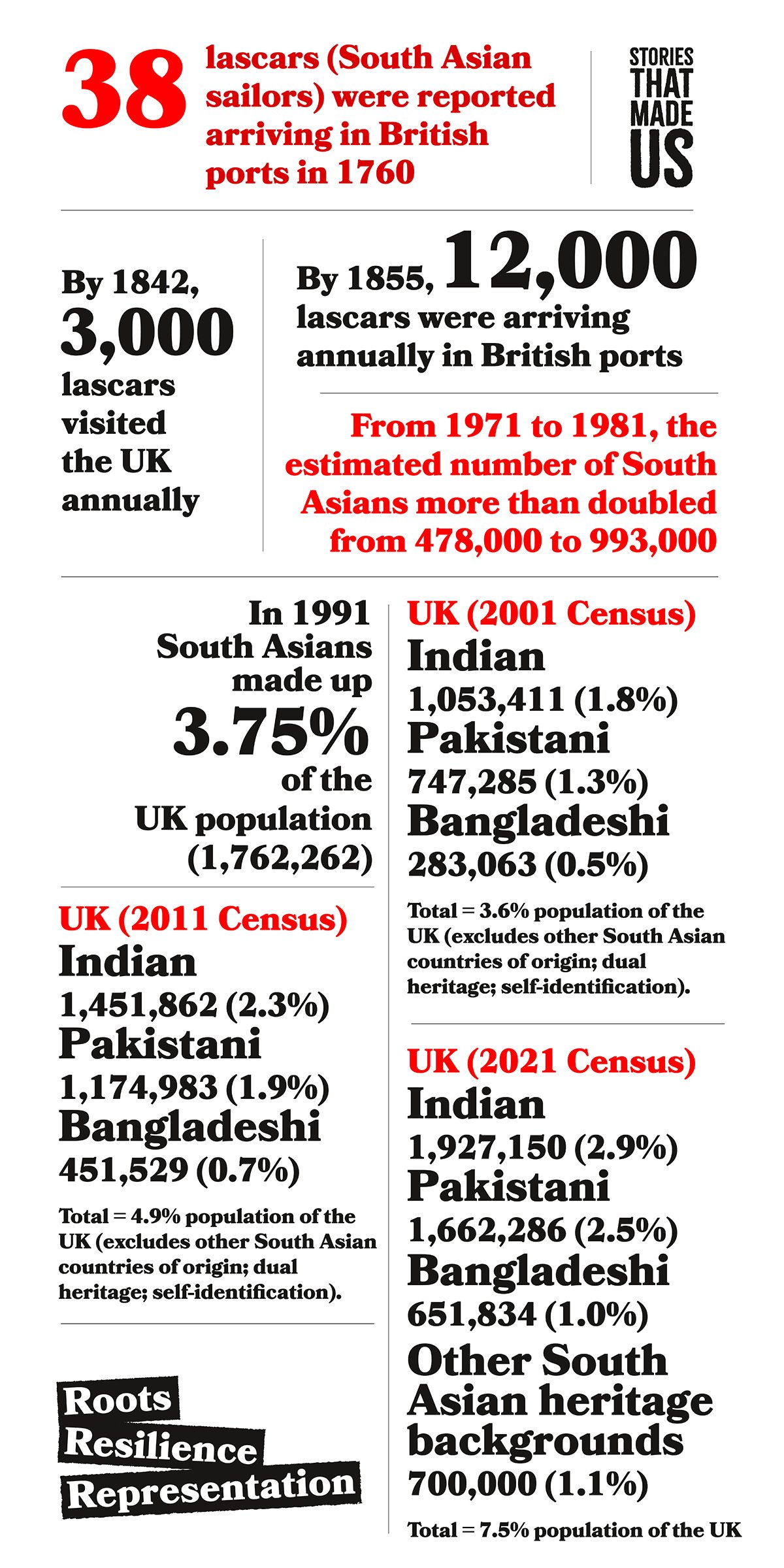
South Asians have been part of British history for over four centuries. Their presence dates back to the early 1600s, when trade through the British East India Company marked its initial expansion into India. This began a process of colonisation that marginalised Indians, even as merchants, labourers and sailors moved between the two regions.
From the 1600s, Indian domestic servants and ayahs (nannies) arrived in Britain with British families returning from India. While some Indian citizens returned home, many remained, often facing uncertain futures. Lascars (South Asian sailors) were also recruited to replace White crew members lost to death or desertion. Their hard work was crucial to maintaining trade and expanding the British Empire in India.
Not all South Asians came to Britain as workers. Wealthy individuals, royals and middle-class professionals such as doctors, lawyers and teachers travelled to Britain for education, adventure or career opportunities. These migrants were more independent and less vulnerable than servants or sailors.
Over 400 Years of History – Part 2
South Asians have played a significant role in Britain, notably during the First World War. Their involvement was a direct result of British colonial rule, but their contributions were extraordinary. Over 1.3 million Indian soldiers fought for the British Empire, helping to fill a critical gap in resources as the British Army was much smaller than those of Germany or France.
Beyond the battlefield, thousands of Indian civilians supported the war effort. Medical staff, cooks, cleaners, clerks and storekeepers worked in hospitals and army logistics, ensuring the smooth running of operations. Their efforts were essential to Britain’s wartime success.
The legacy of South Asian involvement in Britain continued beyond the war. In 1939, Indian immigrant workers in Coventry founded the Indian Workers’ Association (IWA), a political and social organisation that grew to have branches in major UK cities like Wolverhampton, Birmingham and London. The IWA became a powerful voice for South Asians in Britain, campaigning for civil rights, better working conditions and against racism.
The IWA also played a role in global politics, supporting India’s independence. Over the decades, it has remained active in trade unions, race relations and cultural advocacy.
Over 400 Years of History – Part 3
Following the Second World War and the decline of the British Empire, South Asian migration to the UK surged, particularly from India, Pakistan, Bangladesh and Sri Lanka. Initially driven by labour shortages, many migrants filled essential roles in industries such as railways, foundries and the newly established NHS. These early arrivals laid the foundations of Britain’s South Asian communities.
Activists like Aftab Ali played a pivotal role in supporting South Asian seafarers, helping them settle and secure rights in Britain. His advocacy led to the creation of the Overseas Seamen’s Welfare Association and even a passport office in his home in Sylhet in Bangladesh.
The 1960s saw further migration due to Africanization policies in East Africa, prompting the arrival of South Asians with British passports from Kenya, Uganda and Tanzania. This large-scale, enforced migration included professionals and businesspeople, many of whom rebuilt their lives in Britain after being expelled from Uganda in 1972.
However, this period was also marked by racial tension. Politicians like Peter Griffiths and Enoch Powell stoked anti-immigrant sentiment, while civil rights figures such as Malcolm X visited the UK to highlight racial injustices. Media portrayals, like the controversial ITV sitcom Curry and Chips, reflected and reinforced stereotypes.
Despite these challenges, South Asian Britons have made significant strides. From early struggles to political leadership, including Sadiq Khan, Zarah Sultana and Humza Yousaf, their story is one of resilience, transformation and lasting impact on British society.

Oral Histories
Migration is a defining part of human experience, shaped by both uncertainty and hope. These oral histories reflect the journeys of individuals such as Jasvir Kang, who travelled from a village in the northern Indian state of Punjab to Coventry. Her story represents a wider generation whose resilience established new lives in Britain while maintaining cultural identity.
Through these recordings, participants share their stories in their own words and languages, offering insight into migration, belonging and identity across generations. The voices heard here highlight lived experiences of displacement, adaptation and legacy, connecting the past with present-day advocacy for representation and inclusion.
Migrant Stories
Audio recordings by South Asian Cultural Ambassadors: Ayisha Abraham, Jitey Samra, Mehru Fitter, Prashant Kansara, Preety Kansara and Project Archives Assistant, Shaniece Martin.

© Culture Coventry 2025.
Created for Stories That Made Us – Roots, Resilience, Representation,
an exhibition conceived by Hardish Virk and curated by Hardish Virk
with Culture Coventry.
Made possible with The National Lottery Heritage Fund.