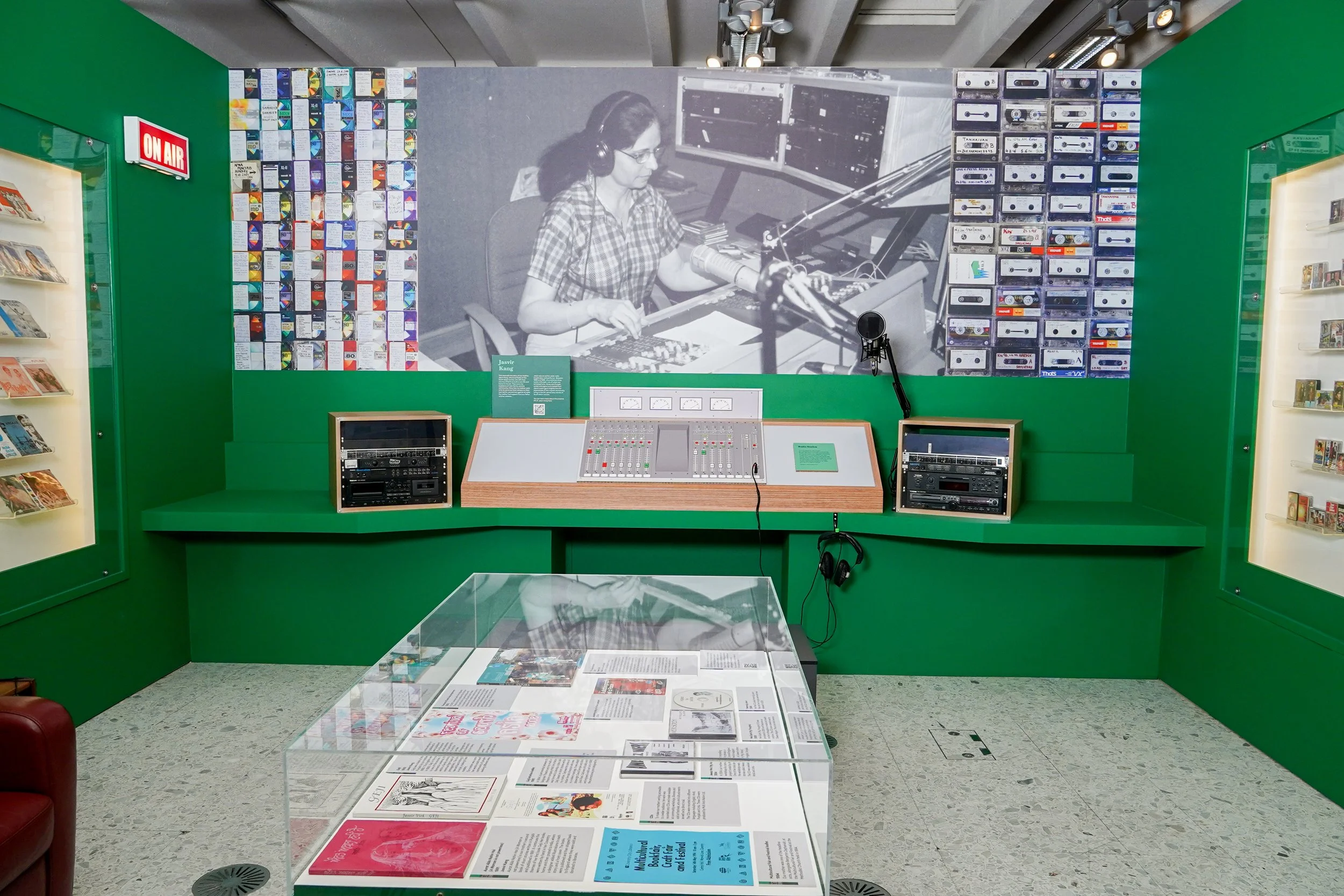

This area tells the story of our mother, Jasvir Kang, who is symbolic of the South Asian women who left their country of birth to build a new life and home in the UK.
They were the backbone of their family and the community. Many like my mother went onto to carve out their careers on their own terms, sometimes against all odds. My mother had support from our father and her children.
Jasvir was an author, poet, radio broadcaster and performer. Between 1989 and 1995, she published three books in Punjabi, two of which are exhibited here. Along with Punjabi author and agony aunt Kailash Puri, Jasvir’s work gave insights into the experiences of the migrant community living in the UK, particularly stories of South Asian women.
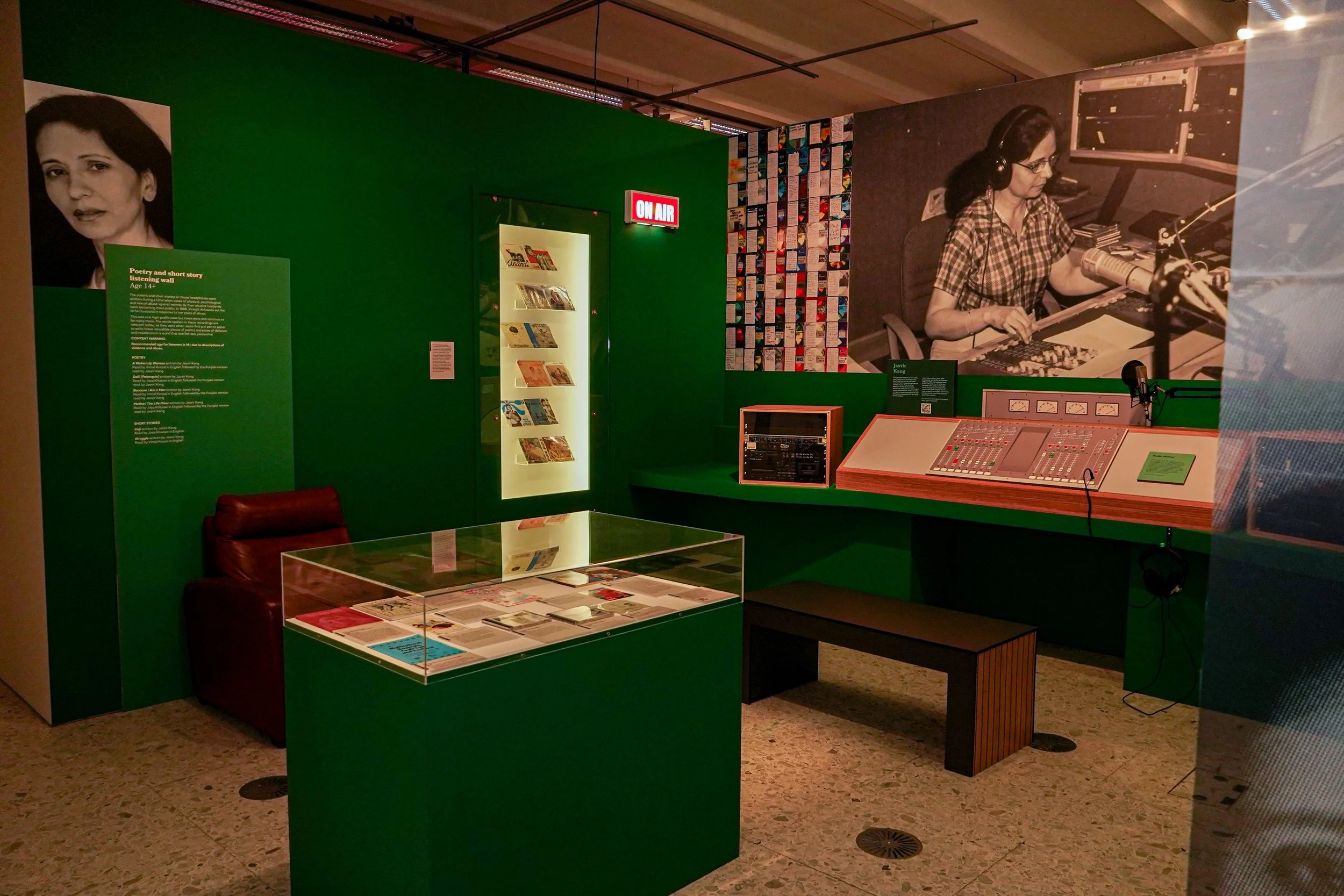
Our mother Jasvir Kang began a career in radio broadcasting in the early 1990s, first appearing on Harmony Radio based in Coventry, after training at BBC CWR.
She went on to presenting her radio shows at South Asian pirate stations before finding a long-term home at Radio XL in Birmingham where she made many friends including the late Zak Mughal, who was both a mentor to our mother and good friend of the family.
Our mother finished her broadcasting career in 2017 at Ambur Radio in Walsall. The displays of 7-inch records, cassettes and mini-discs in this area not only depict the diverse range of music she played but also the radio broadcasts she hosted for over 25 years.
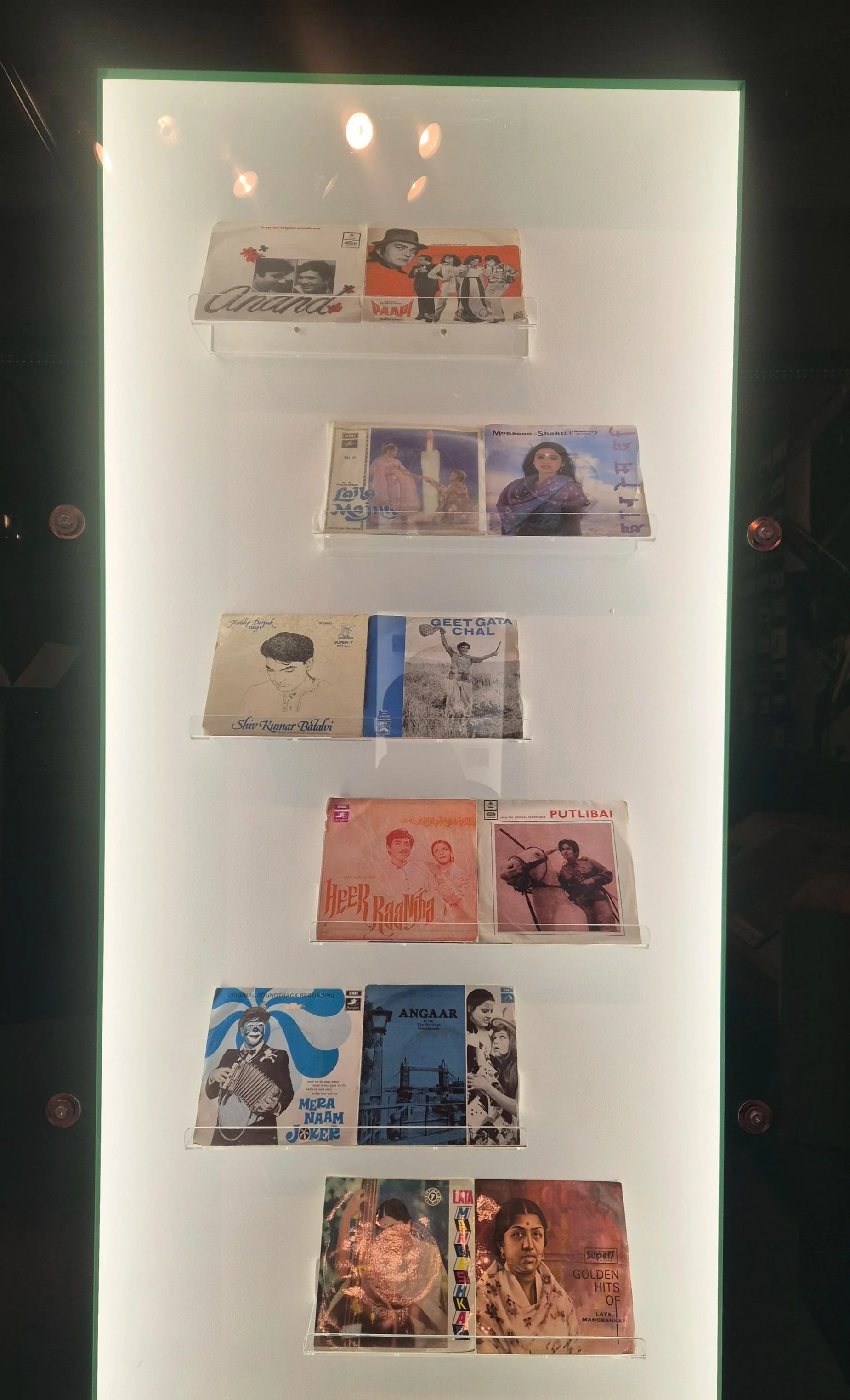

The Poetry and Stories of Jasvir Kang
The poetry and short stories found in this area were written in Punjabi by Jasvir Kang in the late 1980s and throughout the 1990s. Sometimes they are of celebration and memory and other times they are harrowing and disturbing, as depictions of violence and abuse are unapologetically shared with the reader or listener.
The poetry has been recited in English by voice actors and Jasvir Kang’s grandchildren alongside her own recitals in Punjabi.
It is important to note that the translations can never do justice to the original Punjabi versions, but we hope the English versions will make her poetry accessible to a wider audience.
You can view the words to each poem via the drop down menu:
-
It looks like a rainbow of seven colours in the sky,
Shine and freshness of its yellow colour distributes perfume of Satvarg (marigold) flower,
Various beautiful colours of it remind me of Indian sweets,
Orange colour of it reminds me of the fragrance of the oranges displayed on the small hand carts in India,
Red colour of it reminds me of the henna colour on the young children and women’s hands,
In the blue colour of it I can see colour of the late evenings in India,
The sari my mother is wearing shows me a reflection of India.
-
How good are the days of childhood,
we have no worries about good and bad,
about looking good or about skin colour,
the only worry we have is about our mother’s company.
How good are the days of childhood,
we have no worries about getting less or more,
about what is mine and what is yours,
the only worry we have is about our play.
How good are the days of childhood,
we have no worries about our race,
about being rich and poor,
the only worry we have is about our sleep.
How good are the days of childhood,
we have no worries about generating income,
about going to work,
the only worry we have is about our food.
-
Festival of Diwali comes every year,
bringing with it new and old memories.
Everyone’s heart fills with happiness when they see lights of various colours.
Queues start building up to buy Barfi, Ladoo and Jelabi (Indian sweets) from the morning.
Big and small stores get crowded by the people to buy fireworks (patake).
The lights of the festival add to the happiness of the people.
Brightness of the beautiful lights is dimmed by the thought of the atrocity,
that is taking place at present time in the world.
I do not know who should be blamed for this,
but I will ask them to come and join us,
in celebrating this happy occasion,
by leaving behind feelings of racism, rich
and poor, colour, beauty and religious differences.
Embrace each other and promise that we will bring the light of the Diva (clay lamps),
into the houses of the depressed and helpless people.
-
Memories of the country,
the faint fragrant coming from the soil of the land,
how could I forget the country.
The wide open courtyard of my house
where I spent my childhood,
where I grew up and turned into a young person,
how could I forget the courtyard.
The footpaths which took me to schools and wells,
the footpaths on which I learnt to stand,
on my feet and to walk,
how could I forget the footpaths.
The women, who spun cotton in groups
on the spinning wheels, in the alley ways,
the women who made big piles of the spanned cotton,
how could I forget the women.
The loud and long singing tunes of the young ladies,
who sang and danced at the time of weddings.
How could I forget the loud and long singing tunes
which enhanced happiness on every occasion.
Memory written by Jasvir Kang and read by Ari Virk Nicholl
-
It never occurred to me,
that one day I will grow old too,
that my hands and feet will start trembling,
that my legs will not be able to bear the weight of my body.
It never occurred to me,
that I will need to wear false teeth to eat my food,
that it I will be hard to hear too.
It never occurred to me,
that my skin will no longer be firm,
that I will lose my eyesight.
It never occurred to me
that I will lose my hair,
that all my hair will turn grey.
It never occurred to me
that I will lose my memory,
I will have difficulties in recognising my own family members.
It never occurred to me,
that I will be left alone in this world full of people,
that I will have to live on others’ mercy.
It never occurred to me,
that one day I will grow old too.
-
What type of people they would have been, who found love in return for their love,
Whenever I wished for happiness I received garlands of sadness,
I cannot find anyone to whom I can blame,
I Iaugh and cry on my own as there is no loved one with whom I can share my sorrow and happiness,
In search of happiness I went so far that when I turned to go back I could not find the way back,
Is there a special God for those who won at every walk of their life and were honoured for their victory,
To reach the destination of happiness, I could not find any devoted companion,
It is said that you cannot blame your fate as you are yourself responsible for making your own destiny.
Poetry and short stories written and recited in Punjabi by Jasvir Kang
Audio recordings directed by Pavenpreet Kaur
Poetry and short story actors: Jaya Khazaei and Vimal Korpal
Poetry child actors (Jasvir’s grandchildren): Ari Virk Nicholl, Ayah-Ali Virk, Lyla Biswas and Robhin Biswas
Sound Engineer: Jack Nelson
Poetry
My Mother’s Sari written by Jasvir Kang
Read by Ayah-Ali Virk in English followed by the Punjabi version read by Jasvir Kang
Childhood written by Jasvir Kang
Read by Robhin Biswas in English
Diwali written by Jasvir Kang
Read by Lyla Biswas in English
Memory written by Jasvir Kang
Read by Ari Virk Nicholl in English
Old Age written by Jasvir Kang
Read by Jaya Khazaei in English
Love written by Jasvir Kang
Read by Vimal Korpal in English followed by the Punjabi version read by Jasvir Kang
Actors:
Jaya Khazaei
Vimal Korpal
Grandchildren:
Lyla Biswas
Robhin Biswas
Ayah-Ali Virk
Ari Virk Nicholl
Poetry and Short Stories
The poems and short stories on these headphones were written during a time when cases of physical, psychological and sexual abuse against women by their abusive husbands were becoming more public. In 1989, Kiranjit Ahluwalia set fire to her abusive husband in response to ten years of abuse. This was one high-profile case but there were and continue to be many more. The words spoken in these recordings are relevant today, as they were when Jasvir first put pen to paper to write these incredible pieces of poetry and prose of defiance and resistance in a world that she felt was patriarchal.
Content Warning: Recommended age for listeners is 14+ due to descriptions of violence and abuse.
You can also read the poems via the drop down below:
-
Even after being born in grieving surroundings I will endeavour to change it into happiness,
I will endeavour to make my dear mother’s helpless and defeated face to bloom like a Rose flower,
I will endeavour to fight like a lioness to have rights equal to boys in every walk of my life,
I will endeavour to answer the warnings of the red angry eyes of my grandad, paternal uncles, father and brother with my own red angry eyes,
I will also endeavour to let my hands reach their necks who strangle their daughters, sisters to death,
I will endeavour to burn all those who have burnt their daughters-in-law alive by pouring kerosene oil over them, with the same matchstick,
I will also endeavour to bury those alive in the dowry who have greed of getting more and more dowry,
I will endeavour to show those, who instructed me to keep a scarf over my head and to keep my whole body covered, that I wish to live my life in my own way,
I will endeavour to express my choice too at the time of selecting a life partner,
I will endeavour to reject the person who would like to marry me,
I will endeavour to take my share of the rights from a man’s inherited rights.
-
I inherit everything as soon as I am born.
I can go outside through the courtyard of my house as soon as my legs support me to walk.
Because I am a man.
After I have grown up a little more I can go out to play football with lads of my age in the ground.
As soon as I step into my youth I can indulge myself in sexual pleasure.
Because I am a man.
At the time of selecting a life partner, I can see and reject as many girls as I wish.
Even after getting married I can make other mothers, daughters and sisters victims of my lust.
Because I am a man
Whenever I wish, I can divorce my wife to marry again, a second, third, fourth time.
If I want, I can burn my wife alive by pouring kerosene oil over her.
Because I am a man.
If my wife does not bring as much dowry as asked for, I can openly auction my wife.
If my wife does not produce a male child I can have a second wife as well.
Because I am a man.
If I wish, I can go to pubs, clubs to see naked dances until midnight, I can come home completely drunk every night.
Because I am a man.
If I do not wish to come home, I can spend the whole night away from my house.
I can beat my wife up badly with sticks whenever I wish to.
Because I am a man
If I am not sexually satisfied with my wife I can fulfil the desire by making my daughter victim of my lust.
If I do not like something my daughters and sisters have done, I can strangle them to death.
Because I am a man.
If I wish, I can shave off my head and beard.
If I wish, I can roam round in a bazaar alone in my underpants.
Because I am a man.
I can live my whole life on my wife’s earning.
When I cannot think straight I can throw my own mother out of my house.
Because I am a man.
With the rights I inherit from my birth, I can live my whole life happily and with pride.
Because I am a man.
-
Once you have been sent in the Dolli,
to your husband’s house,
do not leave the house until you die.
We will have peace of mind only if we could see
your dead body carried out from that house in a coffin.
Treat your mother-in-law as your own mother,
even if she does not allow you to have food more than once a day.
Always respect her by bowing to her even if she beats you up and breaks your bones.
Treat your father-in-law as your own father,
even if he tries to touch you with sexual desires.
Do not let anyone have even slightest idea about his behaviour, my daughter!
because that is how you will be faithful to them.
Treat your sister-in-law as your own sister
even if she makes your life a hell.
Even when your sister-in-law comes back from her own in-laws’ house and turns her brother (your husband) against you so to beat you up.
If you could not have a child because your husband is impotent, take the blame yourself.
If you are not given enough food, do not let the whole world know about it (keep quiet about it).
If you want your parents to live with dignity,
do not give others a chance to lift a finger towards them even if your life has finished for you.
Once you have been sent in the Dolli
to you husband’s house,
do not leave the house until you die.
We will have peace of mind only if we could see
your dead body carried out from that house in a coffin.
-
How painfully you might have died when your own children, to whom you gave life, would have helped others to strangle you to death.
Mother! the life giver.
Who will understand it and whom will you make understand why you became so ill-tempered and the pain and feelings that were buried deep inside you.
Mother! the life giver.
People said in the crowded court whatever they had heard from others (whatever the judge said to the man).
You have been through hell for a very long time without any fault of your own.
No ordinary person can endeavour to go through the hell for such a long period.
Mother! the life giver.
The statement made by the judge in the court, full with people, would have penetrated your lifeless body.
Mother! the life giver.
You have been going through hell for centuries and your suffering will continue.
Because the affect of your suffering perhaps does not reach the male human race.
Mother! the life giver.
Wakeup! endeavour to change your hell like life into a blissful life.
Or in this man dominated society no one will take any notice of your sufferings.
This poem is based on an incident which took place in India, when a man killed his wife with the help of their children. He was able to walk out of court, free of any charges, because the children gave statements in favour of their father.
Poetry
A Woken Up Woman written by Jasvir Kang
Read by Jaya Khazaei in English followed by the Punjabi version read by Jasvir Kang
Because I Am a Man written by Jasvir Kang
Read by Vimal Korpal in English followed by the Punjabi version read by Jasvir Kang
Dolli written by Jasvir Kang.
Read by Jaya Khazaei in English followed the Punjabi version read by Jasvir Kang
Mother! The Life Giver written by Jasvir Kang.
Read by Jaya Khazaei in English followed by the Punjabi version read by Jasvir Kang
Short Stories
Geji written by Jasvir Kang
Read by Jaya Khazaei in English
Struggle written by Jasvir Kang
Read by Vimal Korpal in English
Radio Broadcasts
This is an extract of Jasvir Kang's groundbreaking and thoroughly entertaining Punjabi radio show. Her radio show was known for having an agony aunt segment for listeners to seek advice on subjects that they were sometimes unable to discuss with family and friends. There was also a talent segment where listeners rang in, singing their hearts out, as well as memorable music, adverts and jingles written, recorded and presented by Jasvir, gaining her a massive fanbase.
Words by Pavenpreet Kaur.
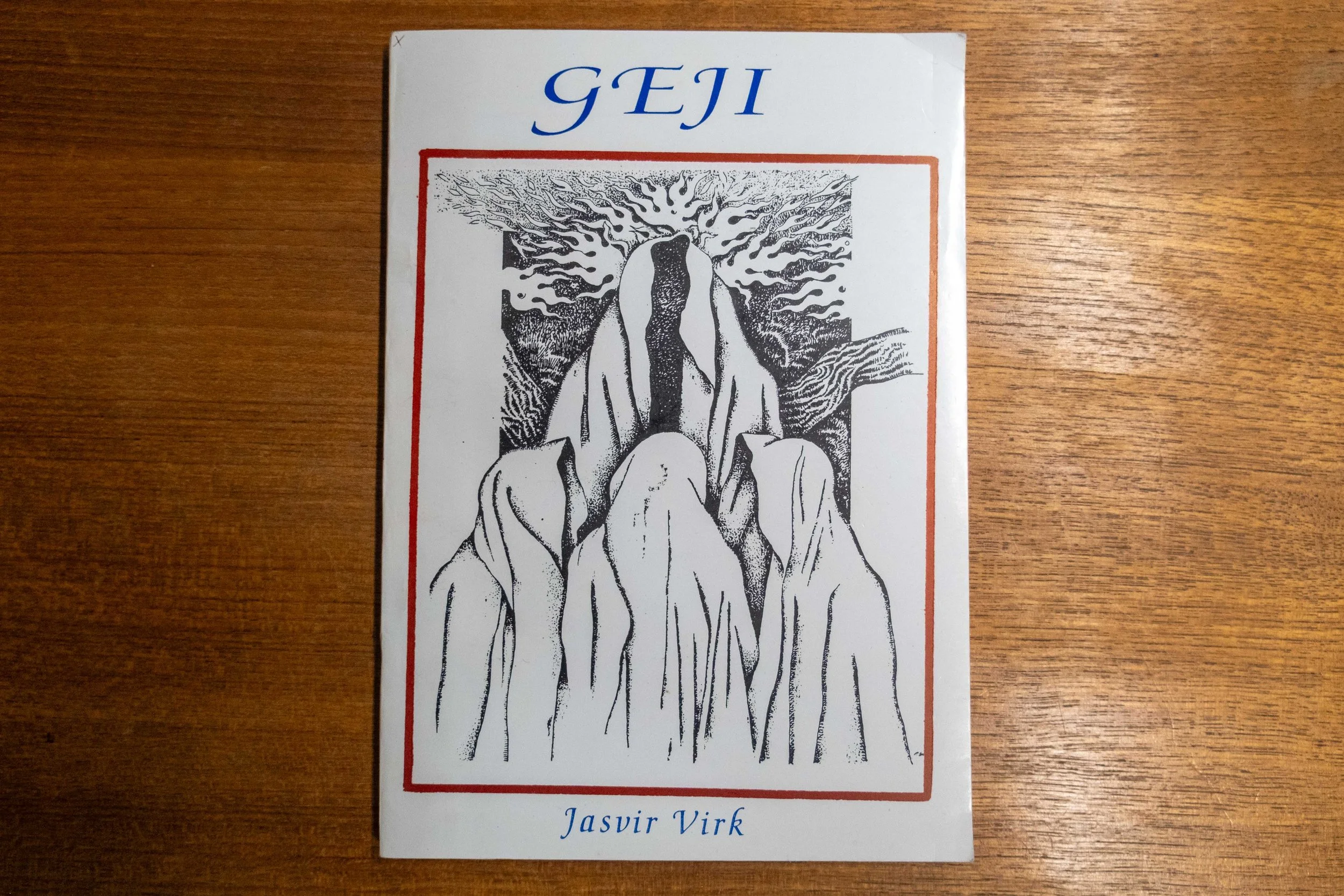
Geji
1993
Jasvir Kang
Geji was a book of short stories written in Punjabi by our mother and published in 1989. This English version was published in 1993. Geji is the name of a character in one of the stories. The stories address domestic violence, the role of patriarchy within a family environment and the eventual fight back of the female protagonists. The tone and language are raw and hard-hitting but also cinematic in style, making it accessible for many readers. Our mother was committed to ensuring her words could reach a diverse community of people, so she was always seeking different ways to tell her stories.
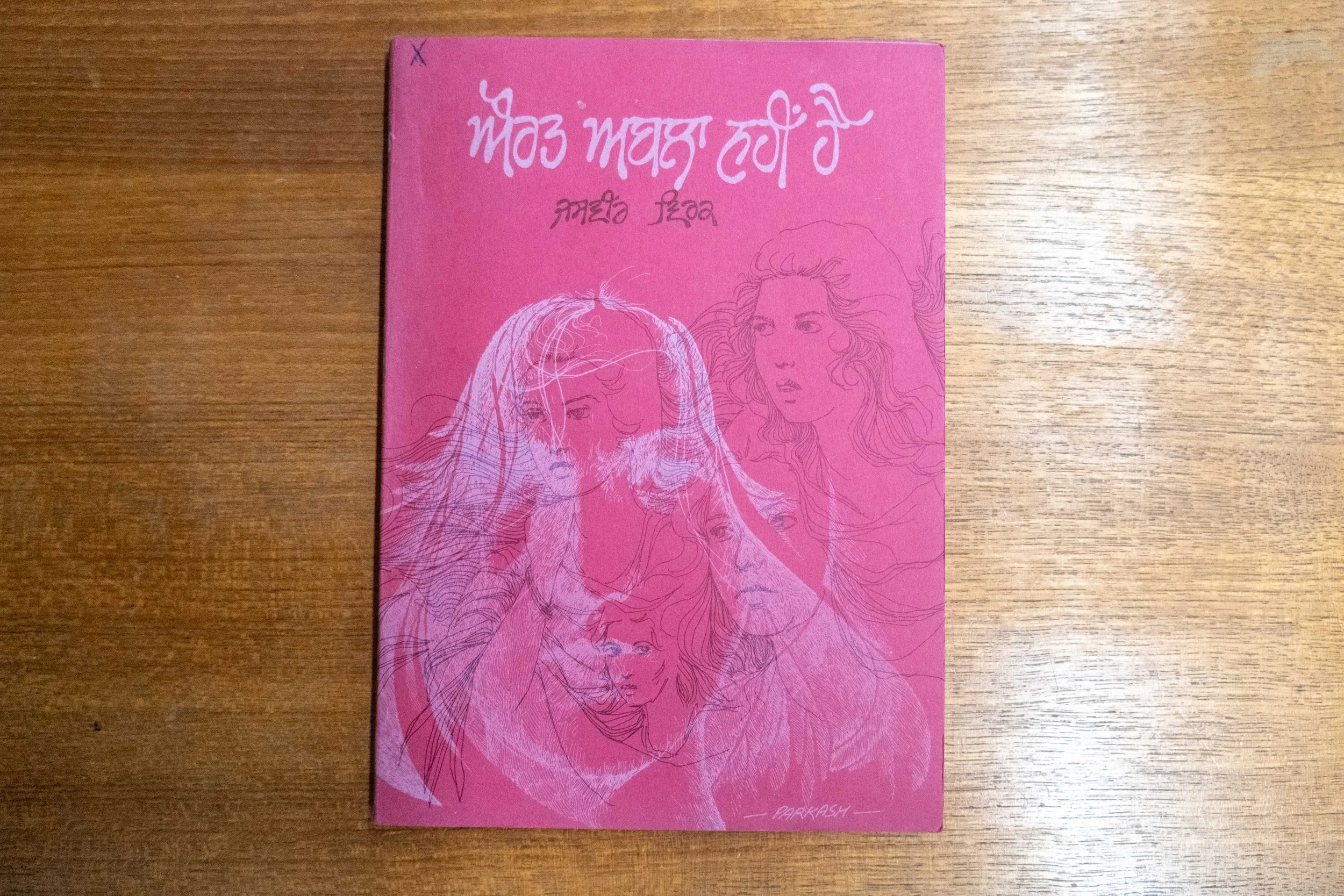
Aurat Abla Nahin Hai (A Woman is not powerless)
1991
Jasvir Kang
Aurat Abla Nahin Hai (A Woman is not powerless) is her second book of short stories written in Punjabi and published in 1991. It continues the themes of her first book Geji. Her books were written by hand in her Coventry home and then posted to India, where a designer added illustrations to each story and a front cover. The books were published and then shipped back to England where they were sold and donated to libraries.
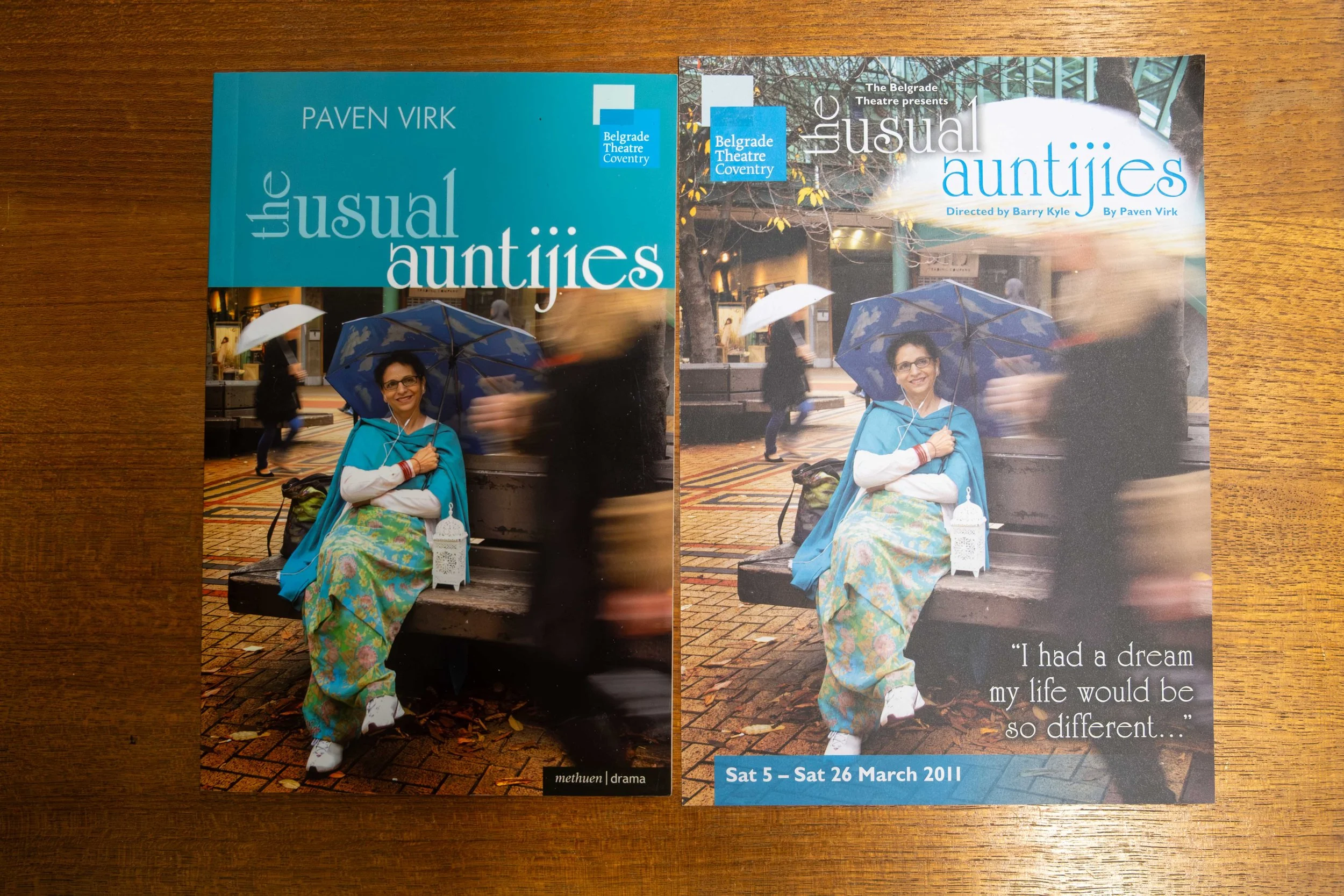
The Usual Auntijies
2011
Jasvir Kang
Book script and leaflet
In 2005, the Belgrade Theatre commissioned my multi-media theatre company Multi Arts Nation to research and develop a new play to be performed in the new mid-scale space, B2. I employed the services of my sister Paven Virk and my mother to facilitate workshops with a diverse community of South Asian women in Coventry. The findings from these workshops led to Paven writing a synopsis, which became the basis of the script for the new play, The Usual Auntijies. It opened at the Belgrade Theatre on Saturday 5 March 2011. This is the book script and leaflet to The Usual Auntijies, which features our mother on the front cover. Our mother’s poem, Dolli is heard playing on a fictional radio show in the play. It was chosen due to its subject matter which resonated with the themes of the play.
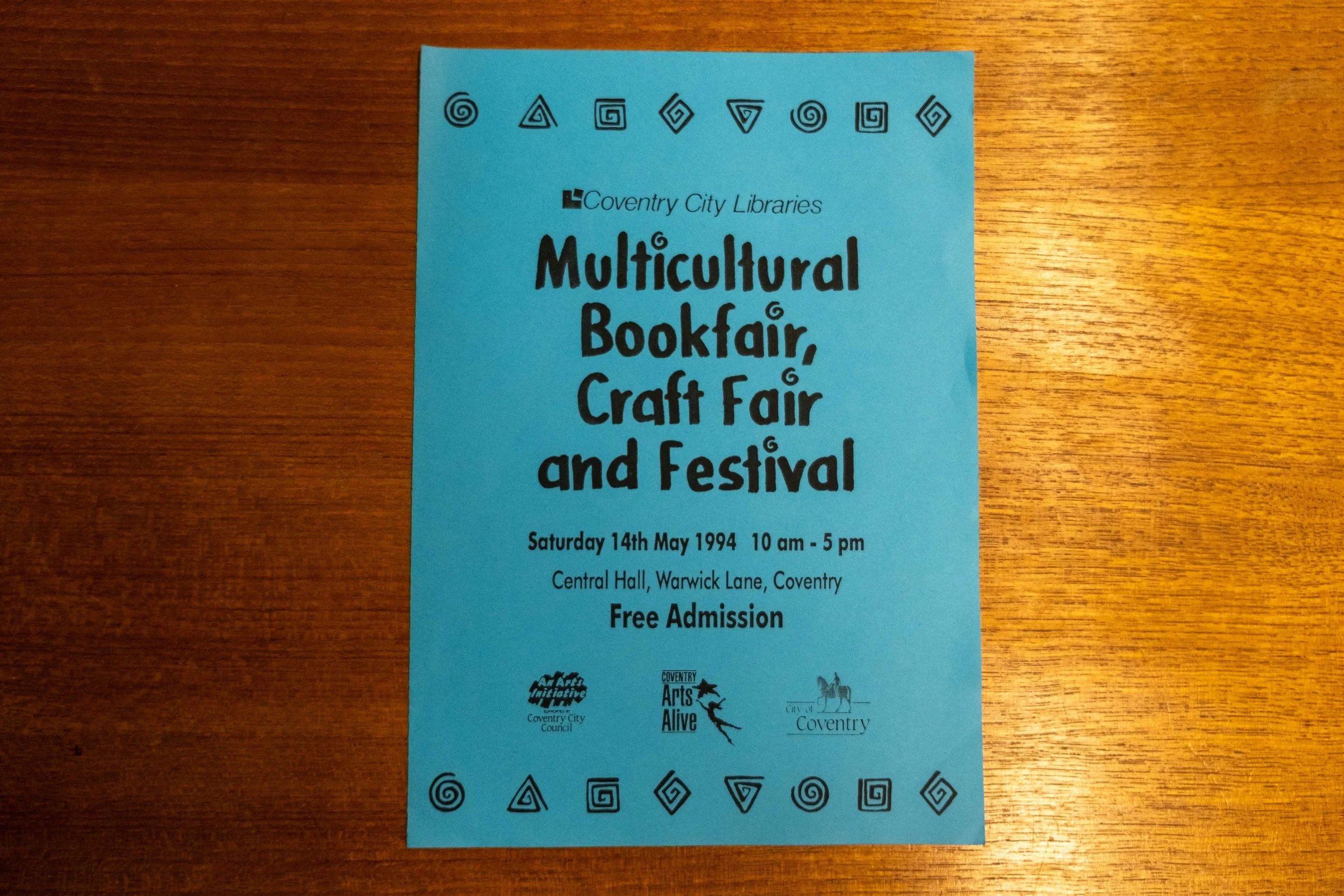
Multicultural Fair and Festival leaflet
1994
Our mother was one of the headline acts, alongside Benjamin Zephaniah, at the Multicultural Fair and Festival at the Methodist Church held in 1994.
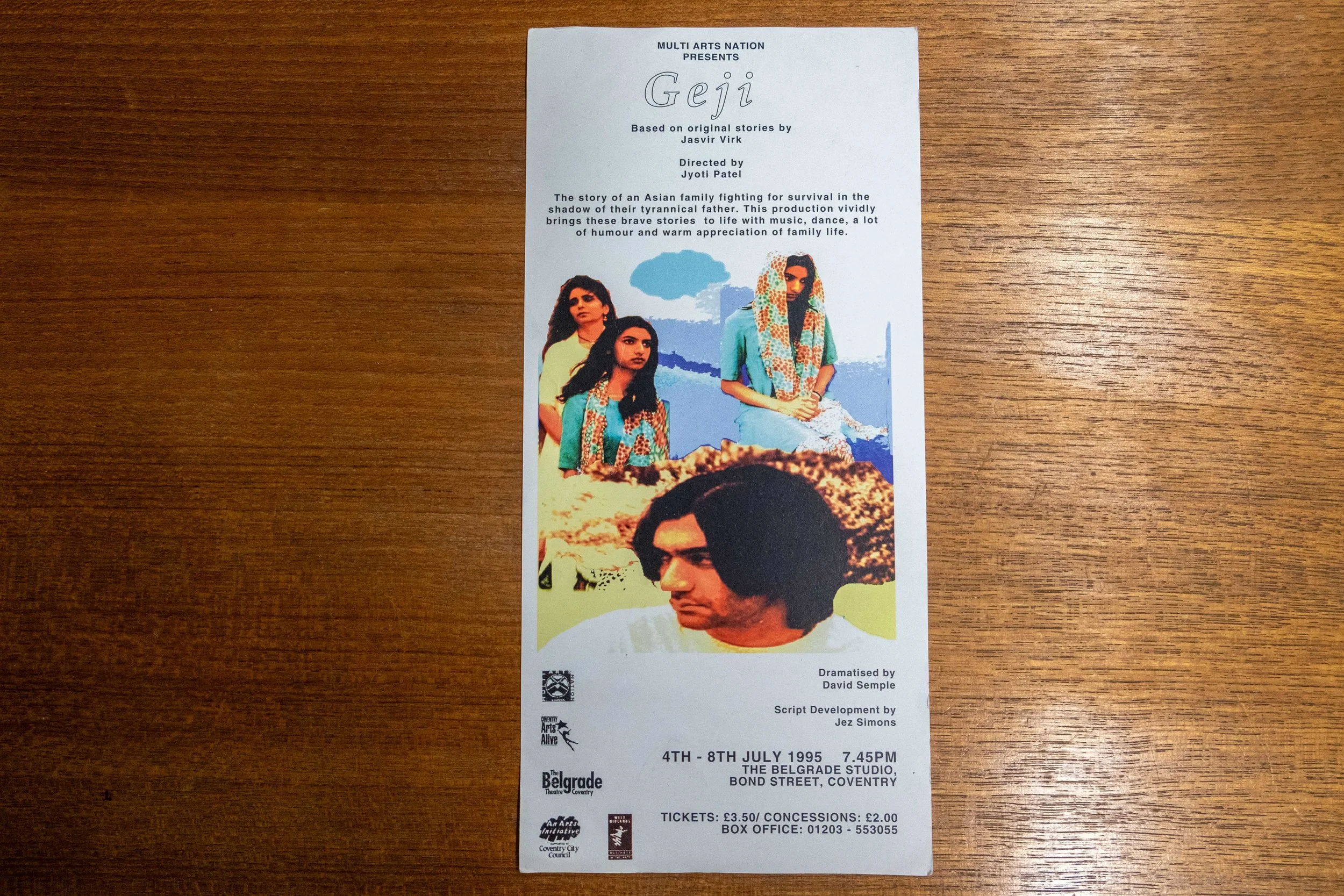
Geji letterbox leaflet
1995
In 1994, a partnership between the Belgrade Theatre and my multi-media theatre company Multi Arts Nation was formed to develop a play called Geji, based on short stories written by my mother. Geji was the name of the Indian female character who was living in a violent marriage. It was adapted by playwright David Semple and directed by Jyoti Patel. Geji was critically acclaimed and enjoyed a sold out run in 1995. This is the promotional print designed by me.
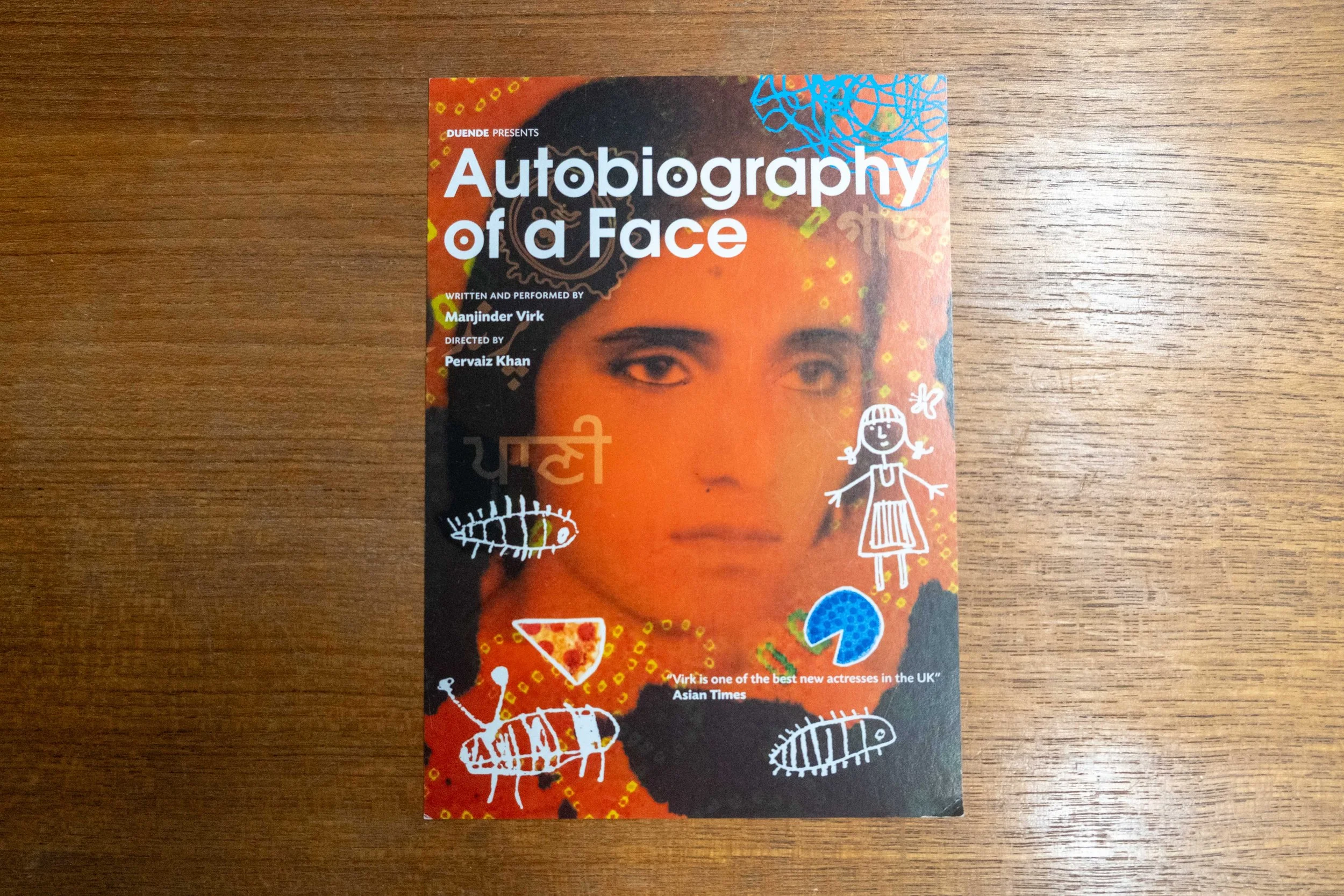
Autobiography of a Face postcard
2004
Autobiography of a Face written and performed by my sister Manjinder Virk and directed by Pervaiz Khan asks questions about what makes us who we are in the world we live in today. This is the promotional print for the tour which took place in 2004, featuring a young Jasvir Kang on the cover.
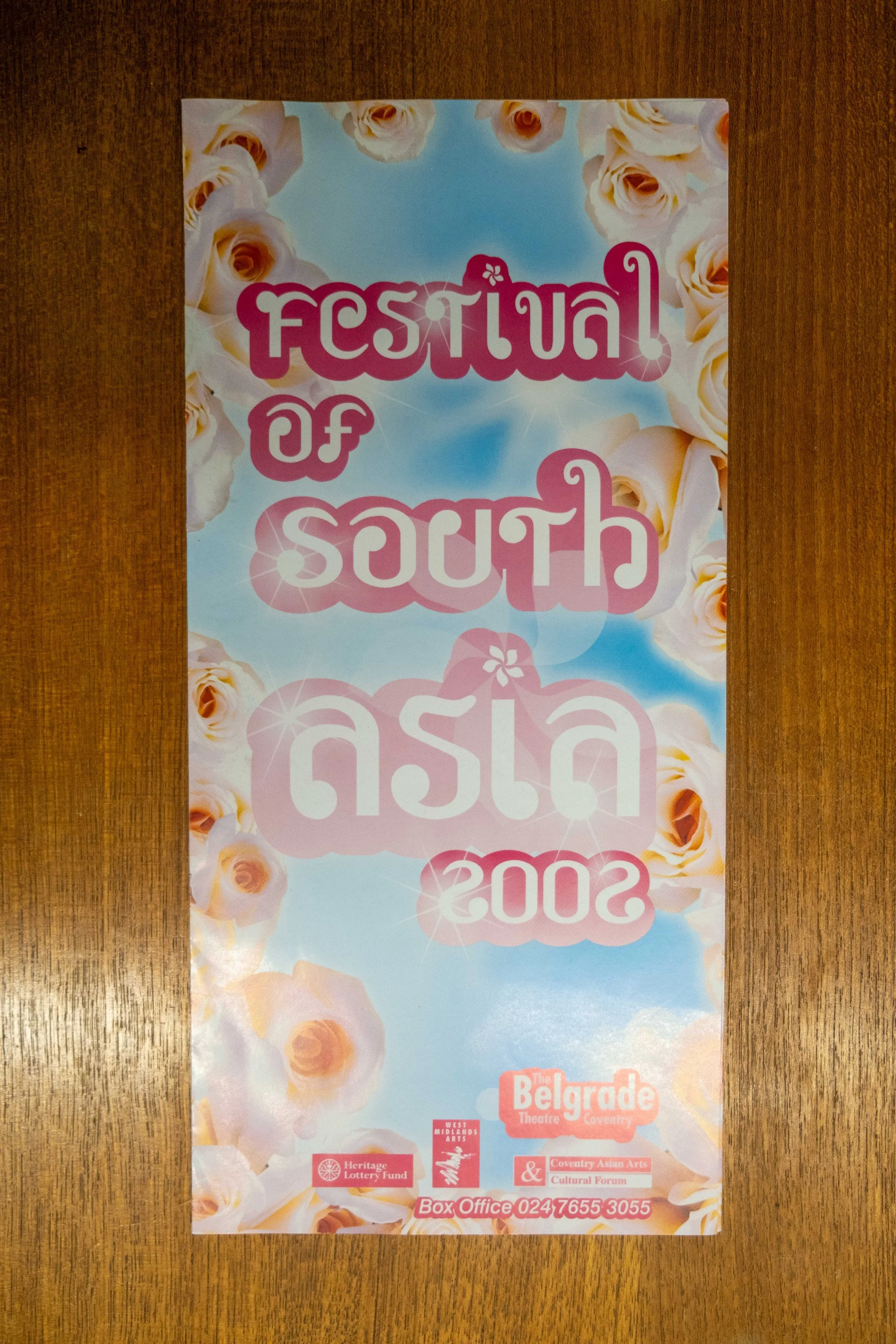
Festival of South Asia programme
2002
In 2002 I worked with the Belgrade Theatre to co-produce the Festival of South Asia in partnership with a consortium of local South Asian creatives. My mother read her poetry as part of the celebrations which also included dance performances, digital artworks, workshops and a headline performance by Coventry’s very own Silinder Pardesi. This is the programme for the festival.
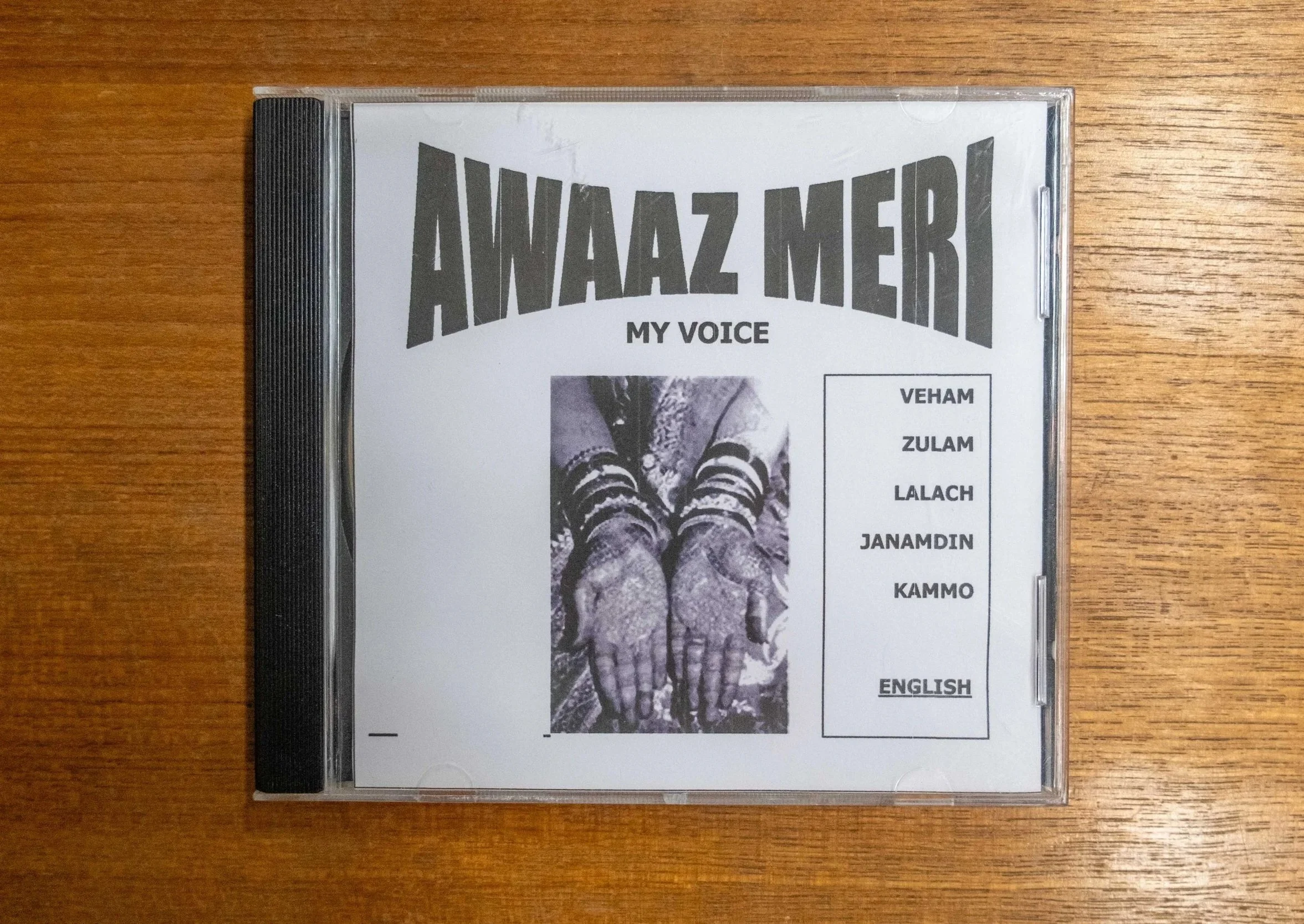
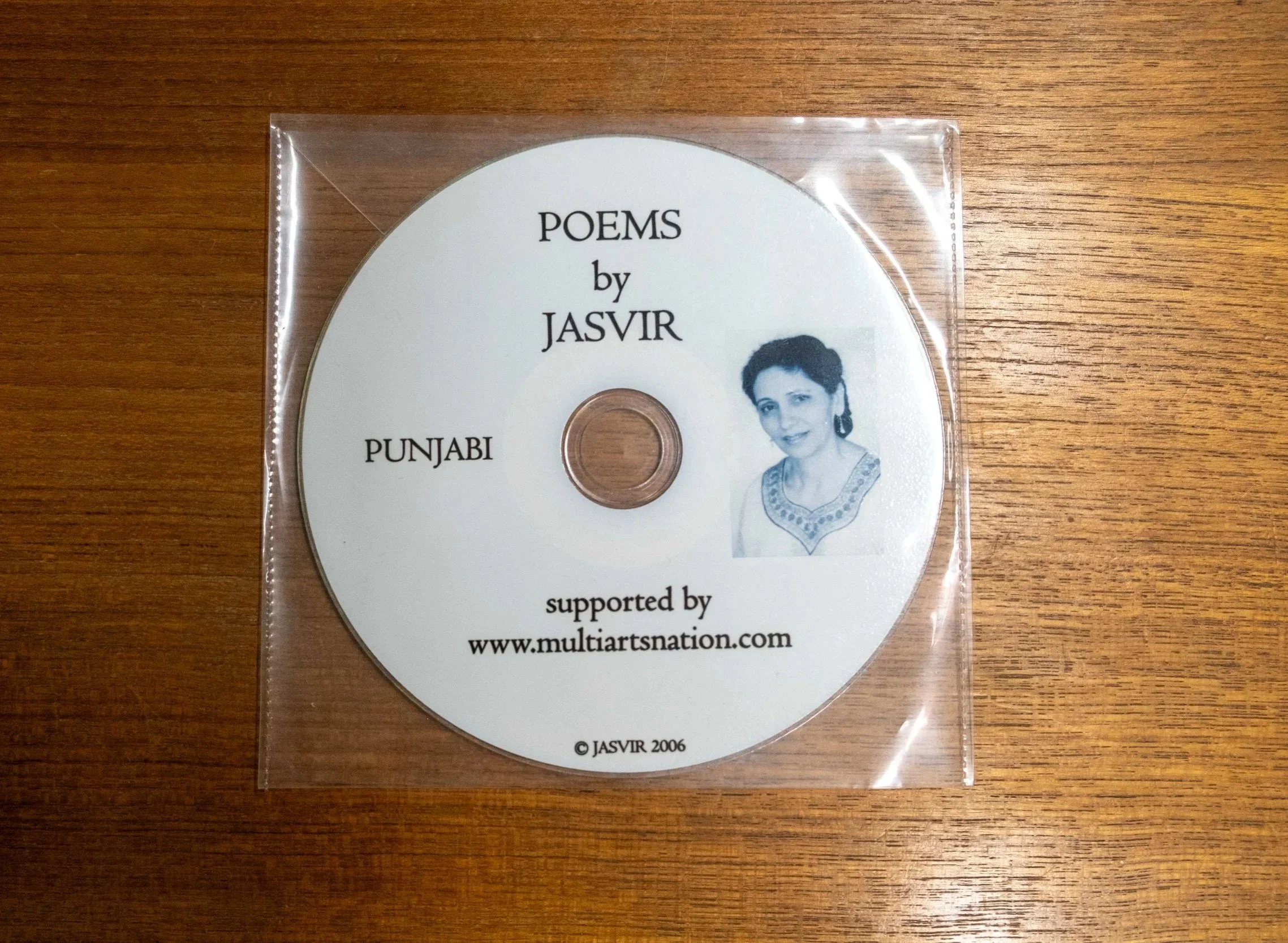
CDs
To make our mother’s writing accessible to a wider audience, her work was recorded onto CDs and made available at community workshops, libraries and sold at festivals, arts and cultural events as well as by direct mail. The CDs were recorded into different languages including English, Hindi and Urdu. These CDs were produced by Multi Arts Nation Ltd.
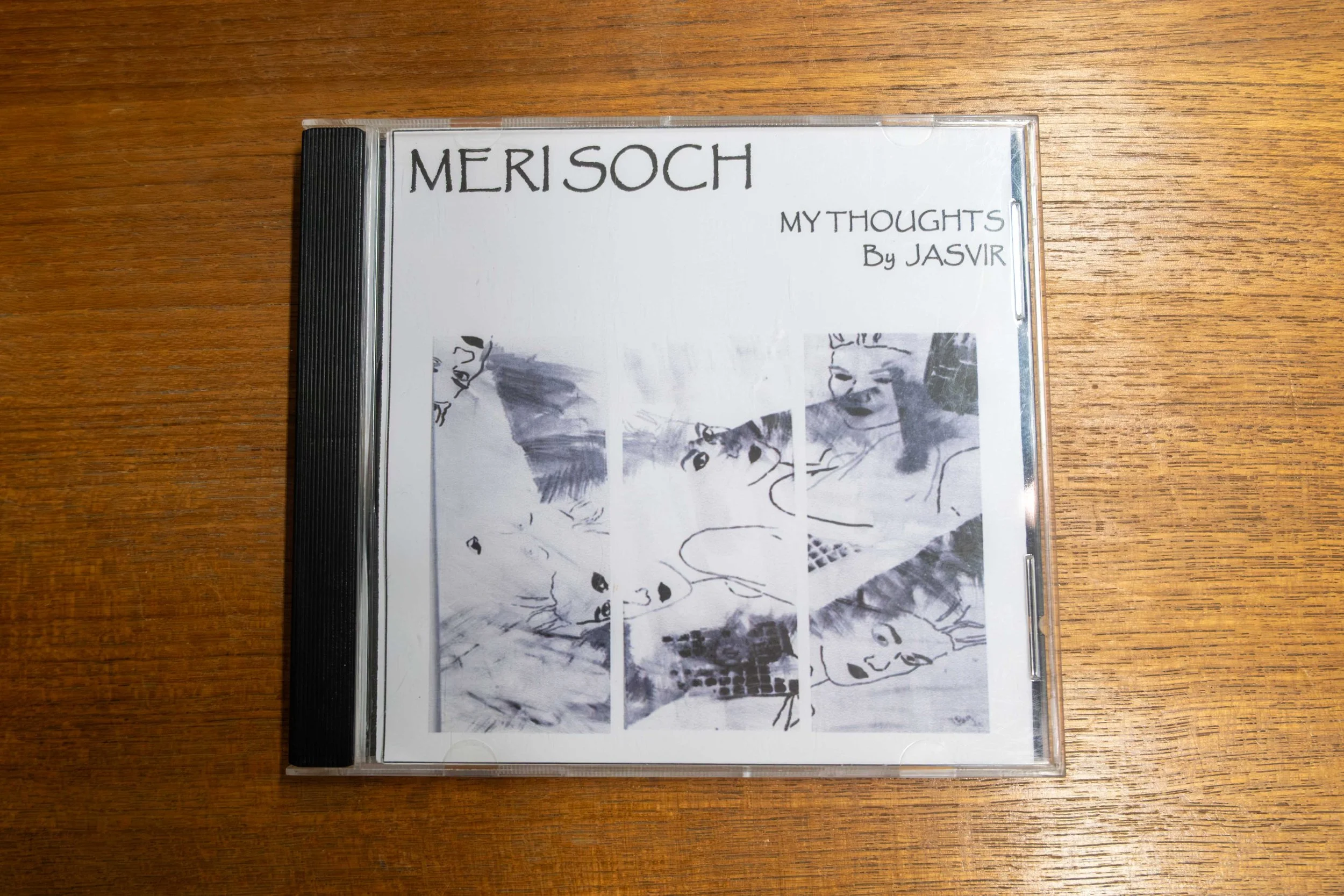
Meri Soch (My Thoughts)
2005
Meri Soch (My Thoughts) CD was produced in 2005 and features our mother’s thoughts on social and health matters. The CD cover artwork was by Dilwara Begum. This is the Hindi version.