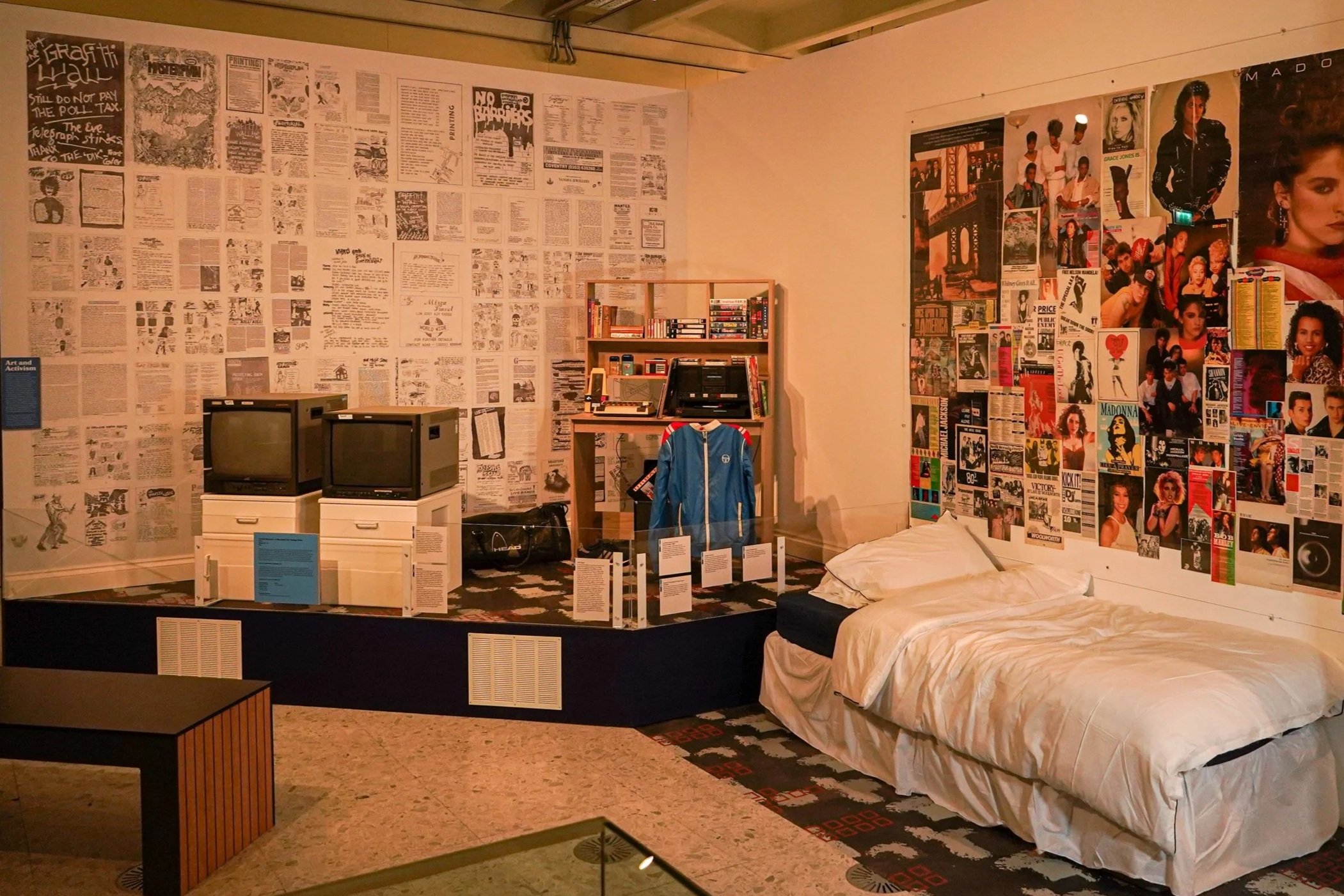

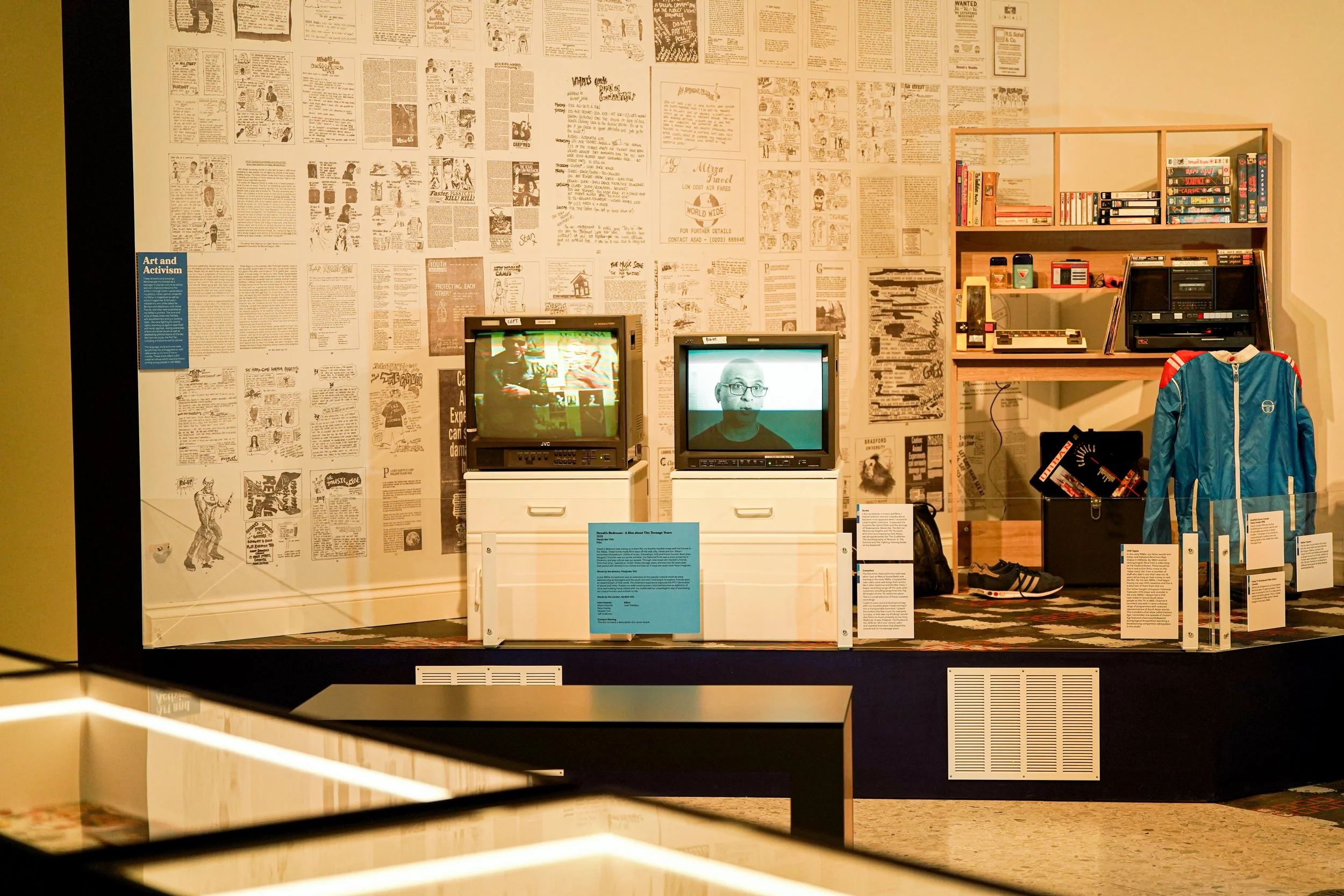
The Bedroom setting tells the story of their eldest child, Hardish Virk, a teenager in Thatcher's Britain during the 1980s.
This is a story of friendship, activism and creativity told through the design of the space, posters on the wall, cassettes, VHS, school books, comics and magazines, badges and zines.
The short film, 'Deesh's Bedroom' captures the power of friendship as well as the struggles against racism and violence with care and nostalgia.
This is the story of Representation.

Hardish Virk
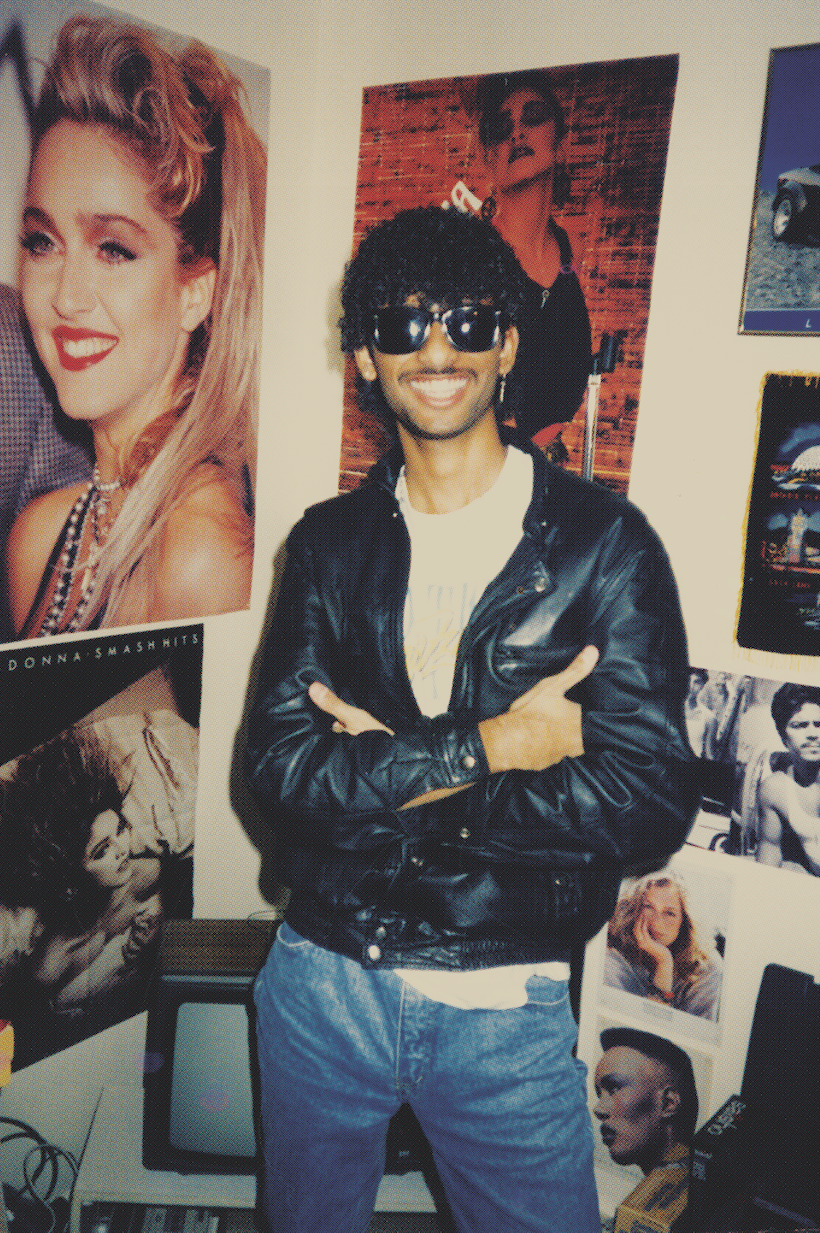
Born in 1971, the year A Clockwork Orange hit cinemas and T. Rex topped the charts, Hardish Virk grew up in 1970s Britain surrounded by creativity and activism. With artist-activist parents, his early life was steeped in culture and community. By the 1980s, Hardish was acting in school plays and at the Belgrade Youth Theatre, landing a role in The Good Person of Szechwan in 1986 and appearing as a background actor in films like The Dream Team with Michael Keaton.
Theatre gave way to music. By 1990, he was producing tracks in his garage studio and DJing at clubs, raves and house parties. Throughout the 1990s, Hardish expanded into producing and directing dance, theatre, fashion shows, festivals and film, while also working in health, education and the voluntary sector, developing deep roots in community engagement.
Over the last 30 years, Hardish has led strategic arts projects focused on audience development, race equality, staff training and inclusive programming. His work as an artist and activist is grounded in community, a theme central to Stories That Made Us – Roots, Resilience, Representation.
In the past decade, Hardish has developed his practice as an archivist and curator, preserving and sharing stories that matter. He is also the author of Spirits Message, a book that reflects on memories and trauma told through the lens of a supernatural thriller.
Our mother came home one day in the late 1980s with a tattoo around her ankle. It was incomplete but you can see that it was a snake. She hadn’t realised the pain that comes with getting a tattoo, so she had walked out before the tattooist was able to finish it. This is at a time when tattoos were often seen on bikers, punks and skinheads.
My mother was the same person who dragged me into Owen Owens to get my ears pierced a few years earlier. She didn’t care about what the ‘community’ would say. This spirit would continue to flourish in her children. I now have 13 tattoos and many piercings.
Hardish Virk - Memories
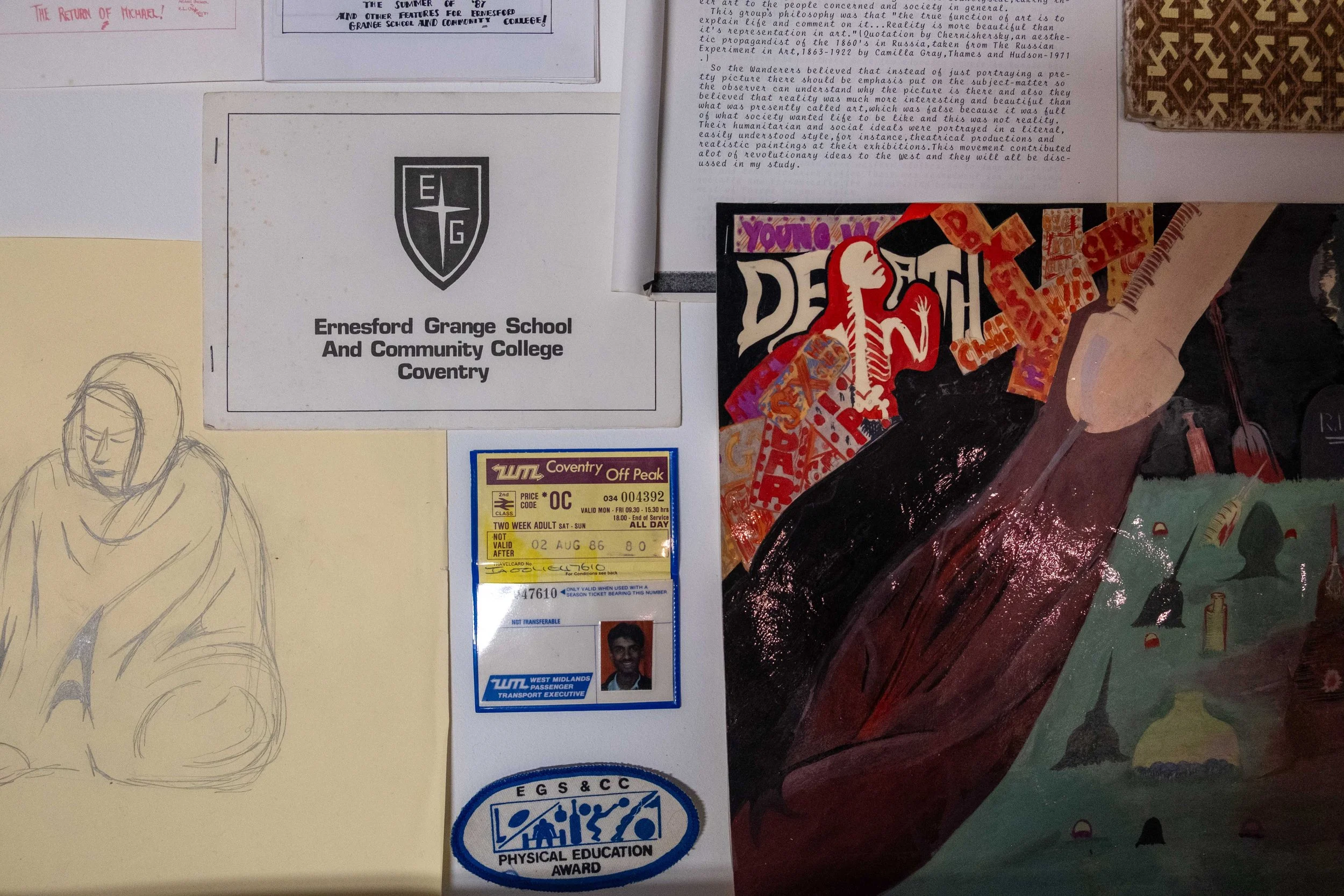
In 1984, our family left the vibrant, multicultural streets of St George’s Road for the quieter, suburban neighbourhood of Ernesford Grange, a predominantly white community. My parents chose Ernesford Grange Secondary School and Community College, hoping for better educational opportunities, but the reality was more complex.
At school, racism was often ignored by teachers and embedded in everyday interactions like in songs such as ‘I like driving on my bus, bud, bud, ding, ding, bud, bud, ding, ding’ with racist impersonations of South Asian bus drivers. The lack of support and trust in institutions like the police left young South Asians like me to find their own ways of coping and resisting. It wasn’t always possible to challenge everything. Sometimes, the prejudice just became background noise.
This was playing out against the backdrop of racism on the streets and institutional racism in the workplace. Young people like me would find different ways of challenging racism as well as protecting ourselves.
One moment still stands out, I remember a White school friend invited me to his house after school. We were hanging out when suddenly his parents pulled up in the driveway, and he panicked. He ushered me out into the back garden and told me to leave. I had to climb over several fences to get back onto the street. He was scared or ashamed to have an Indian friend.
Growing up on St George’s Road in Coventry, I had a gang of friends who turned alleyways and parks into playgrounds. Breakdancing, cycling and football filled the streets with energy and friendship. But when the family moved to Ernesford Grange, the pace changed. Quieter streets and fewer kids meant more time indoors. My bedroom became a creative hub, a space for music, films, comics and drawing. It was here that I began making home movies.
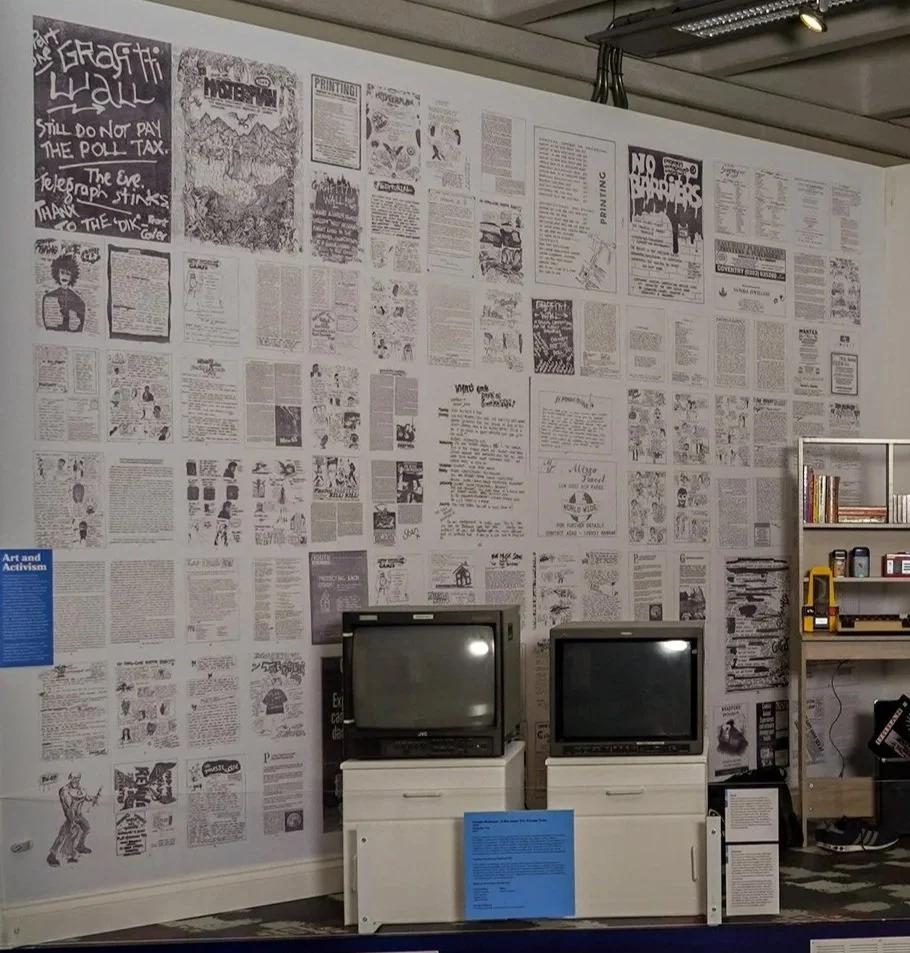
Art and Activism
These artworks and drawings demonstrate my interest as a teenager in popular culture as well as activism. Cartoons became the artform through which I spoke about my politics. I drew cartoon strips for my father’s magazines as well as school magazines. Eventually I created my own zines called No Barriers and Masterplan with some friends, and they were published at my father’s printers. The tone and style of these zines was fearless, anti-establishment and pro-working class. We were fighting for animal rights, standing up against apartheid and racist regimes, raising awareness of environmental issues as well as addressing political topics of the day like how not to pay the Poll Tax, including a hotline to call for advice!
The language, style and tone were sometimes raw and aggressive, with references to my love of horror movies. These zines reflect a DIY creative culture which was prominent among young people in the 1980s.
There is also a Coventry Evening Telegraph article covering a story about a comic strip I drew, depicting a police officer planting drugs at a rave party after beating up some of the ravers. The following day a local newspaper blamed the ravers for injuring the same police officer. The backlash from local politicians and the police led to the loss of council funding for the Small Guide, the magazine that had printed my comic strip. This and many other comic strips were based on our experiences of being young in ‘Thatcher’s Britain’.
Below are images and text related to the objects exhibited in the Bedroom setting. These objects can be found in the 'Stories That Made Us' collection
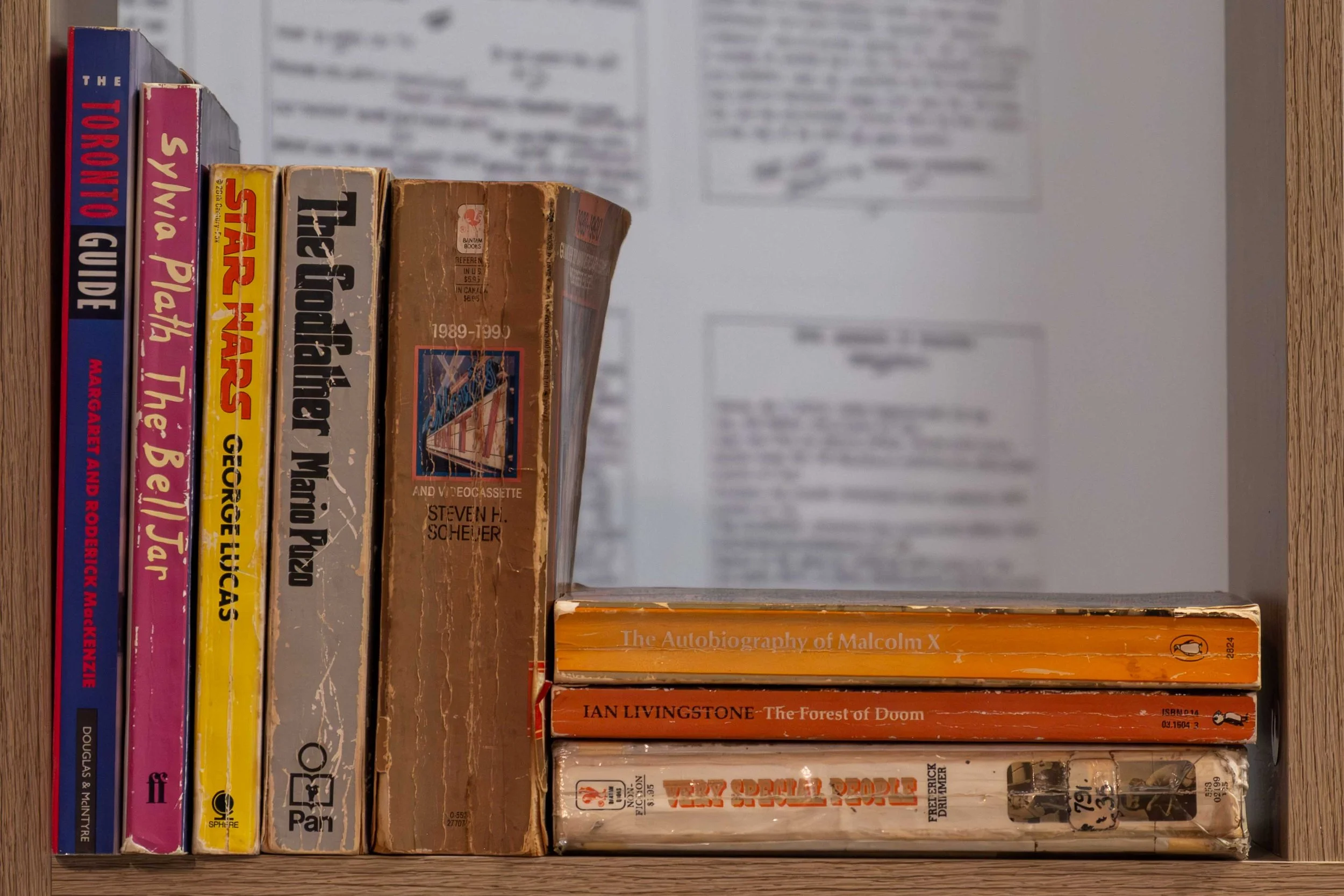
Books
Like my interest in music and films, I had an eclectic interest in books which became more apparent when I studied A Level English Literature. It exposed me to poets like Sylvia Plath and the writings of Shakespeare. Books like The Bell Jar, Wuthering Heights and The Tempest, with their accompanying York Notes, sat alongside books like The Godfather, The Autobiography of Malcolm X, The Exorcist and the Fighting Fantasy books on my bookshelf.
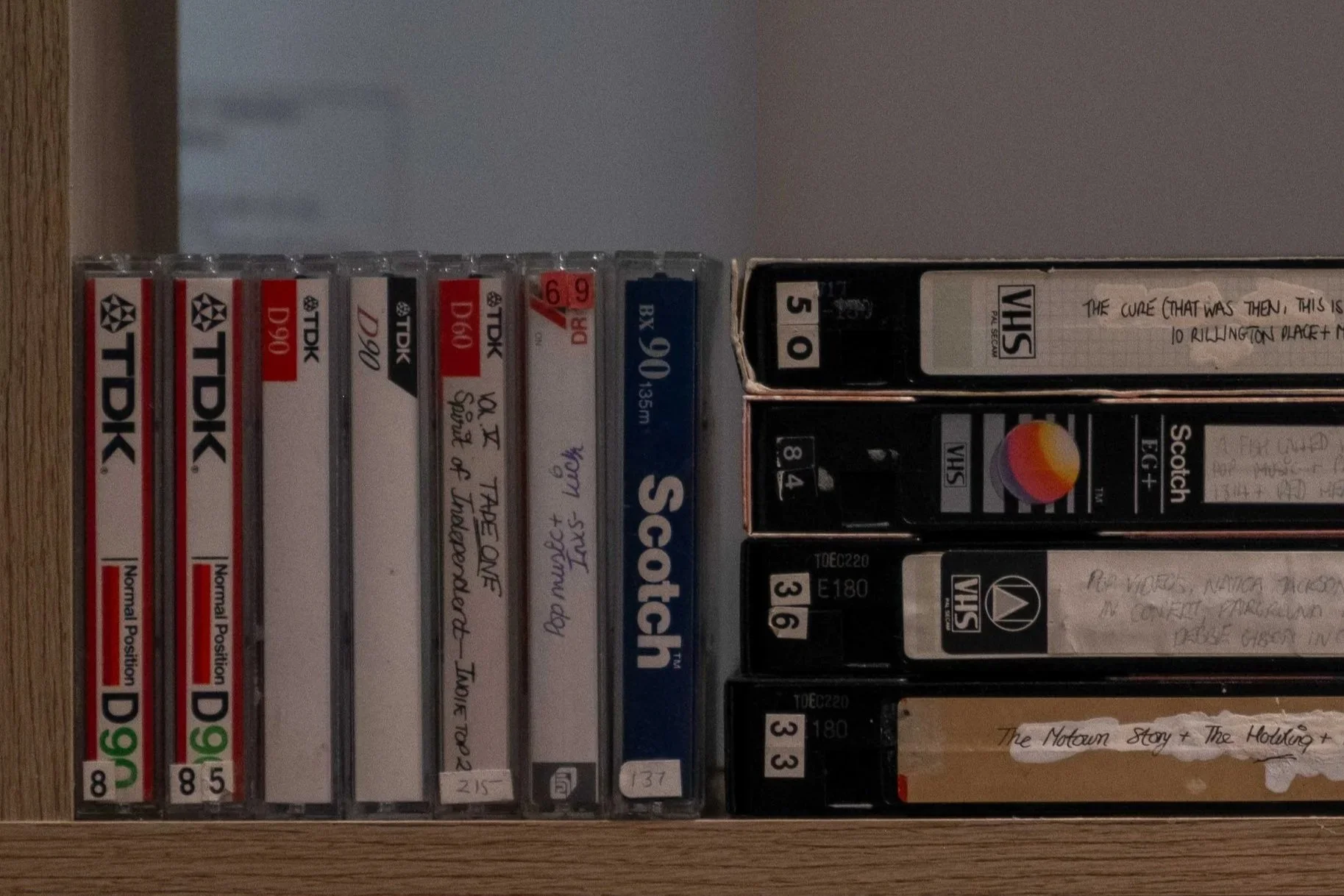
Cassettes
The first time I listened to the radio was when I put on Mercia Sound Radio one evening in the early 1980s. I enjoyed the calm radio voice and songs from artists like Luther Vandross and the Bee Gees. I began recording songs off the radio onto cassettes, including songs from the Top 40 singles charts, for nearly ten years.
This is a small selection of those cassette recordings.
I used to carry round a Head sports bag with my cassette player inside turning it into a transportable boombox. I played the loudest Hip Hop music for everyone to enjoy, or that was my thinking! I would also listen to music privately on my Sony Walkman. It was, however, the Panasonic SG-J500 an ‘all in one’ record, radio and cassette boombox that played the soundtrack to my teenage years.
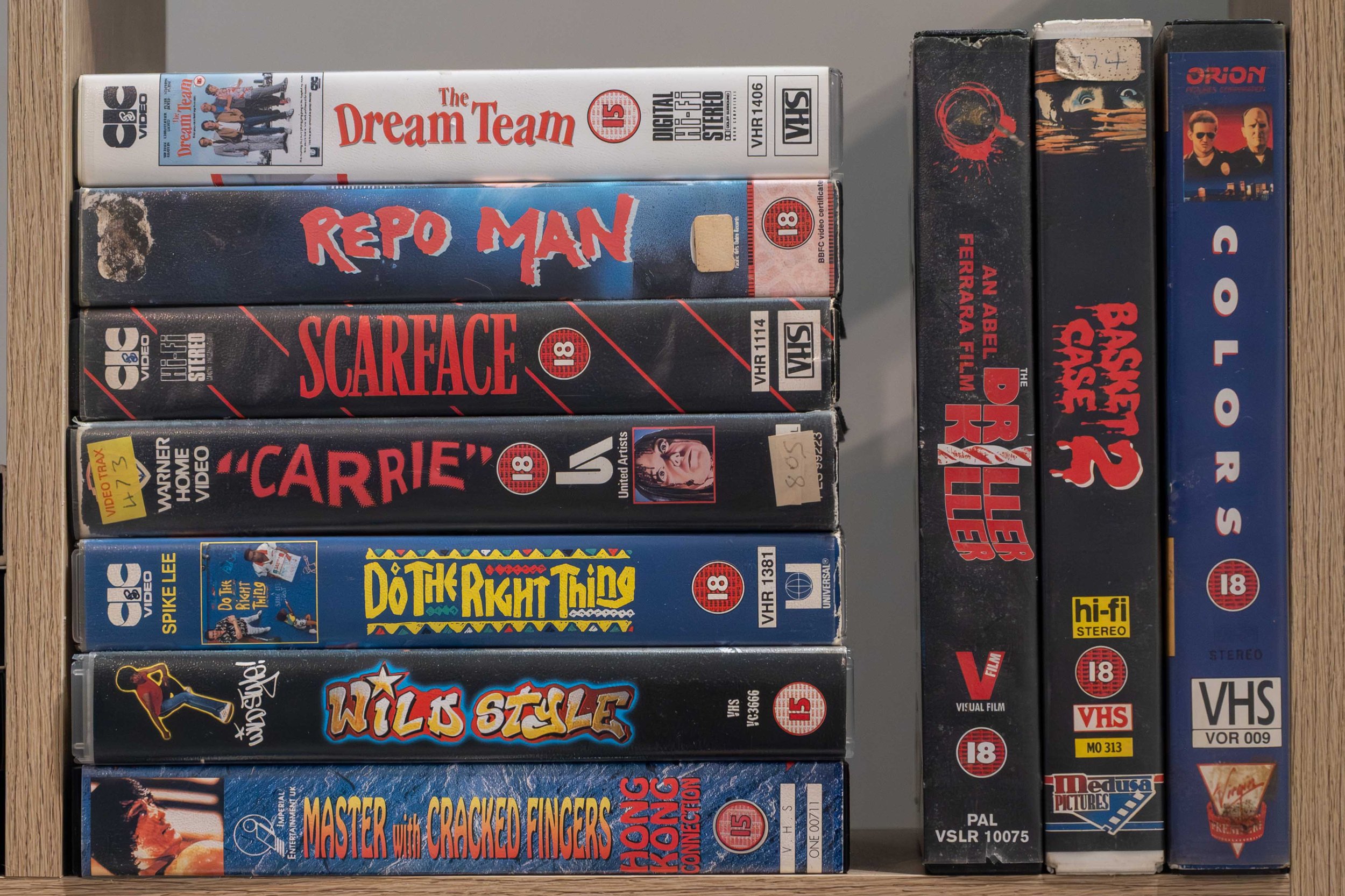
VHS Tapes
In the early 1980s, our father would rent Indian and Pakistani films from Raja Videos in Hillfields. By 1984 I started renting English films from a video shop on Far Gosford Street. These would be horror and action films, many on the ‘video nasty’ list, from a member of staff who didn’t care that I was not 18 years old as long as I had money to rent the film. By the late 1980s, I had begun buying my own VHS cassettes and this is a selection of them from that era. Our father bought a Ferguson Videostar Toploader VHS player and recorder in the early 1980s. I always had a VHS tape ready to record South Asian people on the TV. In 1982, Channel 4 launched, and with it came a diverse range of programmes with nuanced representations of South Asian stories. This included a chat show called Eastern Eye. I remember one episode of Eastern Eye featured a bemused Bollywood acting legend Amjad Khan watching a breakdancing competition taking place in the studio.
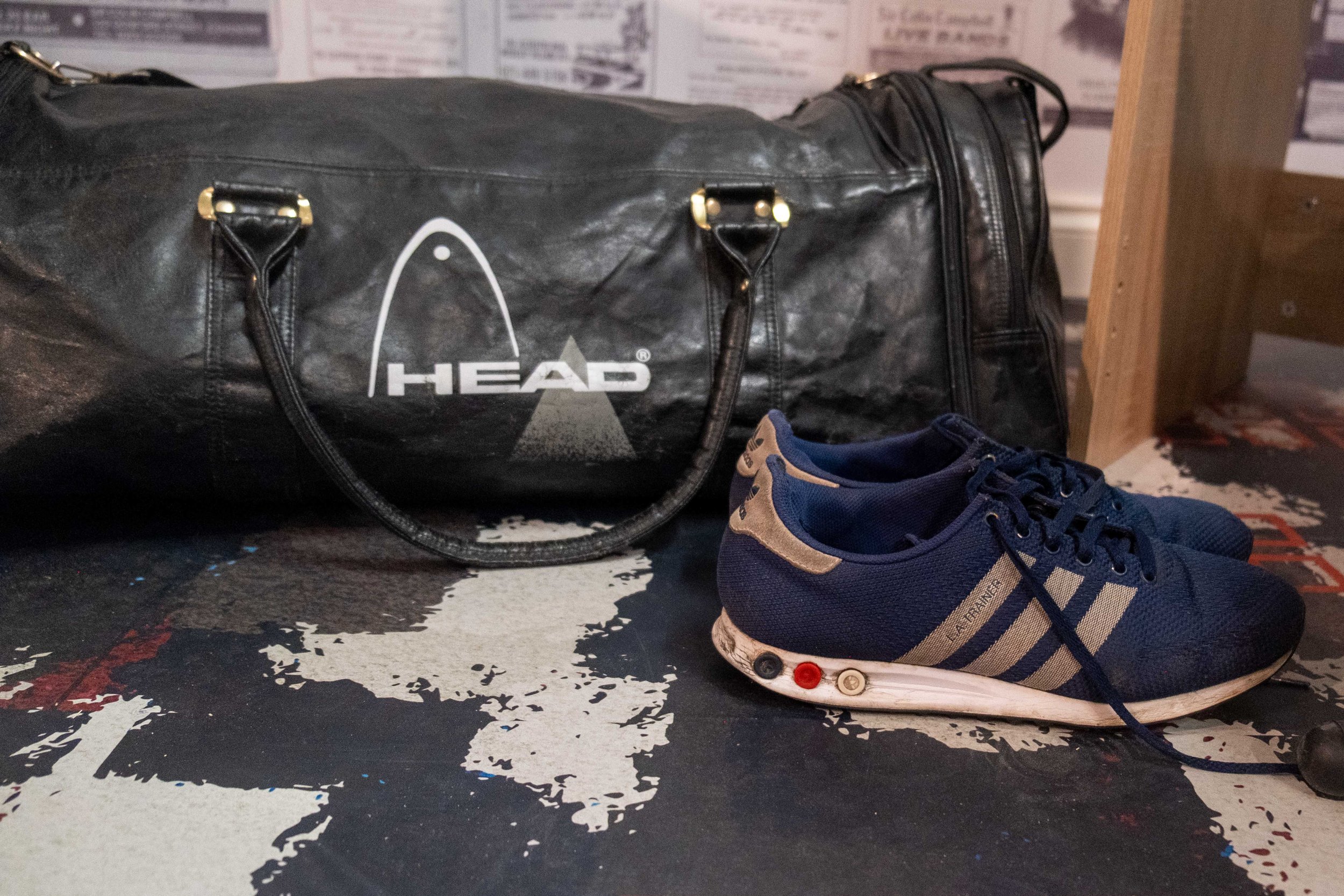
Adidas Trainers
Hip Hop was not just about the music but also about what you wore. Brands like Kappa, Diadora, Lacoste, Fila, Sergio Tacchini and Adidas were popular amongst me and my friends. Adidas LA Trainers were released in celebration of the Olympic Games in Los Angeles in 1984 and were great for body popping and breakdancing.
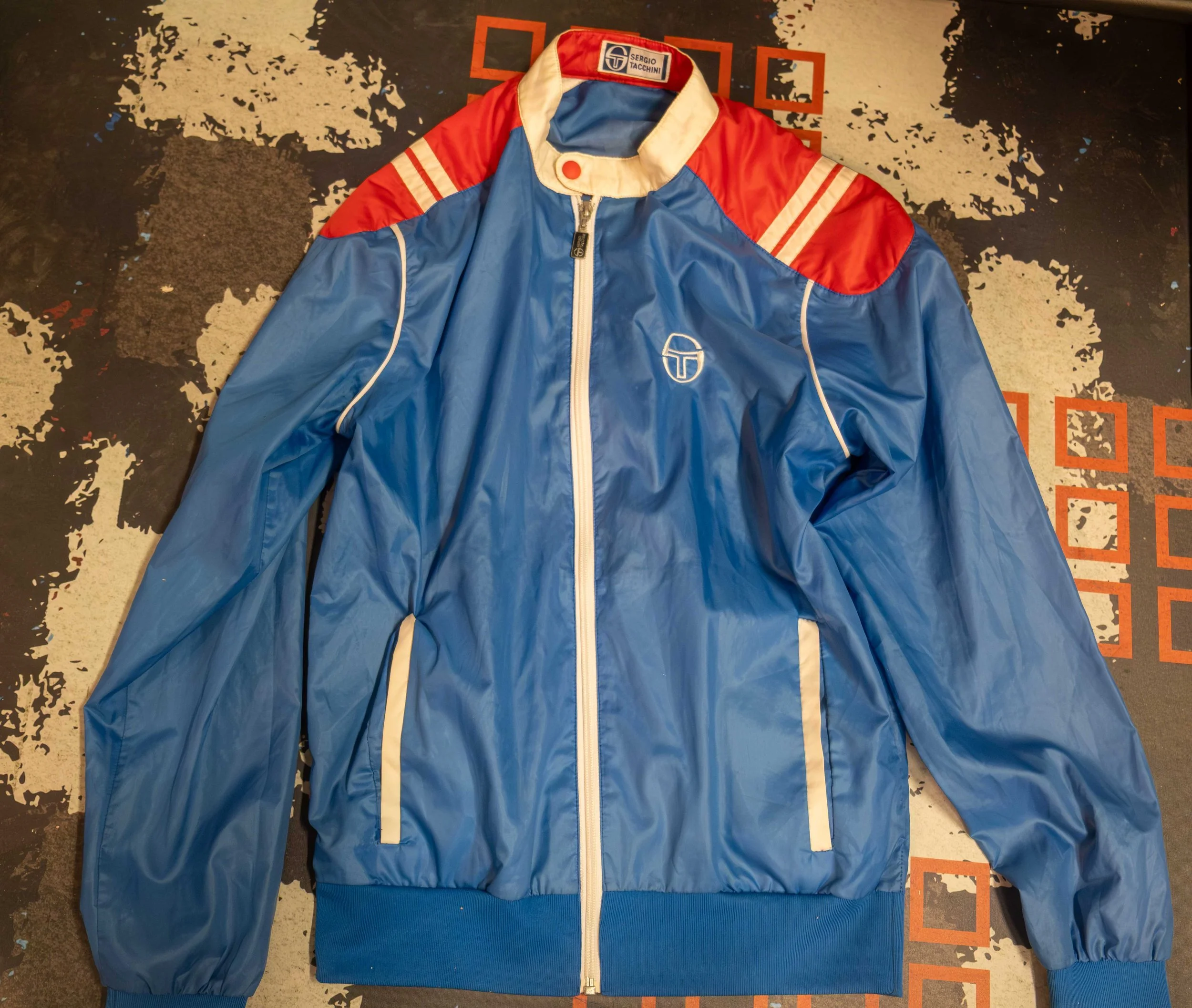
Sergio Tacchini Top
Sergio Tacchini was a must-have brand, and this top was perfect for breakdancers who needed the right material for back-spins.
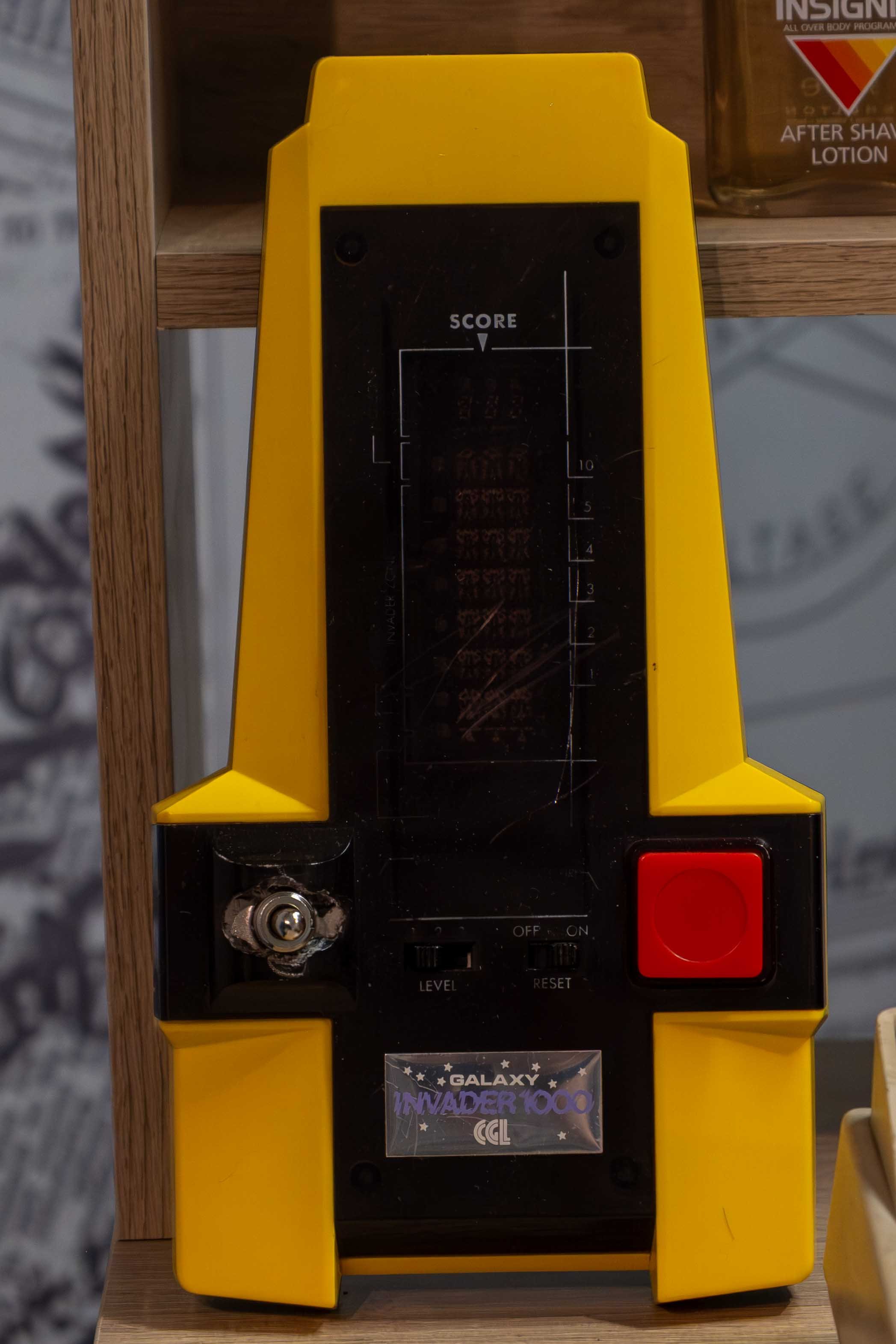
Handheld Games Console
Galaxy Invader 1000 Galaxy Invader 1000 was the first handheld games console I owned, and the gameplay was similar to Space Invaders. The design of the console as a spaceship with a yellow cover and flashing lights in the middle also made this super cool.
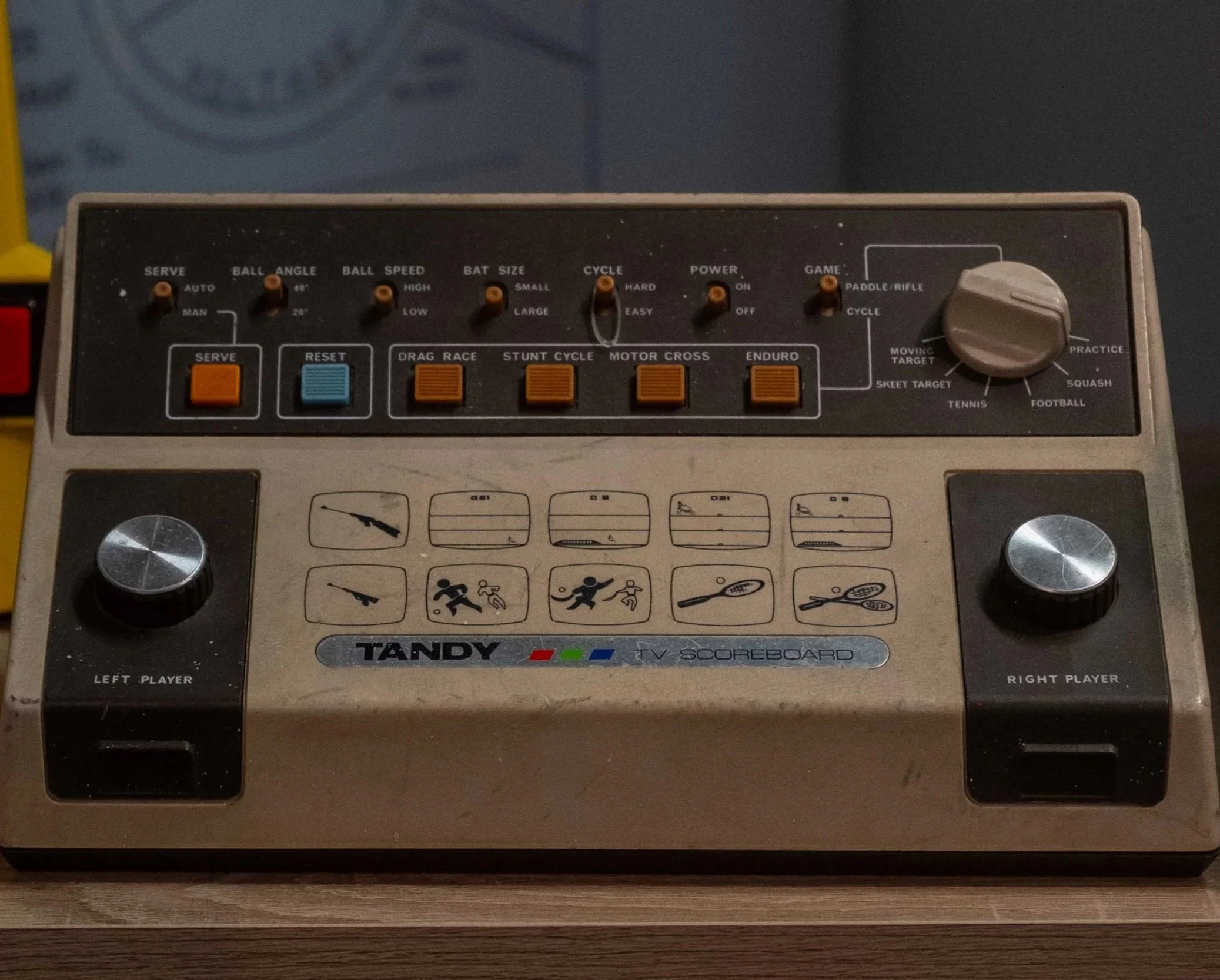
Tandy TV Scoreboard Video Game Console
Before the ZX Spectrum or Commodore 64 there were TV game consoles. These were connected to the TV to play sports, space and action games. This is a Tandy TV Scoreboard Video Game Console bought in the early 1980s.
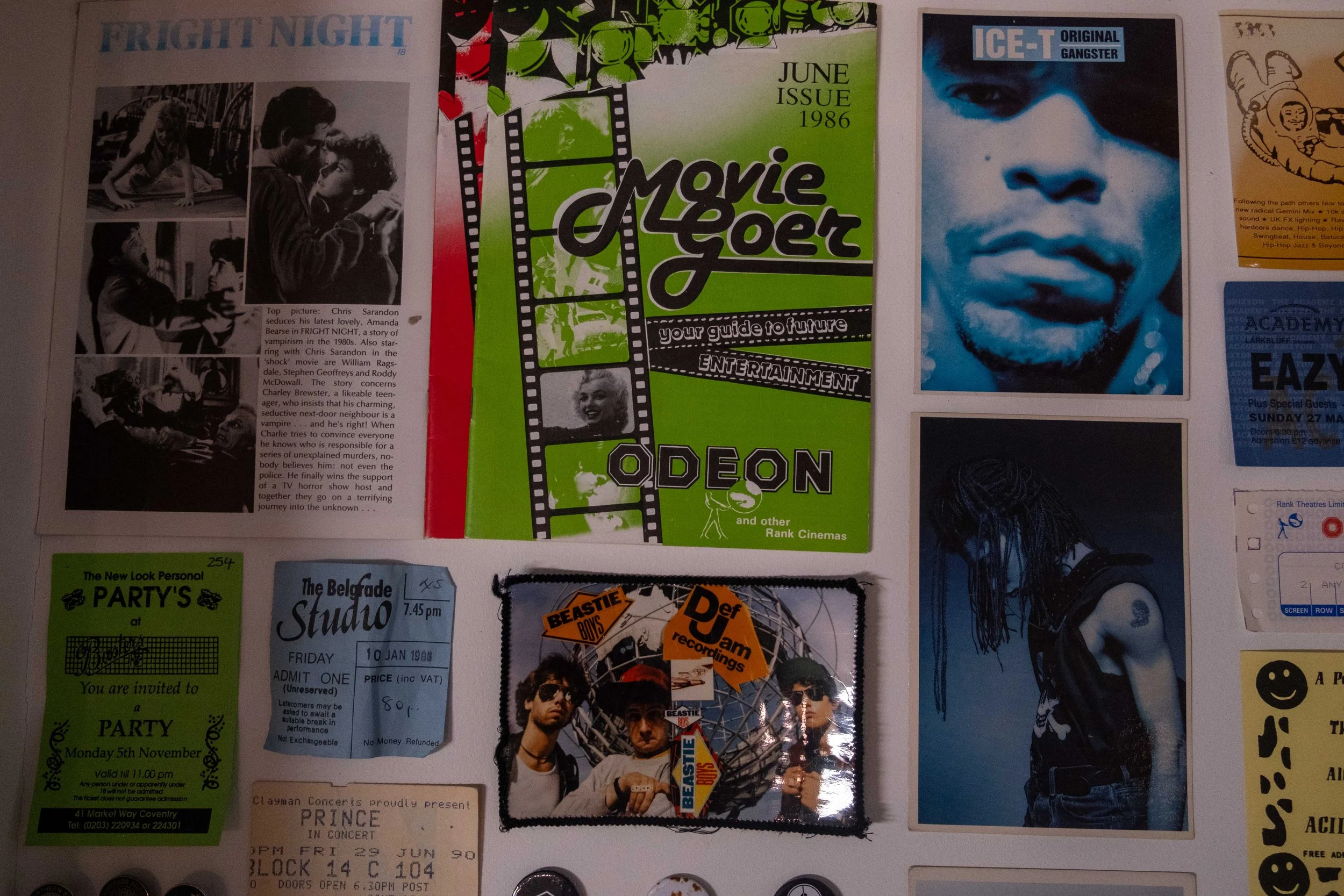
Movies and Music
This is a selection of badges, magazines, leaflets, postcards and tickets reflecting my interest in popular culture. Concerts included Michael Jackson, Prince, Madonna, NWA/Eazy-E, Run-DMC, Beastie Boys and De La Soul.
There is also a leaflet of my first major DJ gig at the Moseley Dance Centre in Birmingham in the late 1980s.
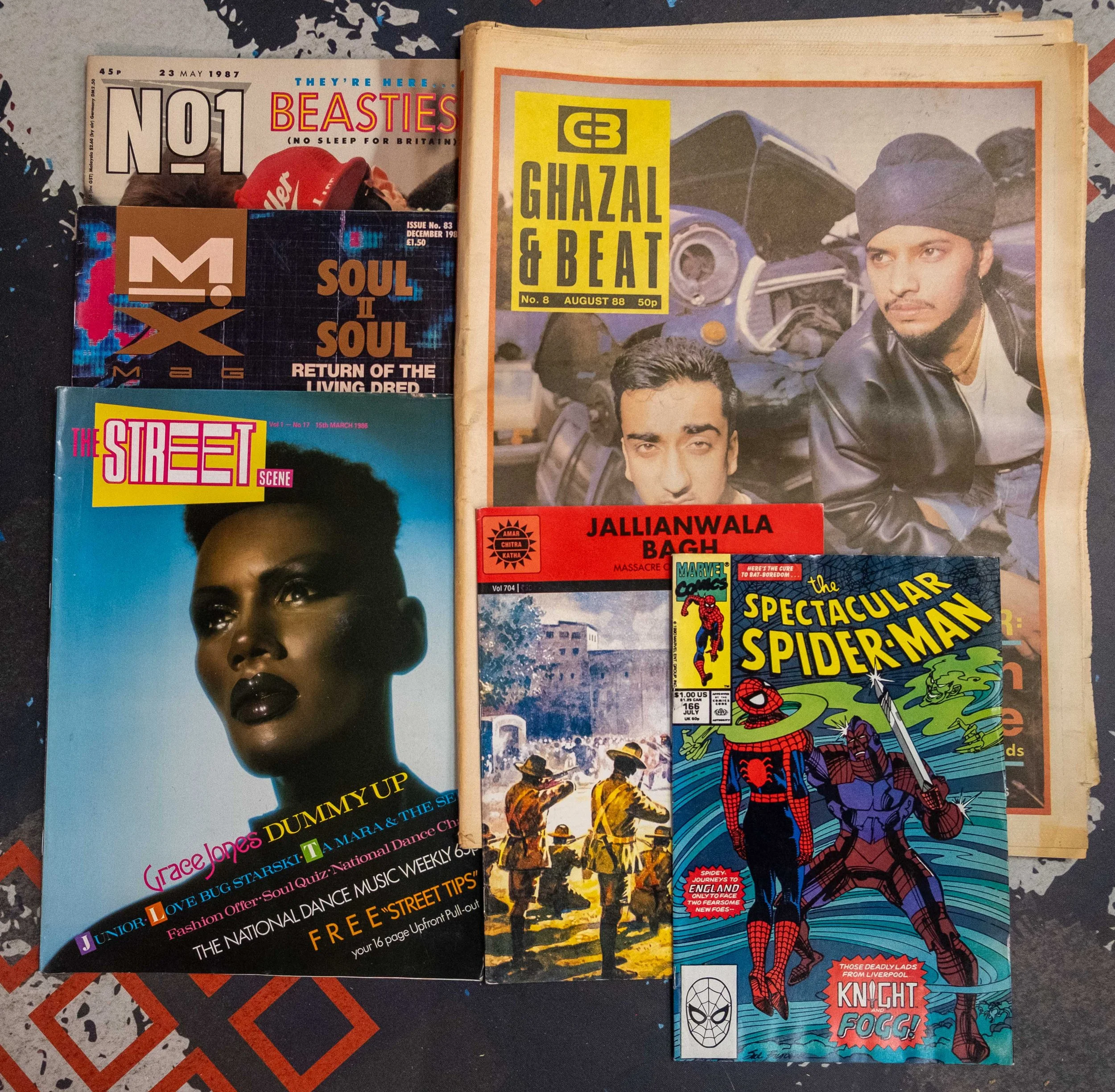
Magazines and Comics
I began buying DC and Marvel comics in the late 1970s from a local newsagent on the way to Gosford Park Primary School.
By the 1980s, I started collecting British comics like Scream! and 2000 AD. I also read my sisters’ Look-in, Smash Hits and No.1 magazines.
By the late 1980s I was collecting Sky Magazine, Film Review, Record Mirror, Mixmag, Fangoria as well as Hip Hop Connection, NME and Melody Maker.
Due to my love of theatre acting, I was a member of the Belgrade Youth Theatre and I was collecting The Stage and Television Today newspaper. These and a rare copy of the UK Bhangra newspaper Ghazal & Beat are displayed in this case.