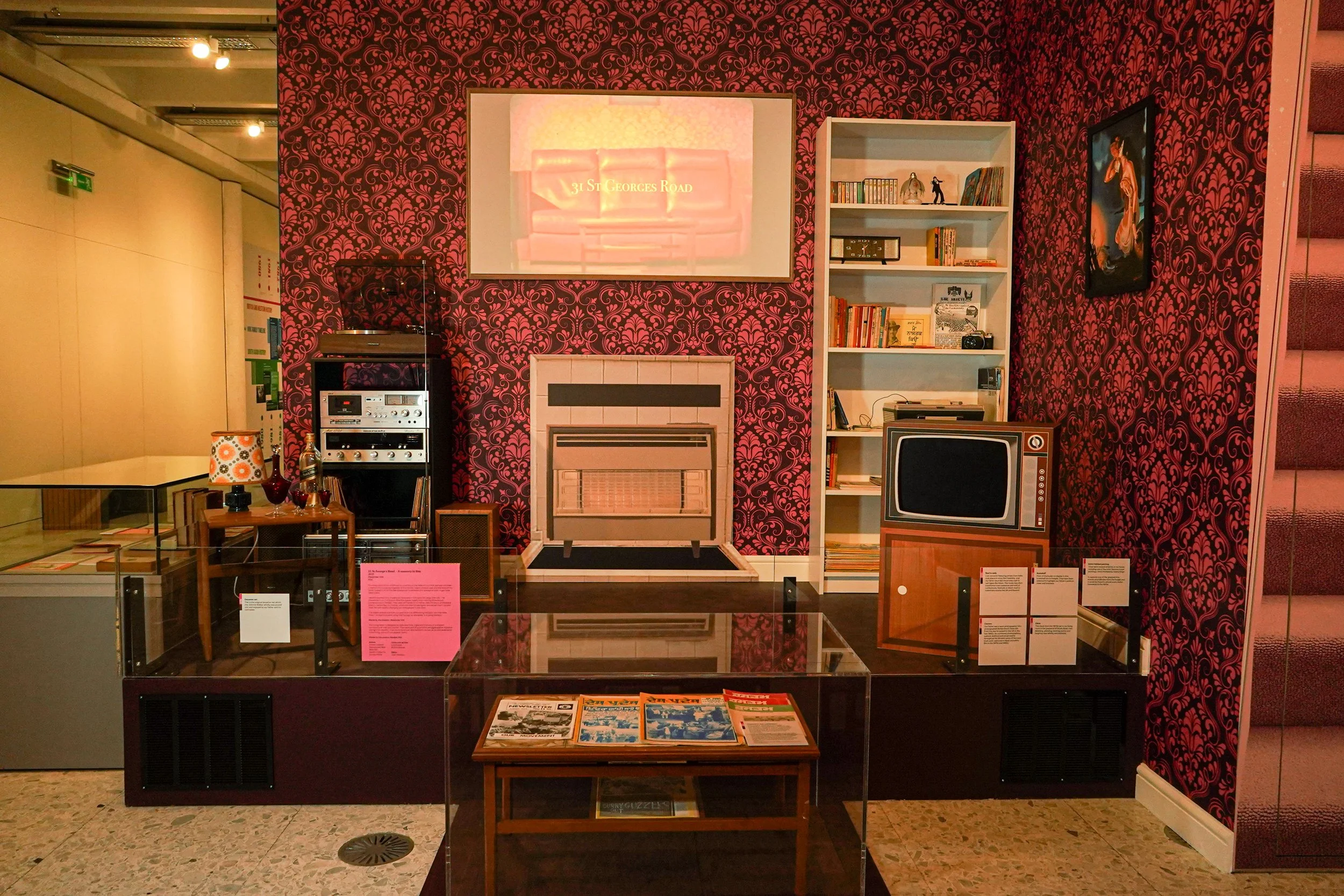

The Living Room setting tells the story of writer and activist Harbhajan Singh Virk by recreating the Virk family living room from the 1970s.
It is in this living room, he would invite his comrades to plan the next anti-racism march, recite poetry, drink whiskey and listen to music.
This is the story of Representation.

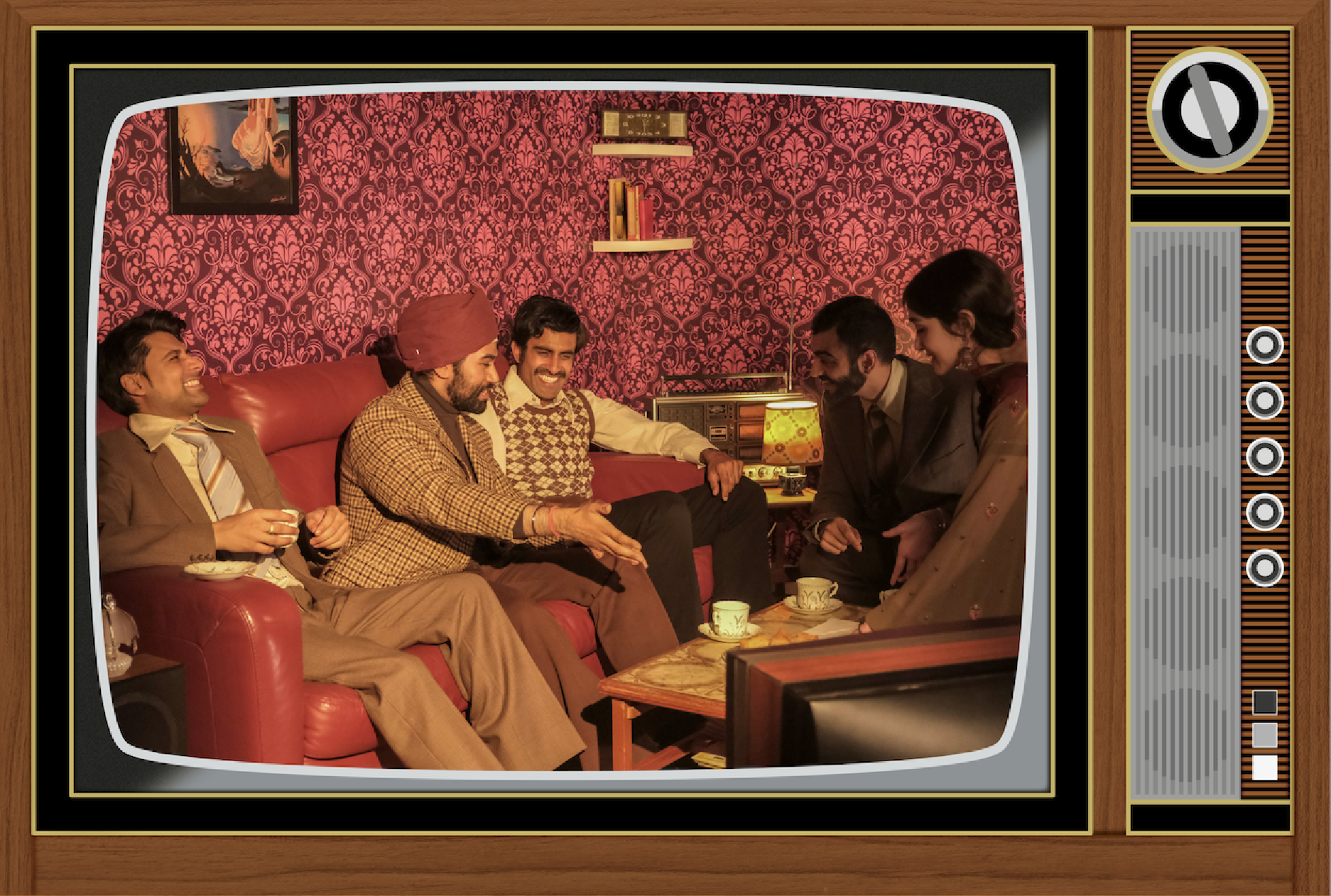
A short film ‘31 St George’s Road - A Memory in Film‘ was commissioned for the exhibition.
This was directed by Manjinder Virk and was played within the Living Room setting.
If you would like to view the film, it can be accessed in the Coventry Archives:
The text below refers to this film:
‘The living room of our childhood is a memory in the back of my mind, perhaps not even a memory but a piecing together of the stories I heard, photos I saw and the voice of my father’s poetry. All of this has allowed me to recreate and reimagine what might have taken place.
I would have been 5 or 6 years old. Everyone in the room felt larger than life. The characters in our living room filled the space, mostly men reciting Ghazals and conversations in Punjabi. They were all friends of my father, like-minded in politics and poetry. I remember my mother, often the lone female figure who served them tea and food. Her soft quality changing the atmosphere in the room.
The videos and photos from our archive in the 1970s bring me back into that time. What I’ve tried to create, using this footage as reference, is a Living Memory.’
Words by the director, Manjinder Virk
Inset TV Image: Alex Frost
Harbhajan Singh Virk
A Life of Labour, Art and Activism
Harbhajan Singh Virk’s journey from rural Punjab to industrial Coventry reflects the complex experience of South Asian migrants in post-war Britain. Harbhajan was a university graduate from a family of farmers and landowners, and arrived in the UK in the late 1960s. Like many migrants, his first job was manual labour, working at the Ford Foundry in Leamington Spa.
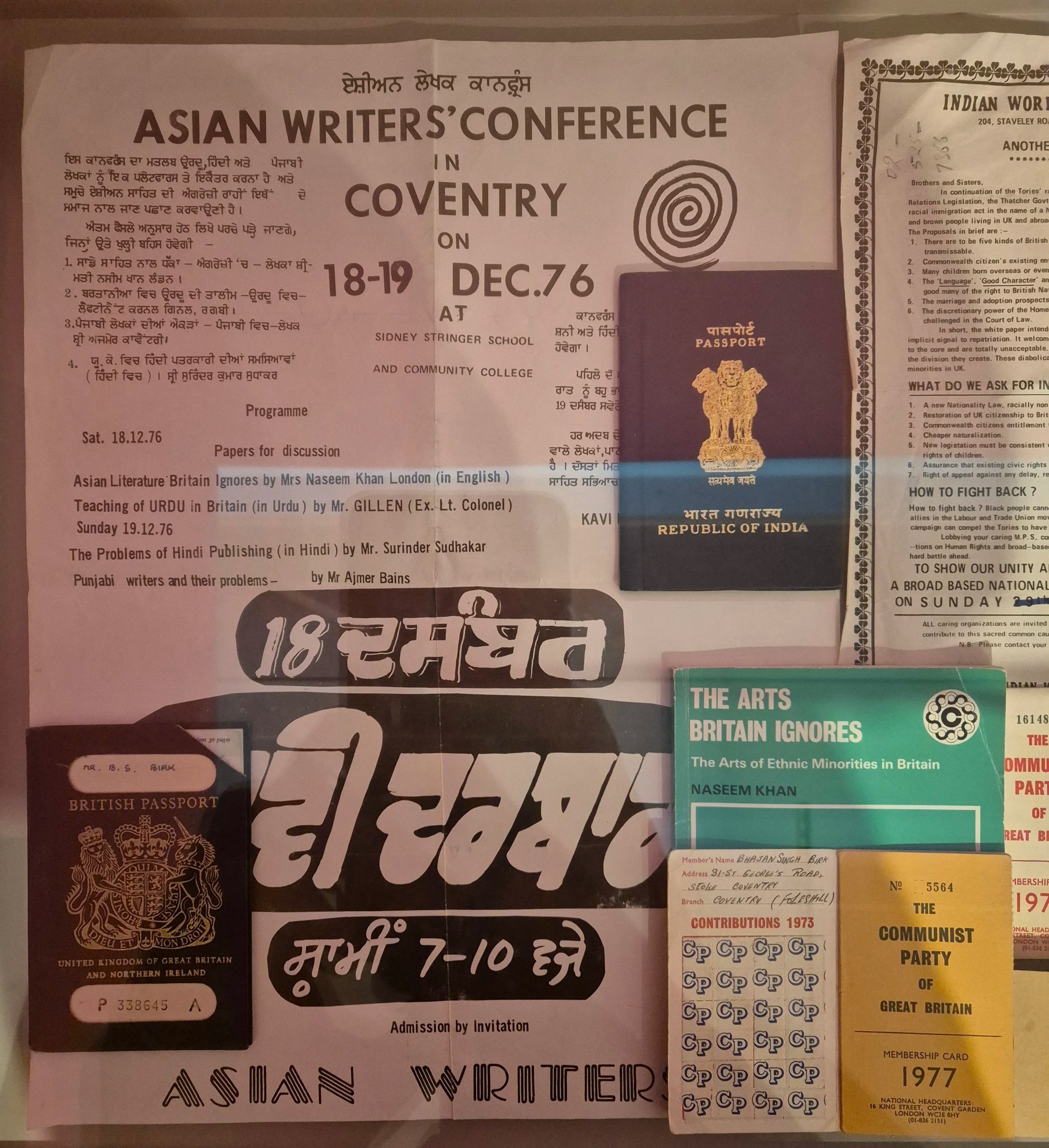
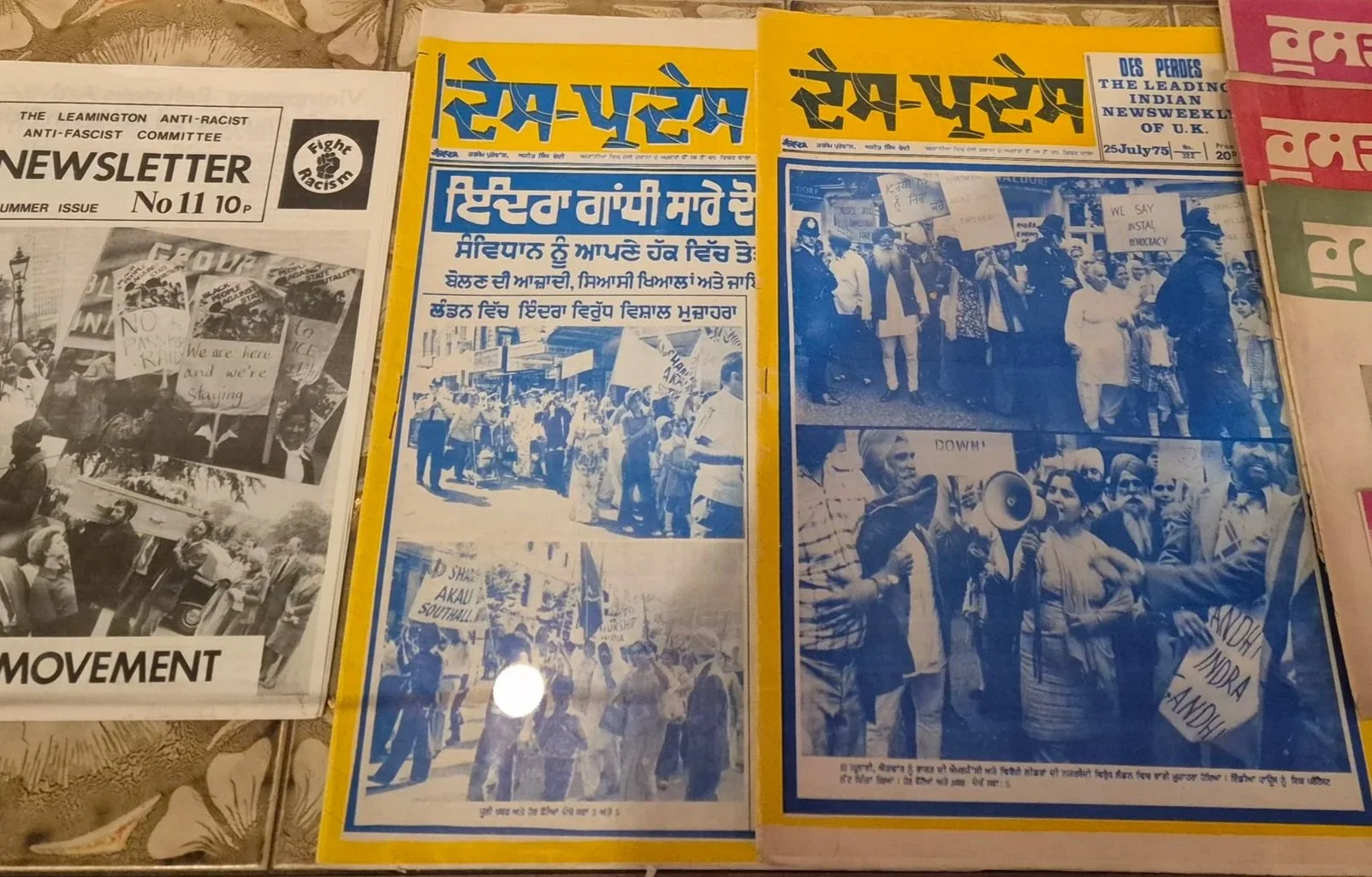
Harbhajan was a passionate student of Communism and Marxism and he drew inspiration from Indian freedom fighters like Shaheed Bhagat Singh and Udham Singh, whose portraits hung in his home as symbols of resistance. His political beliefs found expression through active membership in the Indian Workers Association, the Communist Party of Great Britain, and the Indian Youth Association.
Harbhajan was also a poet, writer and musician who played the violin and harmonium. Today, he would be called an ‘artivist’ or ‘cultural activist’, as he was someone who blended his art and activism to challenge injustice and celebrate identity. His creative work gave voice to the South Asian experience in Britain, capturing both struggle and resilience.
As a keen photographer, Harbhajan documented everyday life in the South Asian community, preserving moments of migration and settlement. His images, now part of the Virk Collection in Coventry Archives, offer a view into the lives of Britain’s South Asian diaspora.
‘The Living Room is designed to capture a time, place and memory of a migrant community of men and women. They were part of a common struggle against injustice and fight for equality. They found sanctuary and solidarity as well as joy and celebration in the living rooms of our parents’ homes.’
- Words by the curator, Hardish Virk
Hardish
Virk
In the 1970s, we lived on St George’s Road in Coventry, a vibrant, culturally diverse neighbourhood. Migrant families from India, Pakistan and Jamaica lived alongside white working-class communities. The street was quiet, with few cars. I remember our father’s white Ford Escort being one of the few cars parked there.
Terraced houses lined the road, with alleyways every ten houses or so. These led us kids to the backs of the homes and a disused railway track. These spaces became the playgrounds of local children, who climbed fences, shared food from each other’s kitchens, and played freely across gardens and streets. Friendship was rooted in fun, not ethnicity. Children formed bonds that crossed cultural lines.
As you walked through the front door of our house in St George’s Road, you were welcomed by a corridor leading to the front and living rooms on the left and a steep staircase in front of you. Standing at the bottom of the staircase looking up, the steps would disappear into darkness. I had a creative imagination and wondered what was lurking in the depths of the darkness upstairs.
The living room, often filled with the strong scent of Johnnie Walker whisky, hosted gatherings where men of my father’s generation would often discuss politics, drink, and perform poetry and tell stories. I can still smell the whisky to this day, as if it was yesterday. Our living room used to stink of it.
St George’s Road was more than a street, it was a stage for everyday life which was shaped by community, curiosity and resilience.
Pavenpreet
Kaur
As the youngest and shyest sister, I found myself observing the world around me, more than taking part. I never quite felt I fitted in. Growing up in a tough but strong city like Coventry forced me to push myself to be seen or get swallowed up by the concrete walls.
Feeling like an outsider helped me later in life with connecting to people from all backgrounds through my community work. I could always identify with new communities who arrive in the Midlands and wondered, what has this place got to offer me?
A city like Coventry gave me my identity, my family gave me my strong sense of roots, and my lifelong friendships taught me about loyalty. Though I wouldn’t have survived childhood without a very strong-willed mother who faced so many obstacles but remained optimistic about everything and everyone.
Manjinder
Virk
I was 4 or 5,
Hiding behind my mother,
Wearing a chiffon sari.
I sense my brother and sister were next to me too,
But it was the shield of my mother I recall,
Standing in the doorway of our terraced house on 31 St George’s Road.
Skinheads in front of the house,
Swearing ‘Paki’.
They wanted to harm us,
But no one was going to get to us because She was there,
To protect us,
Shouting at them,
‘Bastard, go away!’
In her thick Indian accent,
She had no fear.
She gave us that
Fight for your children.
Fight for justice.
It started on those streets in Cov where mum shouted back.
The tying of dad’s turban,
It was an event,
The smell of starch would linger in the house,
Mum had the task of helping him create the perfect turban,
My dad stood on one side of the living room and my mother on the other,
The long material would be weaved in and out until they got closer
and closer and created the shape of the turban,
Eventually placed on my father’s head
It would mould to his head shape
Then taken off to dry and harden.
Burgundy.
The colour I remember the most.
Shame was what I was made to feel
When my dad wore his sacred turban.
Pride is what I feel now,
It reminds me of home.
Our neighbours,
The Blackstocks,
One house apart,
We were always in each other’s houses,
Friendships that are still strong today.
Back then though,
Playing on the streets,
Shouting ‘Maggie, Maggie, Maggie, Out, Out, Out!’
A chant of the times we were living in,
Working class brown.
A white family moved into the middle house between us,
Two kids,
Friends we thought,
Until they threw stones at us,
One hit me on the head,
I was playing in our garden,
‘Paki’.
I remember dots of blood,
My mum taking me inside.
I wondered why they didn’t want to play with us.
I was 7, maybe 8.
Below are images and text related to the objects exhibited in the Living Room setting. These objects can be found in the 'Stories That Made Us' collection or the 'Virk Collection'
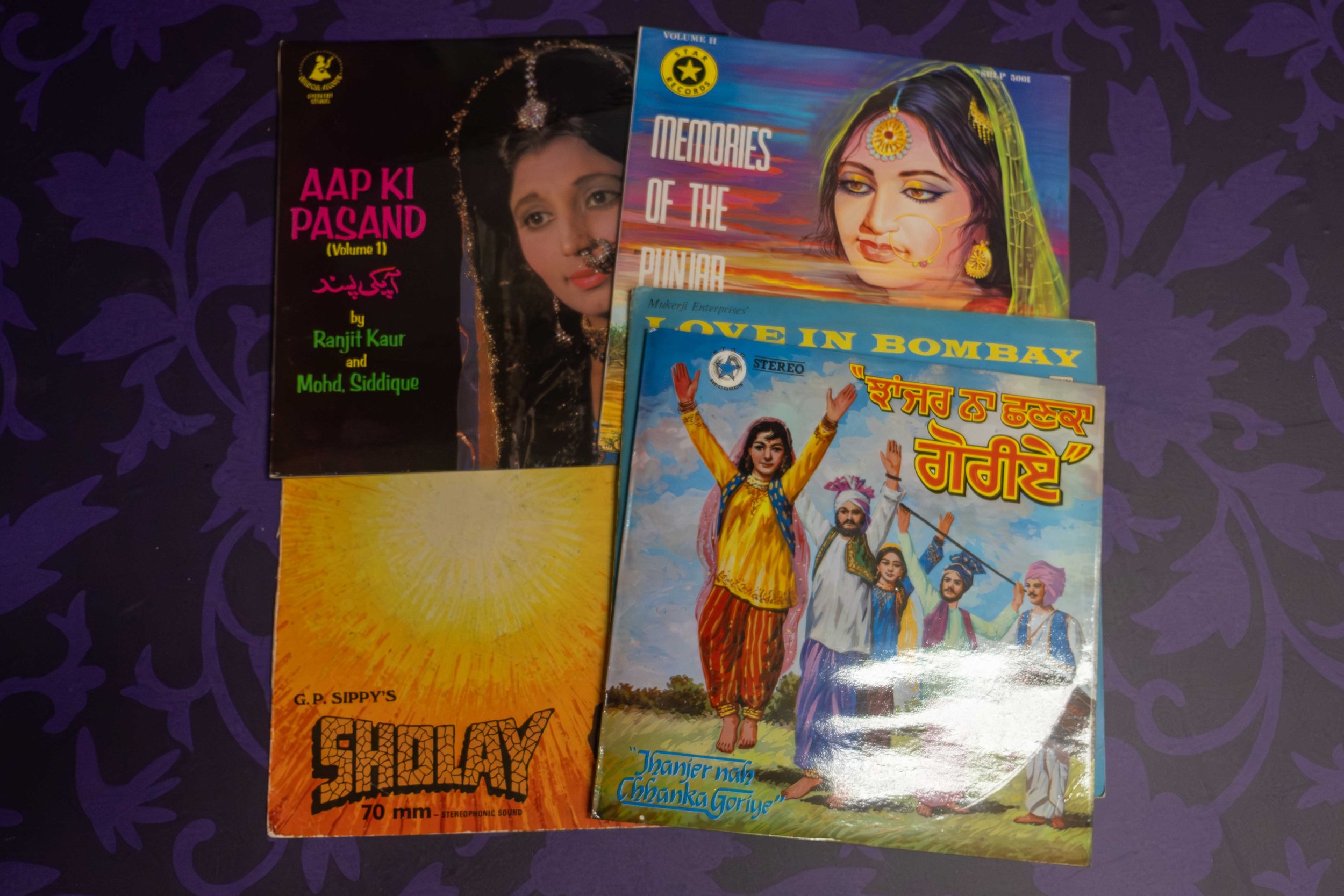
12-inch vinyl records
This is a selection of records imported from India and Pakistan and bought from local South Asian shops like Oriental Star Agencies Ltd in Birmingham and areas like Foleshill in Coventry.
Our father loved all kinds of music, from Punjabi folk and Hindi movie classics to the beautiful poetry of Qawwali. This is evident in his record and cassette collections. For many migrant communities, the music was a soundtrack to wedding celebrations as well as a way of remembering the country they left behind.
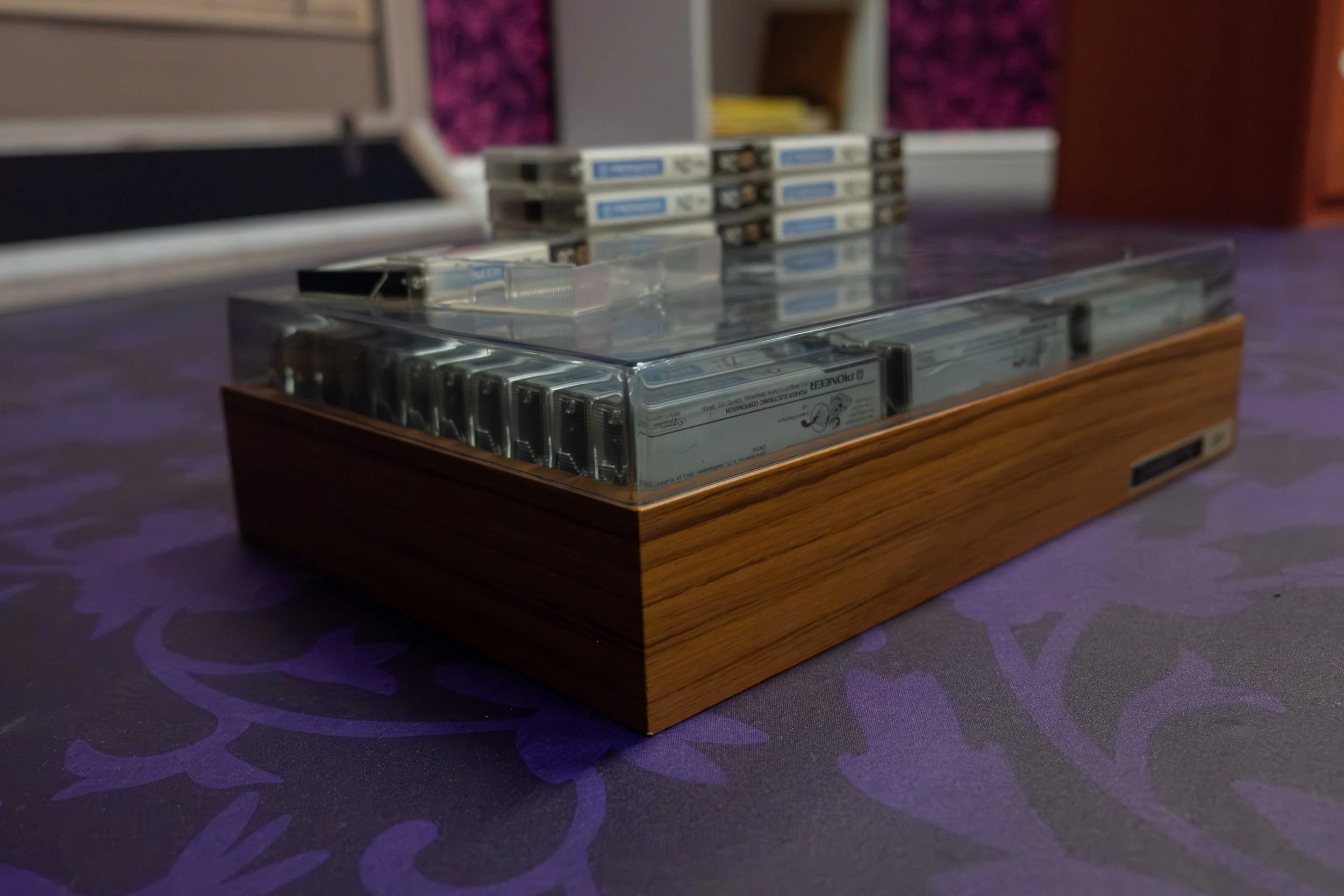
Cassettes
Our father had over a hundred Pioneer cassettes with recordings of music by artists including Lata Mangeshkar, Noor Jehan, Mohammed Rafi as well as Punjabi folk and Qawwali music. He probably recorded them from records loaned to him. There are now only 40 cassettes left from his collection, which are displayed here.
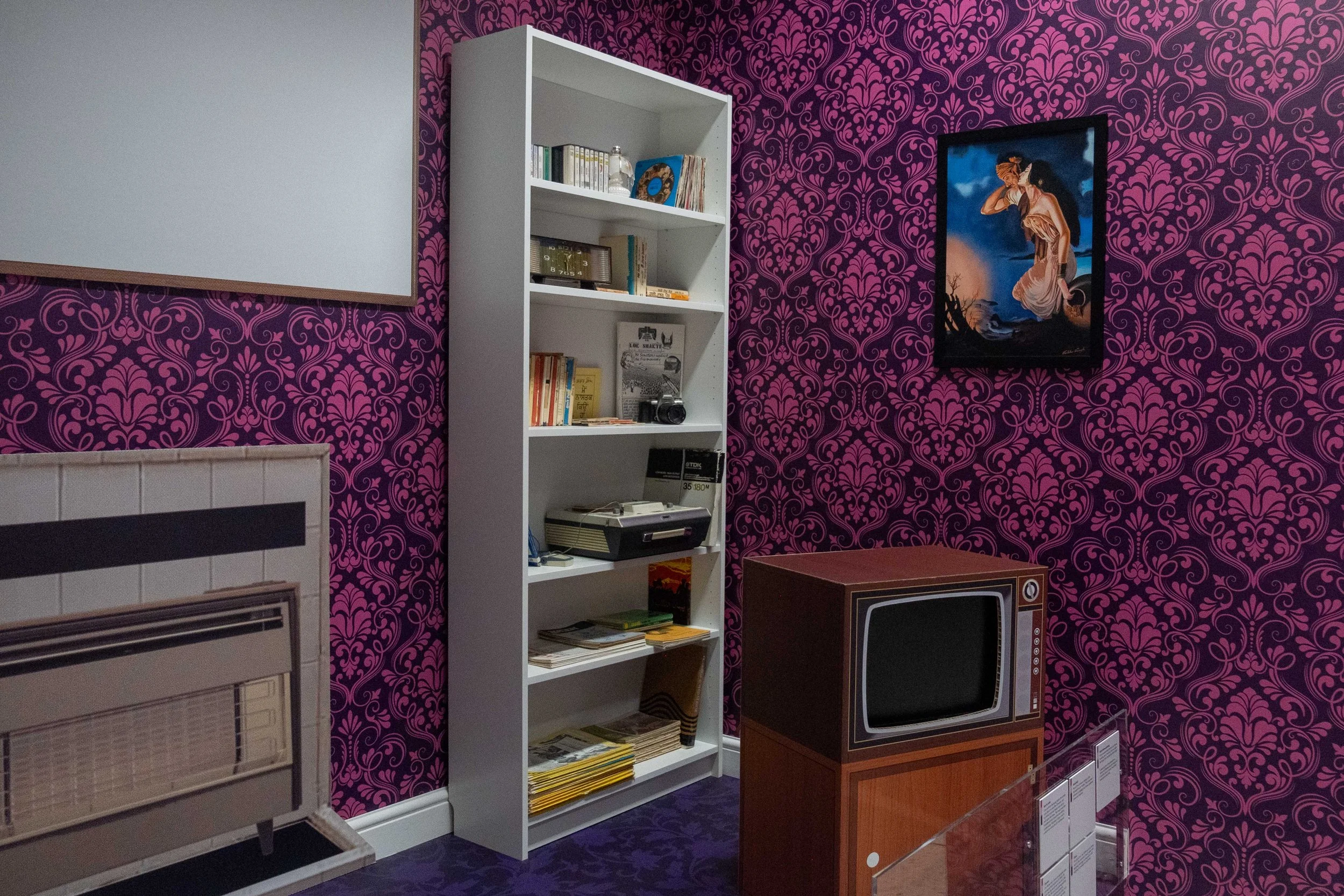
Bookshelf
Most of the books on display in this bookshelf are in Punjabi. They have been selected to highlight our father’s political views and interests.
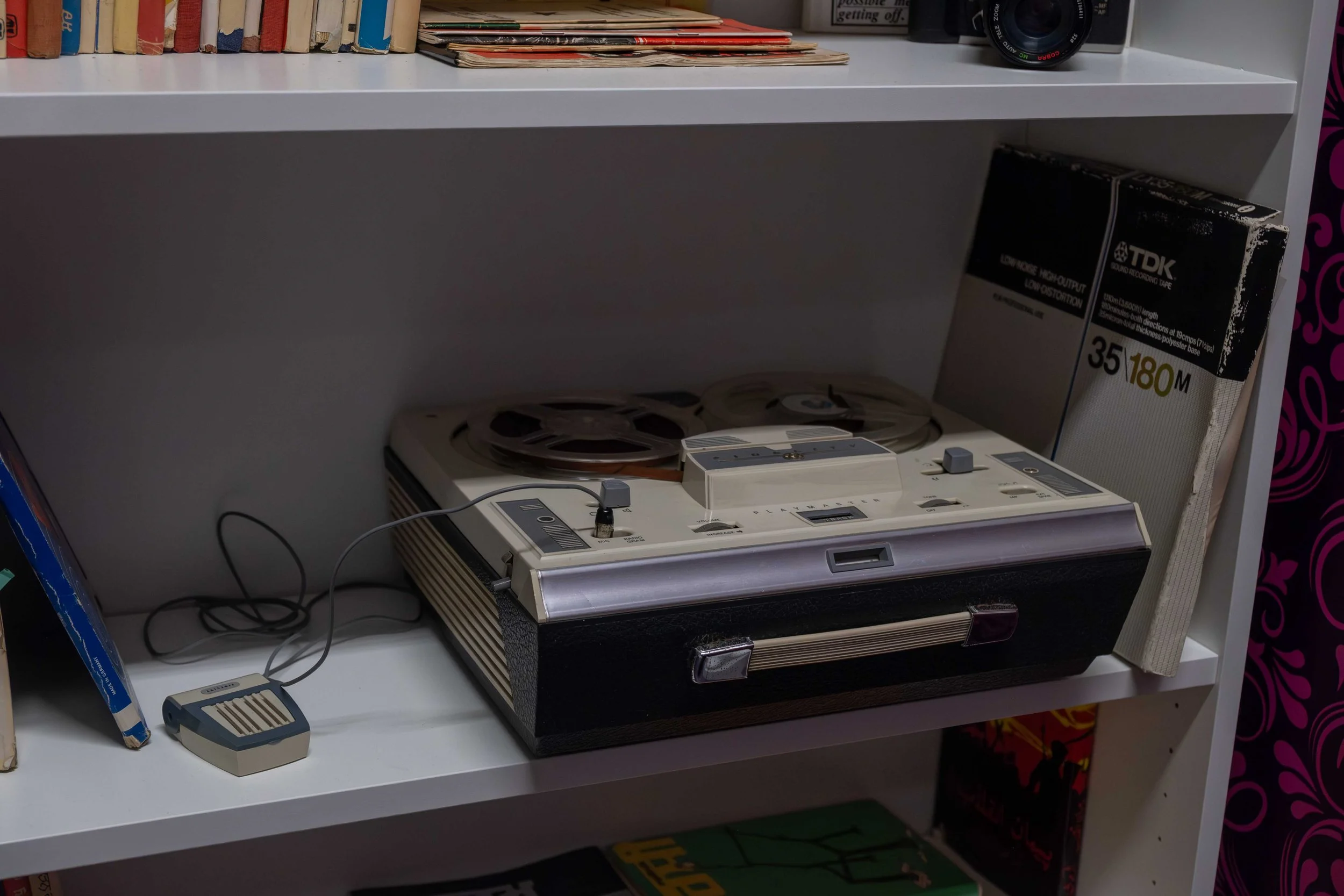
Reel-to-Reels
Live concerts featuring artists from India took place in cities like Coventry, and my father recorded these onto reel-to-reel tapes like these. The music was then transferred onto cassettes and sold at conferences, festivals or direct mail to customers across the UK and beyond.
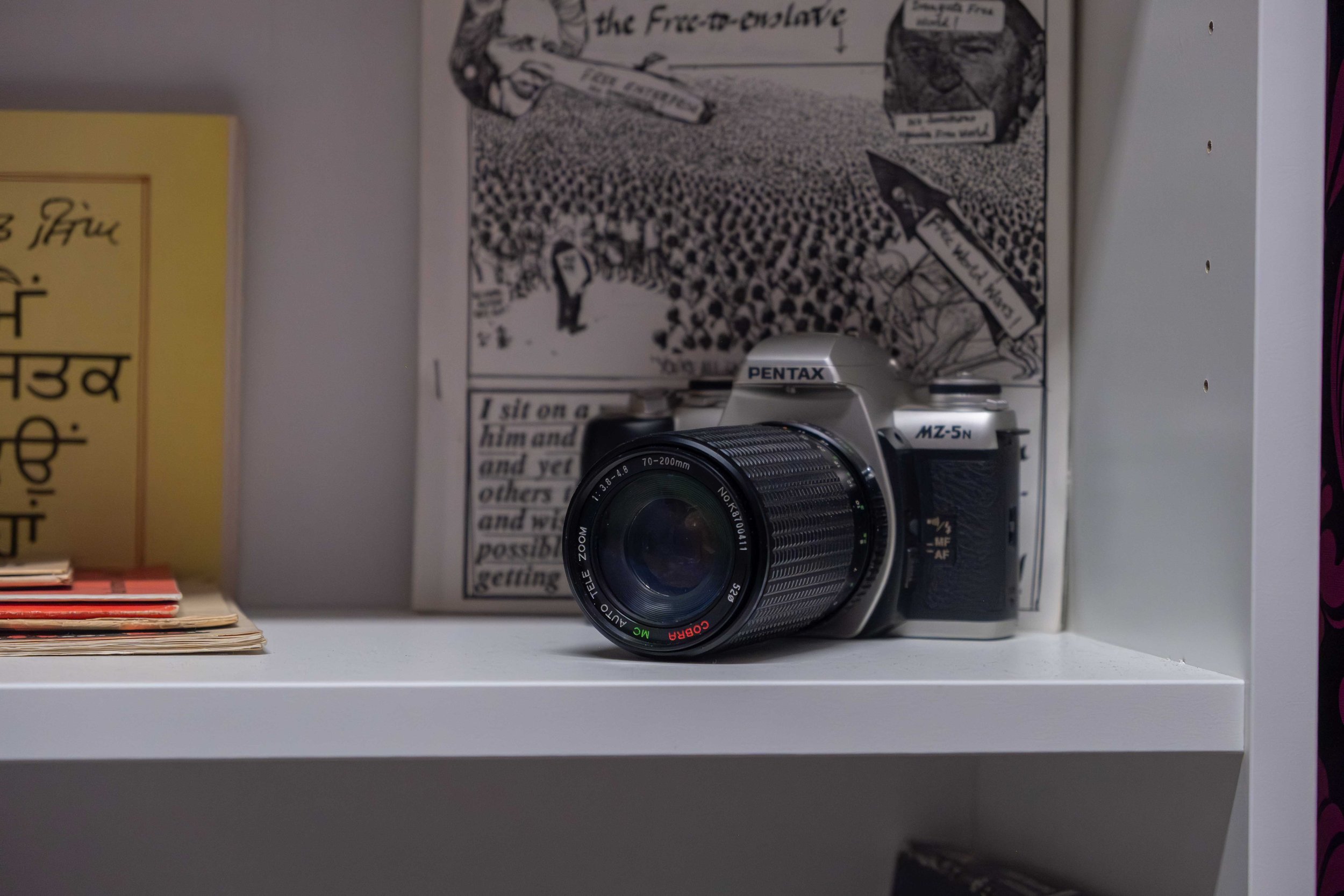
Camera
Our father was a keen photographer who photographed British South Asian life from the day he arrived in the UK in the late 1960s.
He continued photographing cultural, political and social events throughout his life with some of his most stark work captured in black and white film in the 1970s and 1980s.
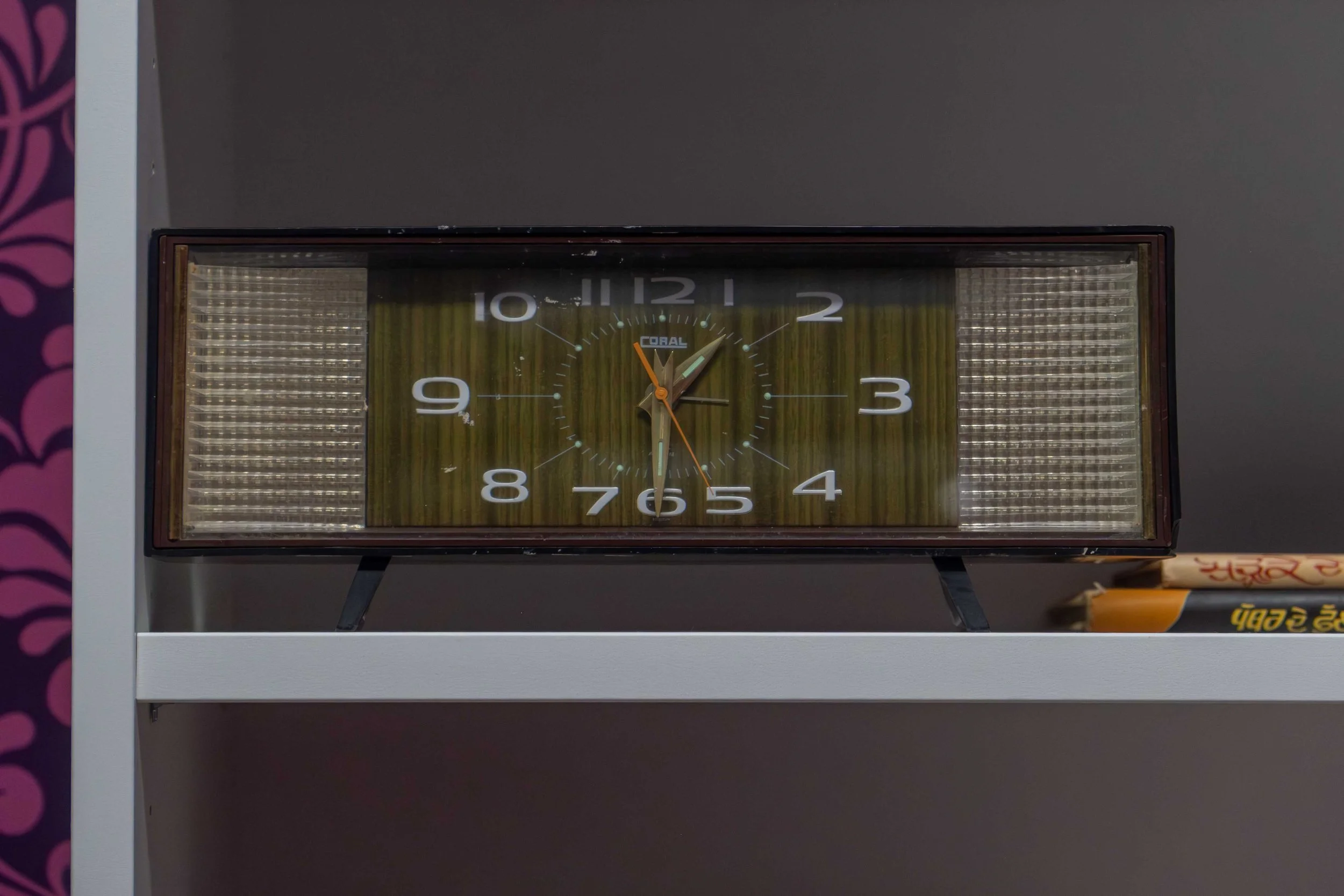
Clock
This clock from the 1970s sat in our living room in the presence of South Asian men debating, planning, reciting poetry and laughing over whisky and samosas.
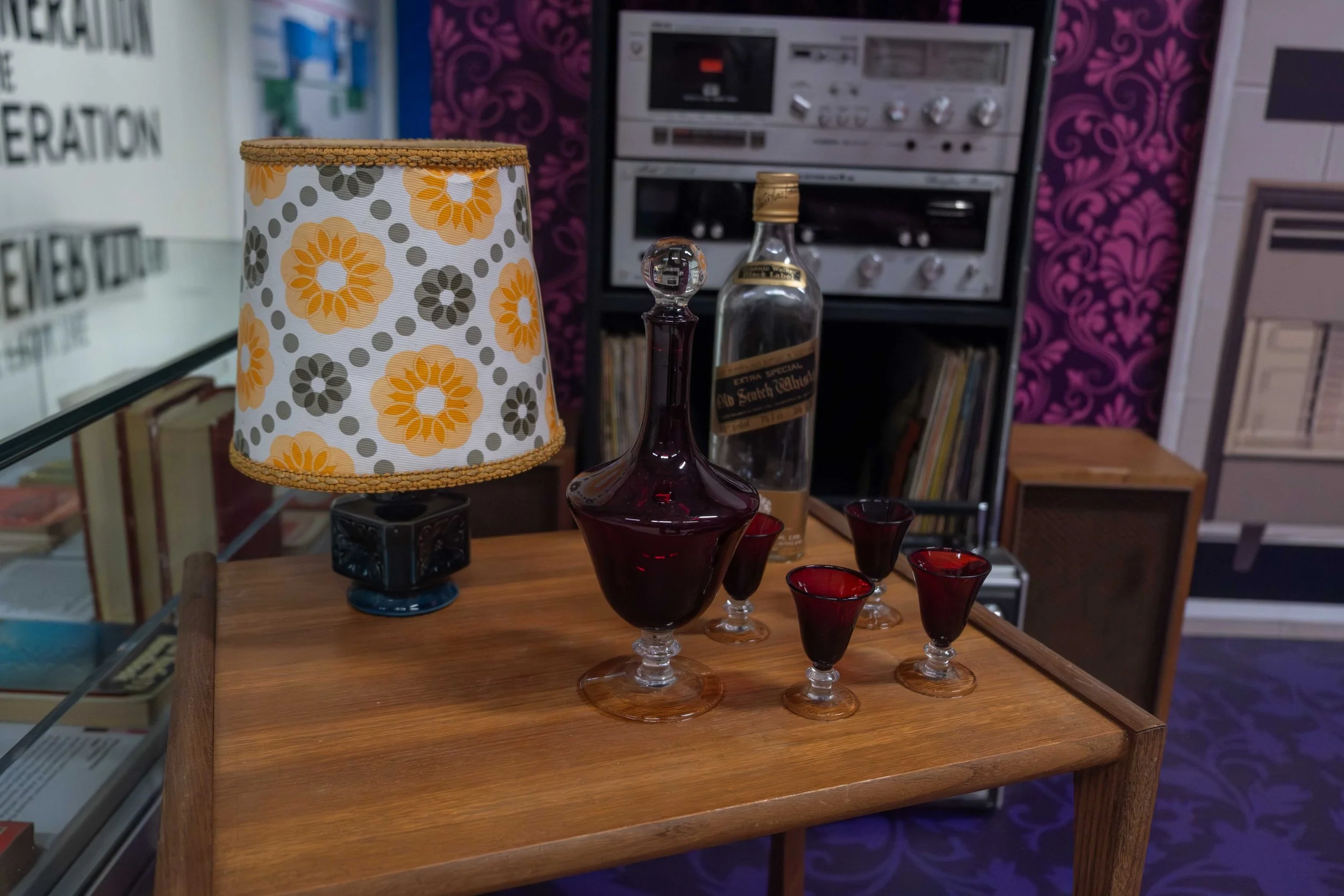
Decanter set
This is the original decanter set which the Johnnie Walker whisky was poured into and enjoyed by our father and his comrades.
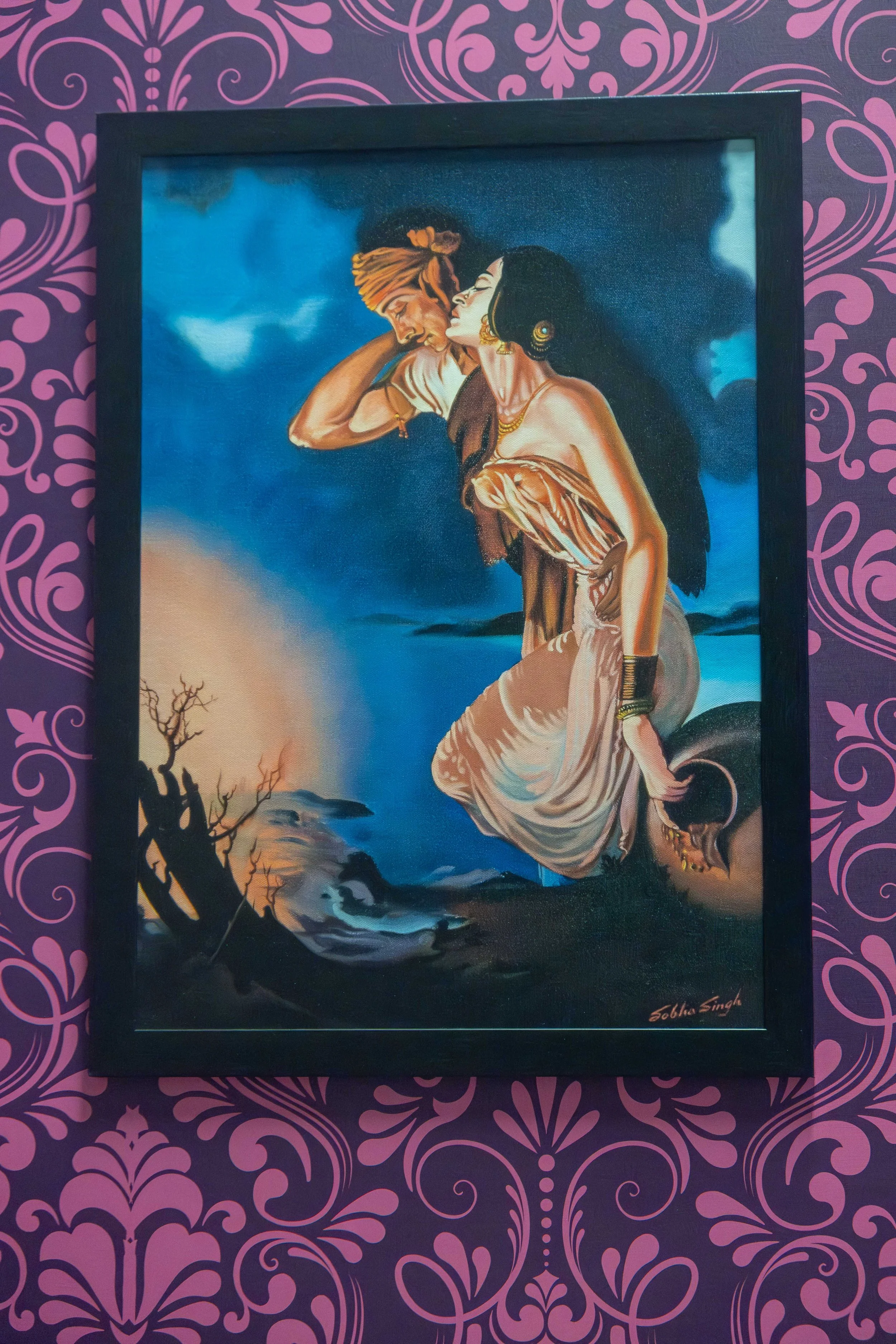
Sohni Mahiwal painting
There were several artworks in our house, including one of the most famous Indian paintings, Sohni Mahiwal by Sobha Singh. It captures one of the greatest love stories and folktales from the Punjab and it could be found in almost every Indian household in the 1970s.
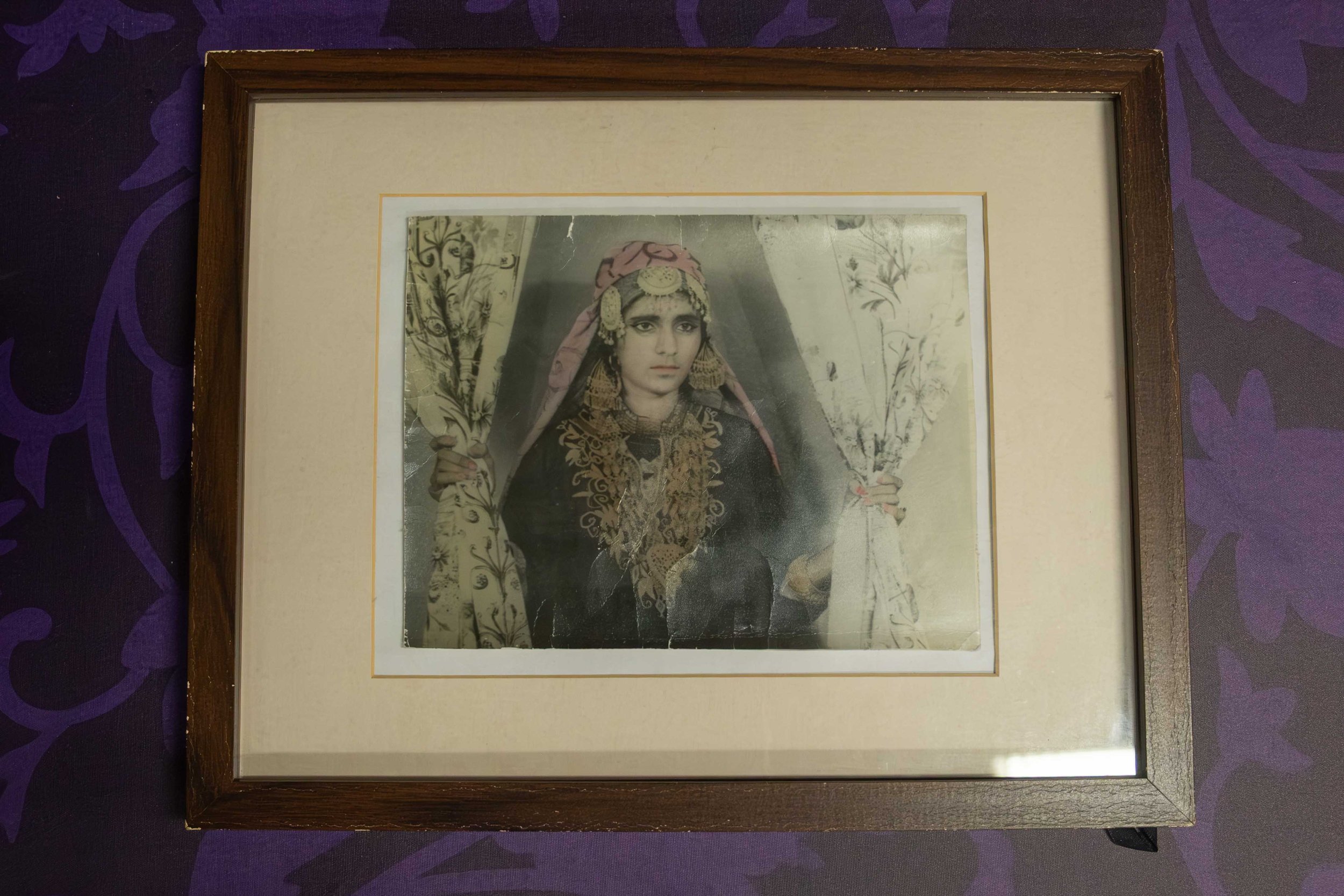
Mother In Kashmiri Outfit
This is our mother, Jasvir Kang’s photo, which was possibly taken in the mid-1960s in India. It is a black and white photograph that has had its negative painted in colour, creating an image resembling a painting. She is wearing a Kashmiri outfit and jewellery, a style of clothing and jewellery she loved throughout her life.
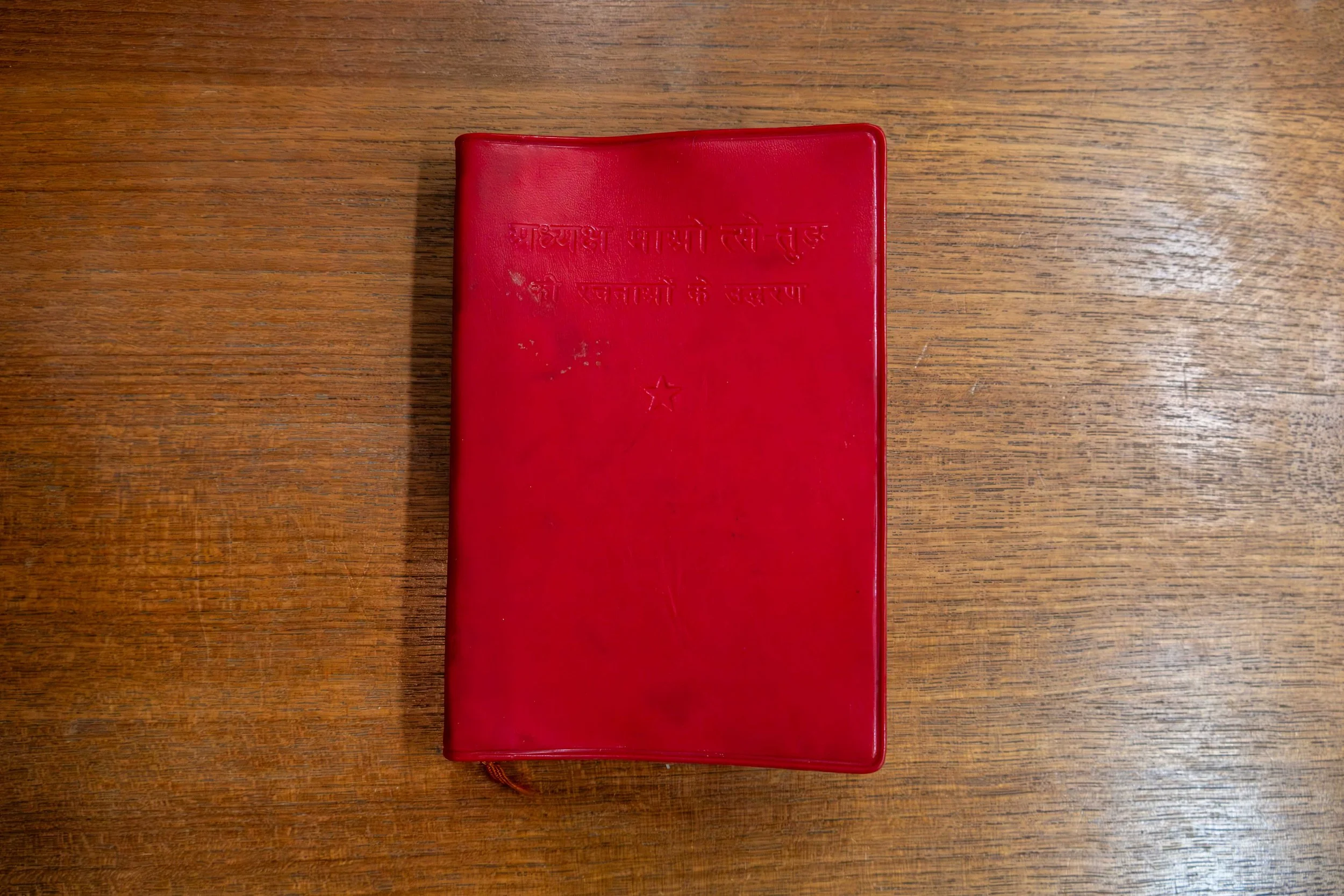
The ‘Little Red Book’ (Quotations from Chairman Mao Tse-tung) in Punjabi
The ‘Little Red Book’ contains speeches and writings by Mao Zedong, the former Chairman of the Chinese Communist Party. It was published in 1964 and widely distributed during the Cultural Revolution. This version is in Punjabi.
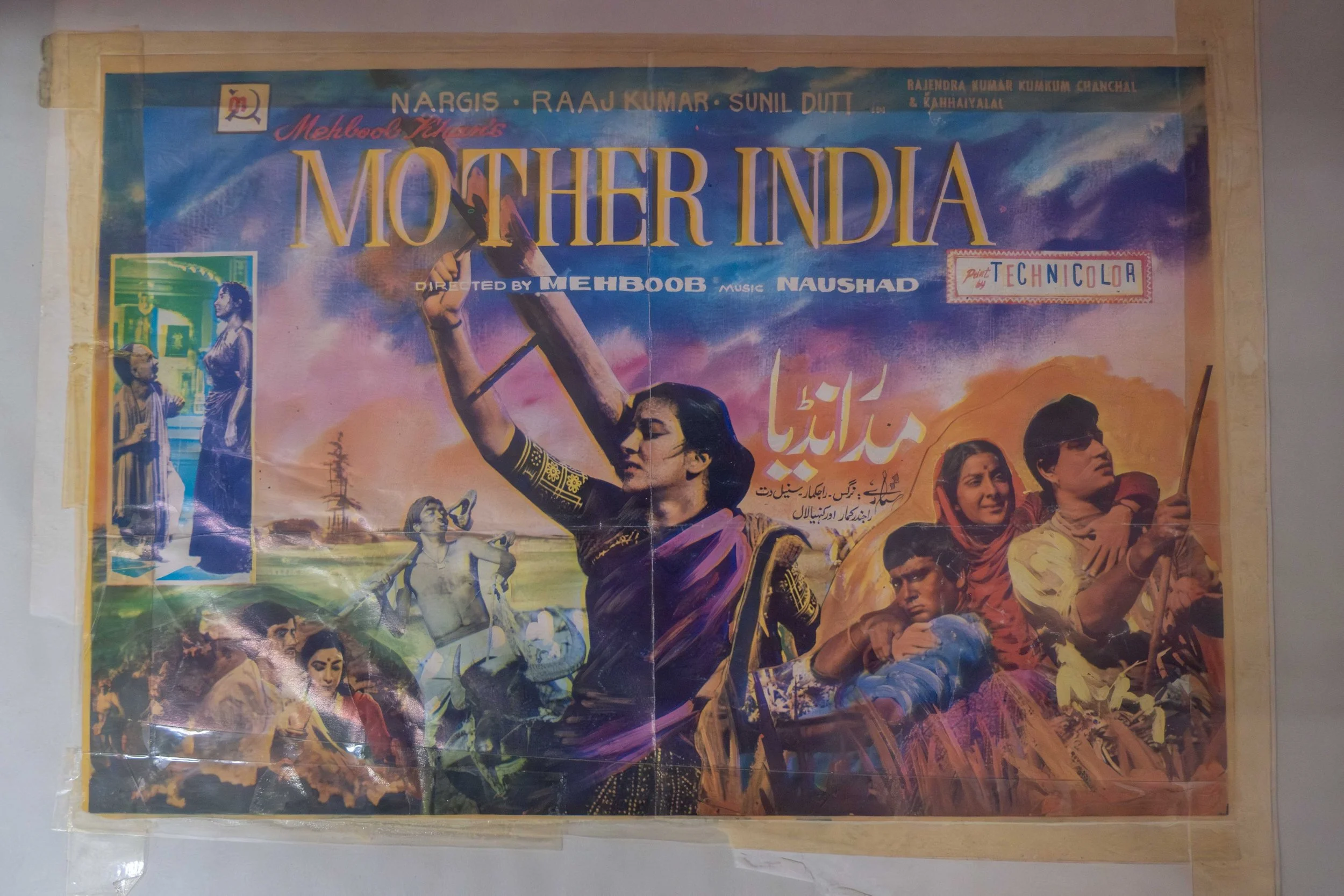
Framed poster of Indian film, Mother India
This is a poster of the Hindi film Mother India picked up from a screening of the movie at the Palladium cinema in the 1970s. Mother India was released in 1957 during the early years of the Parallel Cinema movement. Directors of this movement were making films to reflect the realities of a newly independent India. They addressed social and political issues in a much more nuanced way than previous Indian films. Mother India, directed by Mehboob Khan and starring the iconic Nargis, was epic in its storytelling, addressing the socio-economic struggles of rural India post-independence. Its themes of poverty, social injustice and resilience, including the portrayal of a self-sacrificing mother, resonated with millions in India and abroad. It went on to become the first Indian film to be nominated for an Academy Award for Best Foreign Language Film.
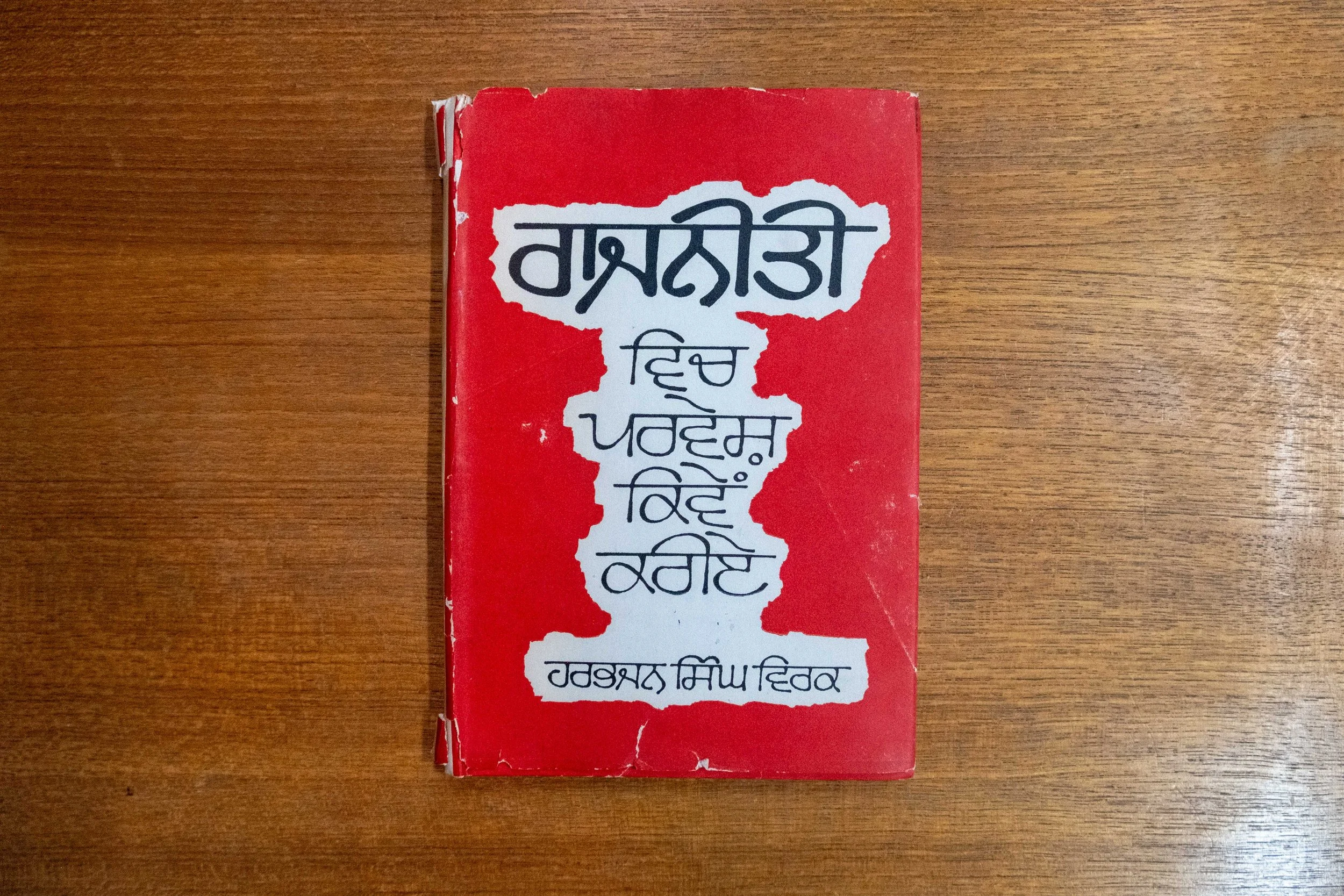
Red book in Punjabi
Harbhajan Singh Virk
1979
As an author and poet, our father wrote several books in Punjabi including How to Enter Politics – homage to the people struggling for socialism which was published in 1979.
The following has been written by Dav Kaur (who is of Punjabi heritage and has worked on the ‘Stories That Made Us’ project since its inception) about our father’s books:
‘The first thing that struck me, when I picked up his work in Punjabi, was how he always added ‘Coventry’ to signing his name. It was his way of paying homage to the city he had made his home.
One of his books was a small handbook on politics and socialism. Despite its size, it was incredibly powerful. In it, he challenged many accepted beliefs about socialism, the class system, and how societies evolve. He pointed out how old systems are often dismantled entirely to create something new, yet without preserving or learning from the past. That contradiction stood out strongly in his writing and showed the depth of his critical thought.
What impressed me further was his versatility. He wasn’t only writing about politics, labour unions, or social struggles. He also created revolutionary poetry and drama scripts.
Punjabi has many dialects, including rural forms that can be difficult even for fluent speakers to fully understand. I grew up with a ‘metro Punjabi’ that blends Hindi and English. But Virk’s books are written in simple, approachable Punjabi. Whether poetry, politics, or drama, his writing is accessible even to those in the UK, who may not have a deep grasp of the language.’
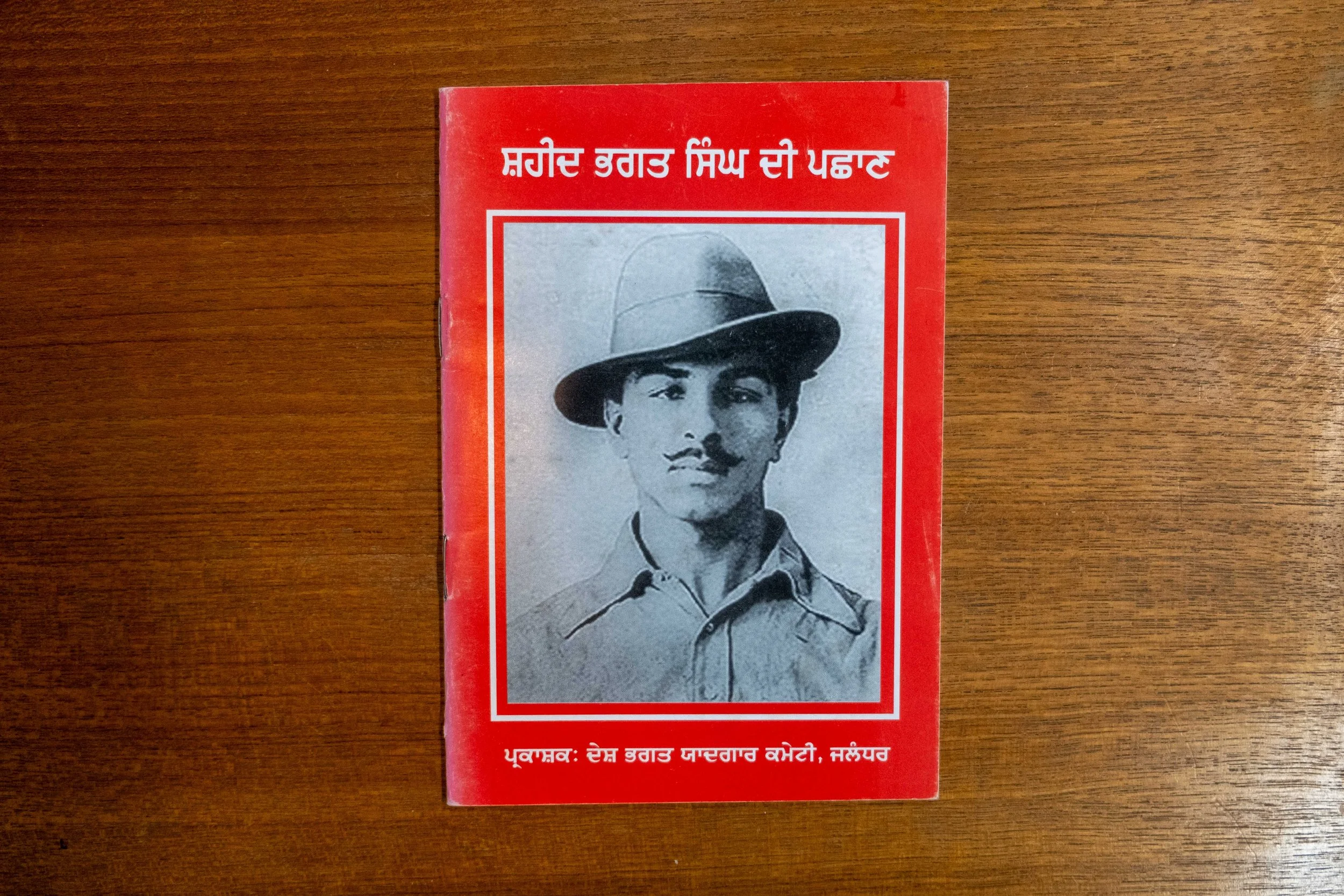
Red book in Punjabi – Identity of Shaheed Bhagat Singh
This book in Punjabi is about Shaheed Bhagat Singh, who was an Indian anti-colonial revolutionary. After his execution by the British in 1931 at the age of 23, he became known as one of India’s most famous freedom fighters.
Pictures of freedom fighters, anti-colonial sentiments, and communist and socialist values were part of our home’s DNA. We would welcome members of the Indian Workers Association who would plan protests from our living room while listening to music, reciting poetry and drinking Johnny Walker whisky.
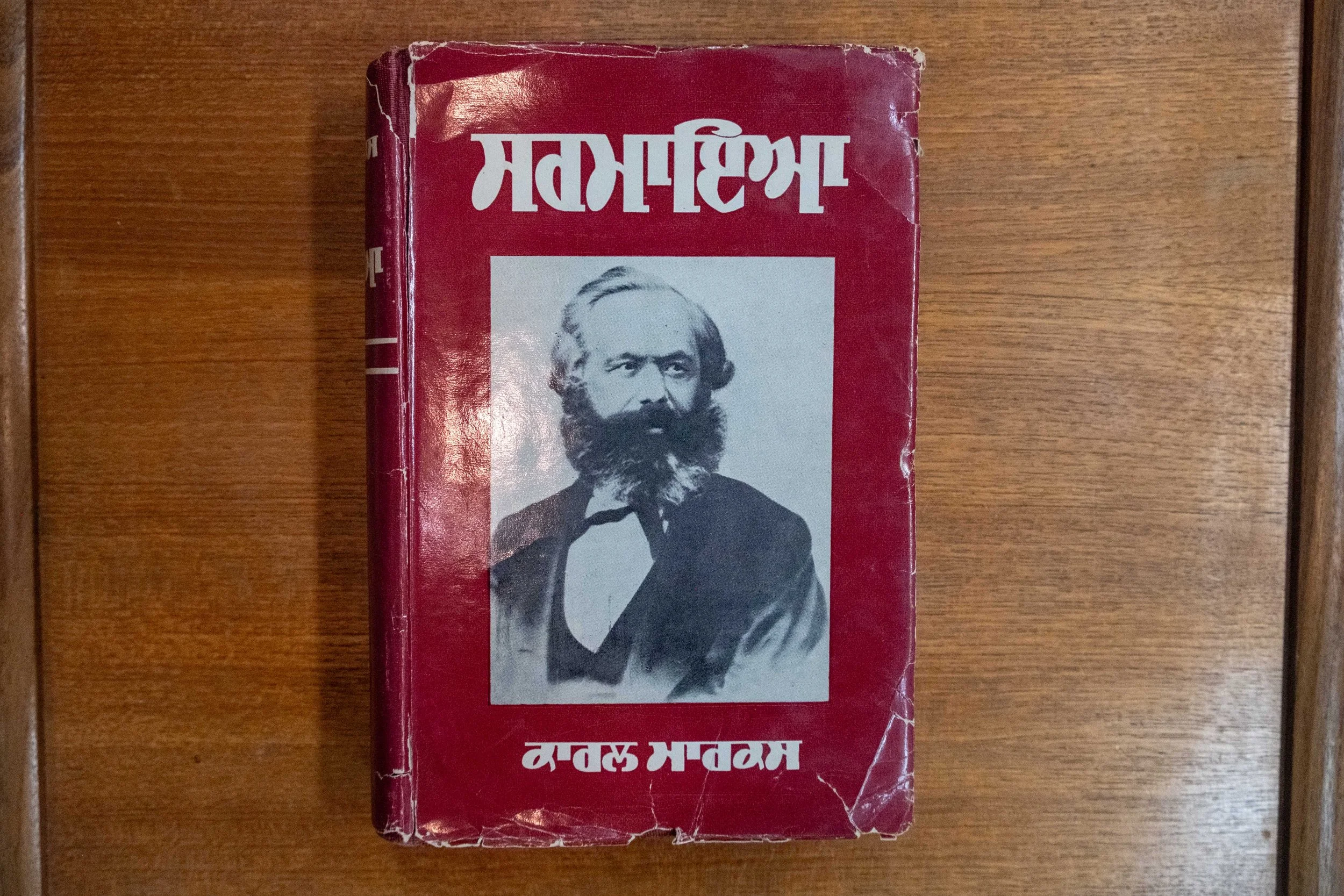
Capital: A Critique of Political Economy
Karl Marx
Volumes 1, 2 & 3 translated into Punjabi and published between 1975 – 1977
These books are translated from the 1887 English edition edited by Friedrich Engels. They were translated into Punjabi by Piara Singh Sehrai, Karanjeet Singh, Gurbachan Bhullar and Prof Prem Singh with help from the Soviet Embassy. They were published between 1975 – 1977.
This set of books depict our father’s communist and socialist values. He believed that a capitalist system was responsible for many of the world’s inequalities.
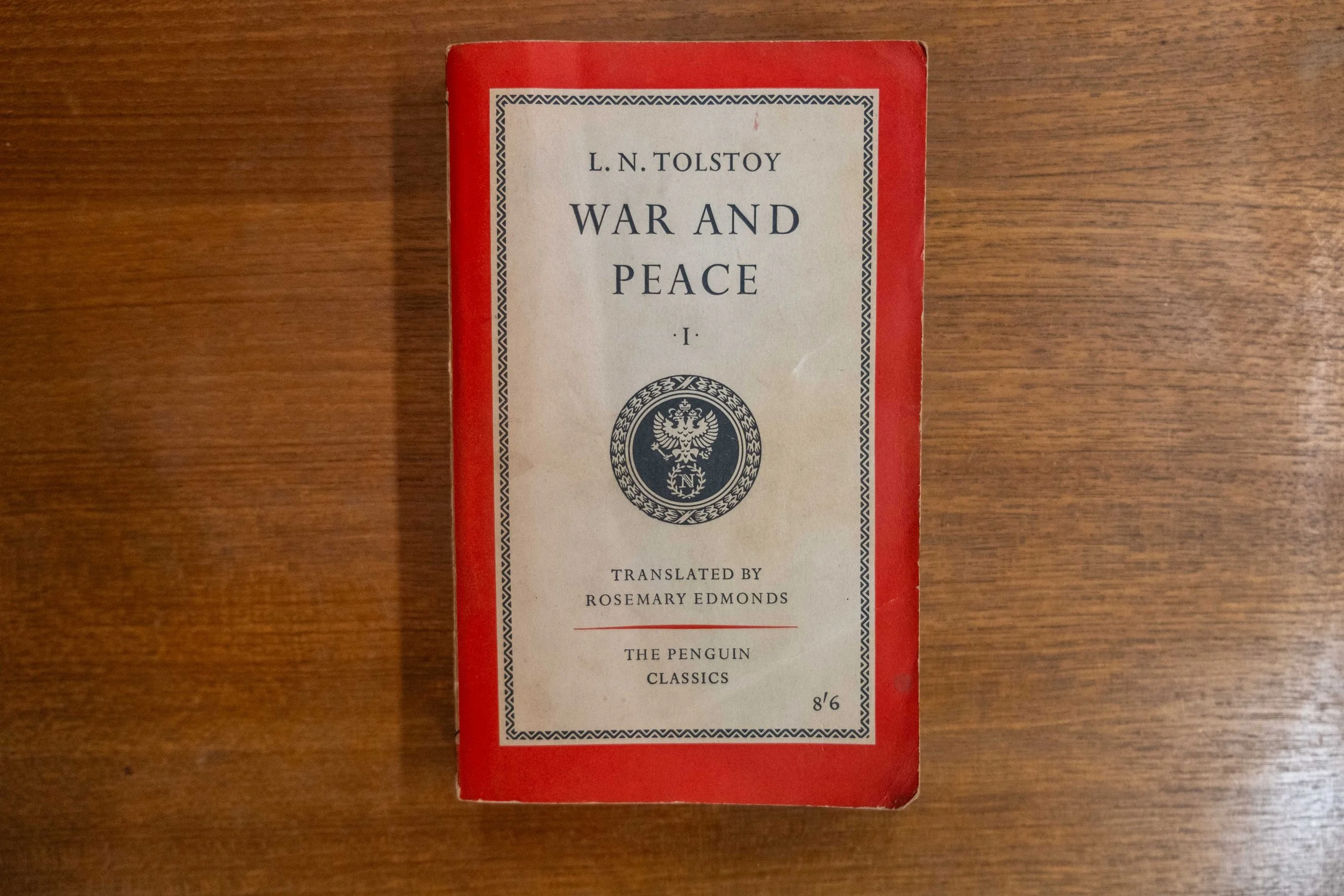
War and Peace
L N Tolstoy
1961
Our father read books from around the world, irrespective of subject, as long as they held intelligence, learning and spoke about the world we live in. War and Peace written by Leo Tolstoy was one of these books.
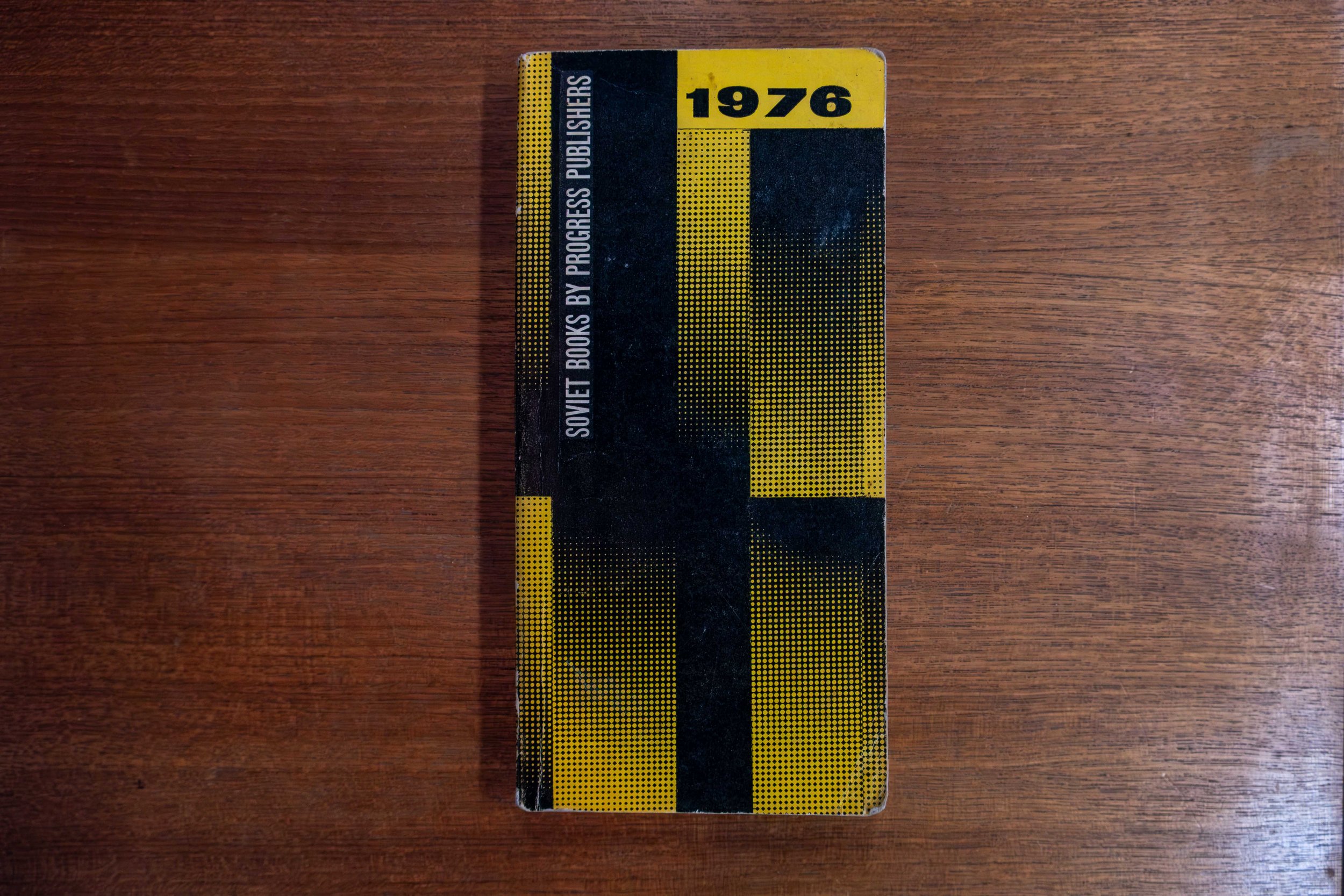
Soviet Books By Progress Publishers
1976
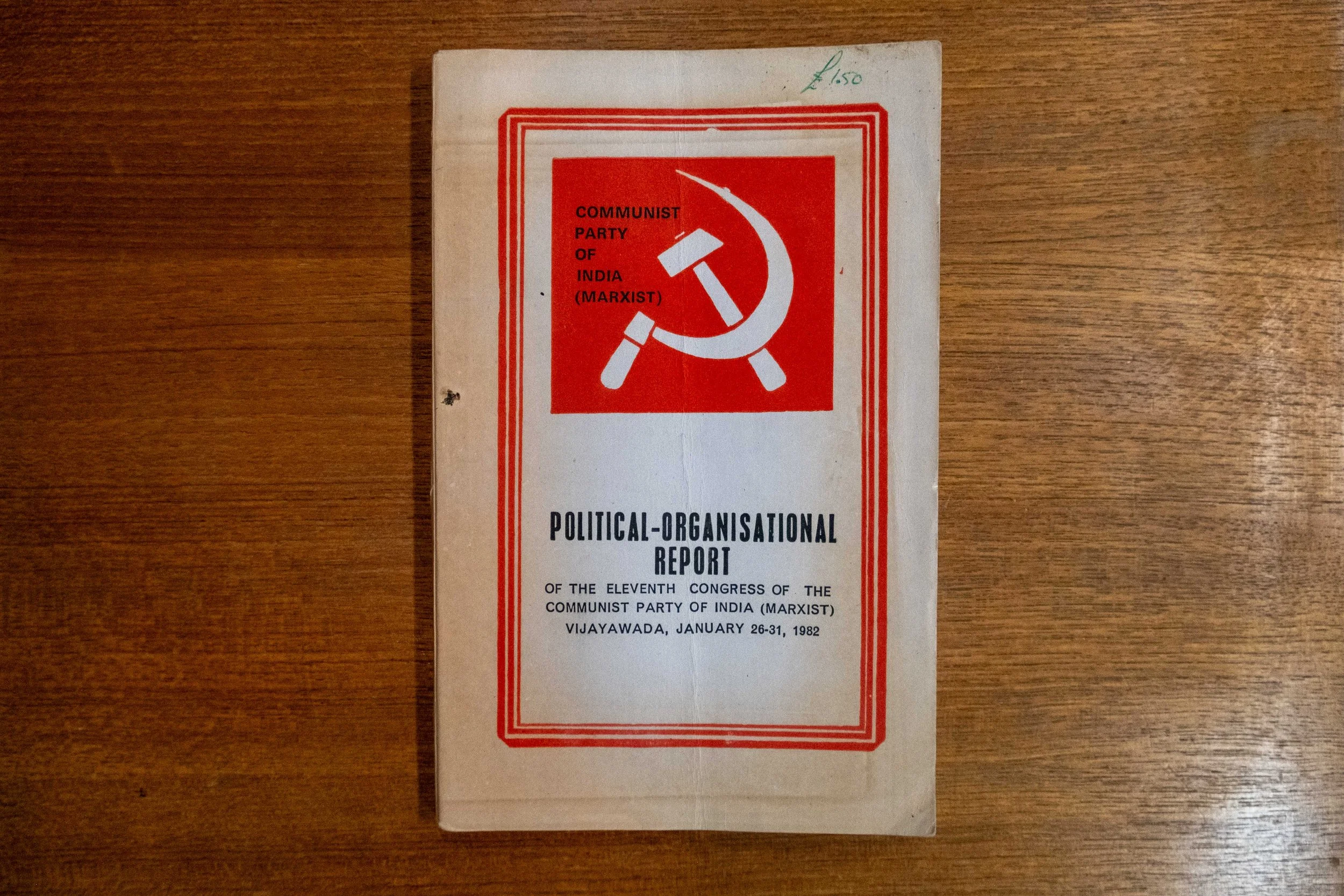
Communist Party of India (Marxist)
1982
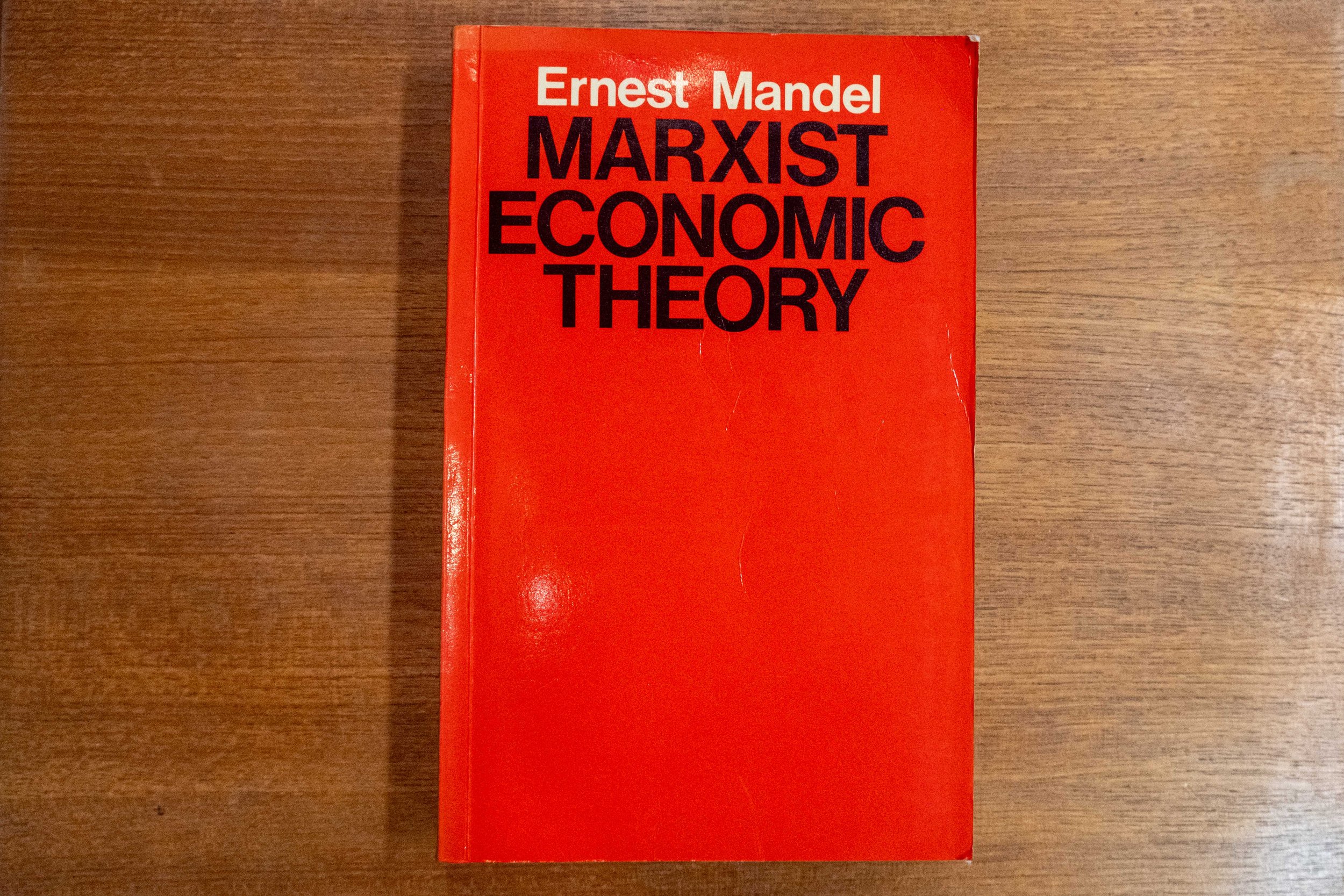
Marxist Economic Theory
Ernest Mandel
1977
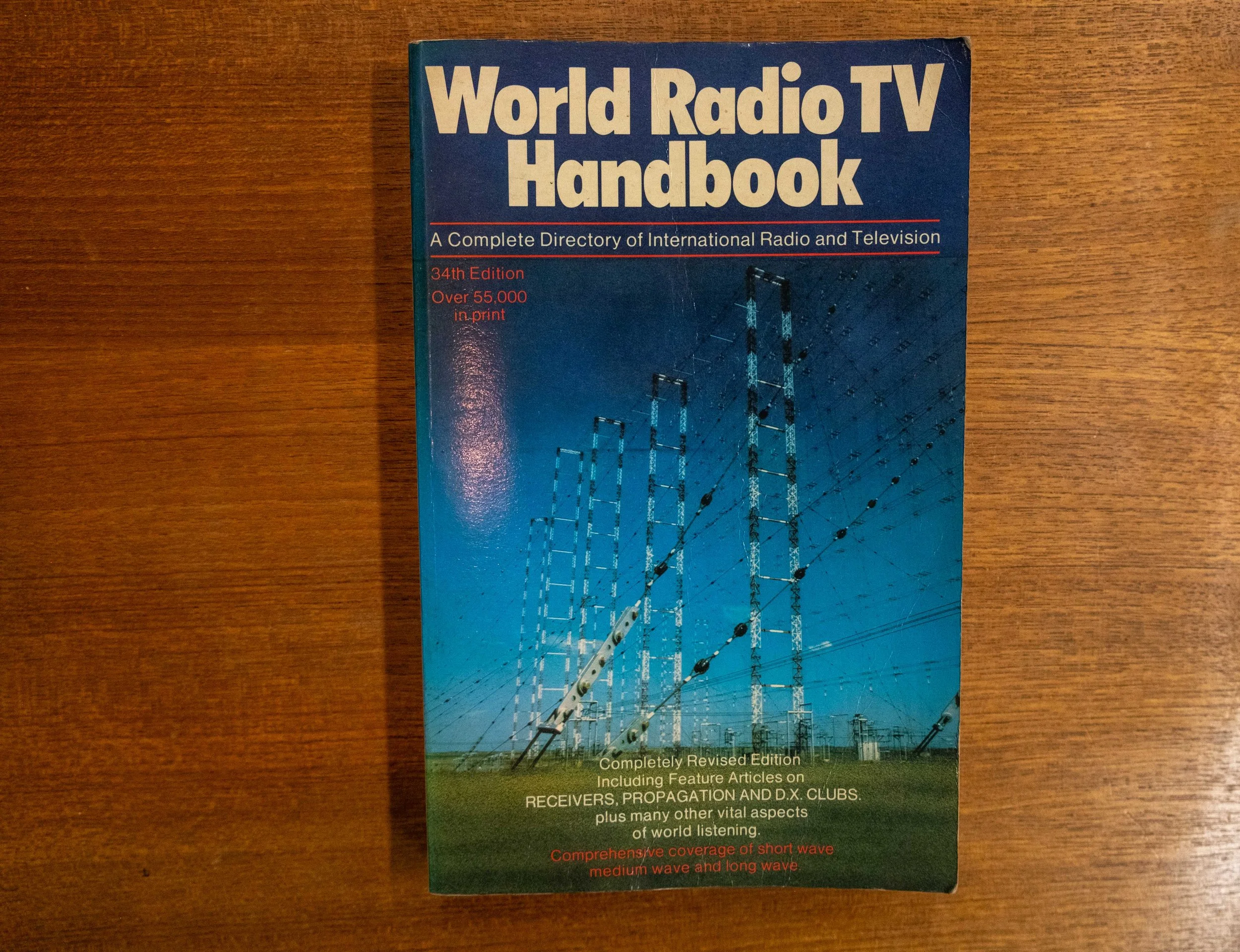
World Radio TV Handbook
1980
Our father was an audiophile who bought the latest technology to record and listen to music. This included a reel-to-reel machine, a separate hi-fi system and a Grundig Satellit Radio. The radio was his prized possession, allowing him access to radio stations across the world. This World Radio TV Handbook accompanied the Grundig Satellit Radio.